What is Israeli President Herzog’s role after results are out?
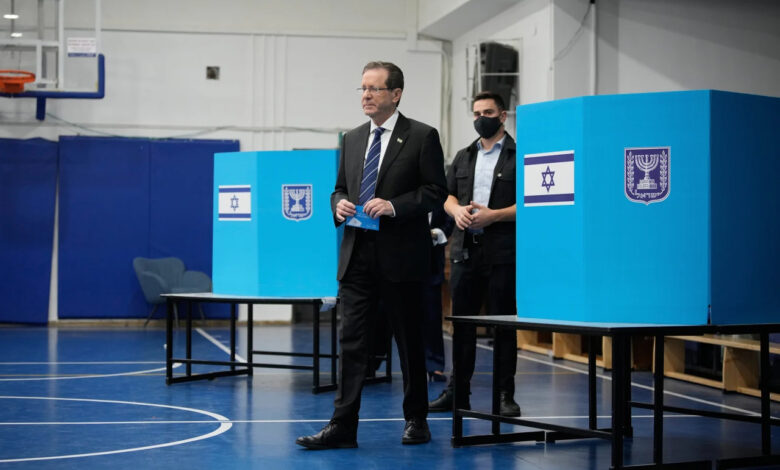
Election night in Israel ends when all the votes are counted, but that is just the first step. Forming a government runs through the president of the state, who plays a pivotal role in post-election politics.
After the results are finalized, President Isaac Herzog will begin consultations with all the elected parties, asking each of them who they recommend to be prime minister. He then assigns the task of forming a government to the candidate he believes is most likely to secure a 61-seat majority. This is not necessarily the leader of the largest party, but the one he deems has a better path to a coalition.
When election results are clear, the choice can be obvious. If there is no clear winner or a deadlock, the president’s decision can be decisive for coalition negotiations.
After Herzog decides who gets the mandate, the assigned candidate will have 28 days – with a possible 14-day extension – to negotiate with other parties over cabinet posts, budget priorities and policy commitments.
The goal is simple: try to form a government. If that candidate fails, the mandate is passed to another candidate for another four weeks. If he fails as well, the Knesset gets a short window to put forward another candidate, and if it cannot then the country goes to another round of elections.
The current vote count shows neither Prime Minister Benjamin Netanyahu nor his primary rival Gadi Eisenkot with a clear path to a majority, enhancing Herzog’s role in the process even more. With neither side holding a clear majority, he may try to steer the two largest parties to form a unity government. Two weeks before the election, Herzog said he will do everything he can “to establish a stable government” and avoid another election.
KioskNews shows a cleaned-up reading view extracted from the publisher’s page — the original always lives on their site, not ours.