Aimed at settlements, UK sanctions could put entire Israeli economy at risk
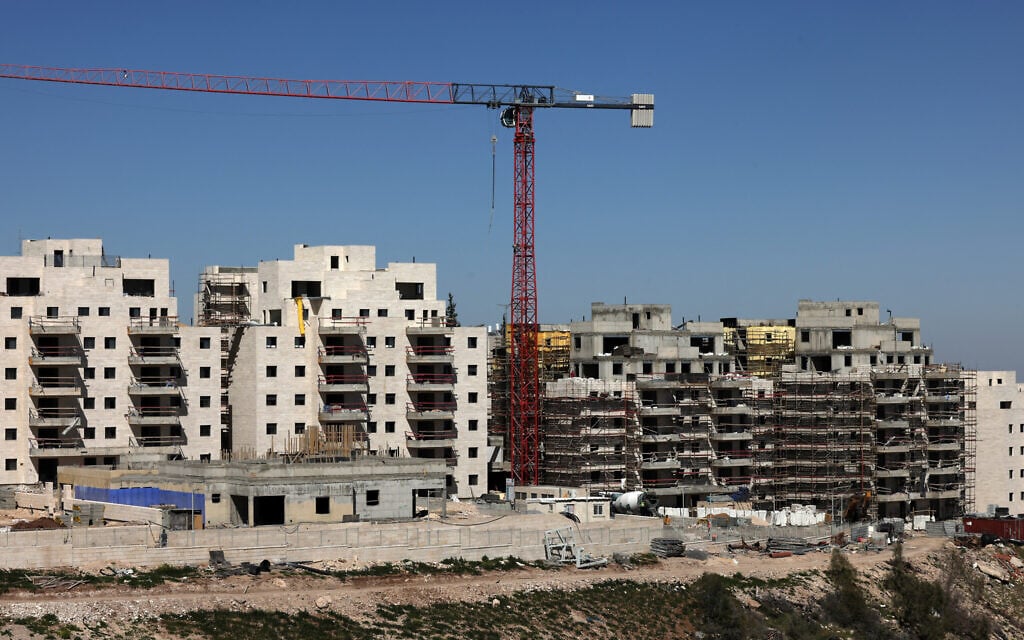
When UK Foreign Secretary Ed Miliband announced a ban on trade with Israeli settlements last week, he took pains to portray the watershed sanctions package as aimed only at those facilitating activity over the Green Line and not Israelis as a whole.
“The sanctions regime will target illegal settlements and settlement expansion, not Israel,” Miliband told Parliament on September 8. “We will continue to support important and valued trade with Green Line Israel precisely because we support the two-state solution, including security and prosperity for Israel.”
However, according to economists and other experts, the planned moves will in reality have the opposite effect, with only muted financial impact for settlements but potentially far-reaching knock-on effects that could chill some of Israel’s most important trade relationships.
“Most of the people abroad don’t necessarily make the differentiation between trade within Israeli settlements and trade with Israel, meaning the action has an effect on the brand of Israel and will be restricting trade with Israel,” said Dan Catarivas, president of the Israeli Federation of Bi-national Chambers of Commerce and Industry.
Industry watchers warned that the threatened sanctions could harm business ties well beyond the UK and the 12 other Western countries that announced plans for similar measures, while a vague promise to impose penalties on anyone aiding settlement expansion could wind up putting the entire Israeli banking system on shaky ground, leading to damage across the country’s economy.
Sign up for the Tech Israel Daily and never miss Israel's top tech stories
By signing up, you agree to the terms
“Diminishing trust in Israel’s economic offering will lead to us not having the income that we need to continue serving our internal and national security interests, and then every Israeli is going to be harmed,” said Joanna Landau, who chairs the board of the Abba Eban Institute for Diplomacy and Foreign Relations at Reichman University.
In a landmark speech, Miliband said the sanctions were coming in reaction to Prime Minister Benjamin Netanyahu’s government turning a “blind eye” to violence by extremist settlers against Palestinians, describing a process of “ethnic cleansing” in the West Bank.
Sharply ratcheting up London’s rejection of what he called Israel’s entirely “unlawful occupation” of the West Bank, Miliband said Britain would impose an import ban on goods from Israeli settlements in the West Bank, sanction companies and individuals that facilitate settlement expansion, and refuse licenses for arms and other exports deemed to materially support Israel’s “occupation,” within six to nine months.
He added that France and Canada would also impose an import ban, with additional countries set to “support further action.”
Shortly afterward, Canada, France, the UK, Denmark, Finland, Iceland, Ireland, Norway, Poland, Portugal, Spain and Sweden released a separate statement promising they would also “introduce national and/or support European restrictions on trade in goods with settlements,” or were at least “actively considering” doing so.
Goods from settlements in the West Bank and around the Jordan Valley make up less than 5 percent of the country’s total exports, according to the Israel Manufacturers’ Association. Settlement products account for only $11.1 million of the annual $8.1 billion trade between Britain and Israel, the group said.

“If we look purely at the size of trade from the settlements, the direct economic impact on Israel is marginal or almost insignificant,” Catarivas told The Times of Israel. “The problem is more a matter of what type of message the noise sends to British or European importers working with Israel, which might deter them from continuing, enlarging, or deepening their trade relations with Israel.”
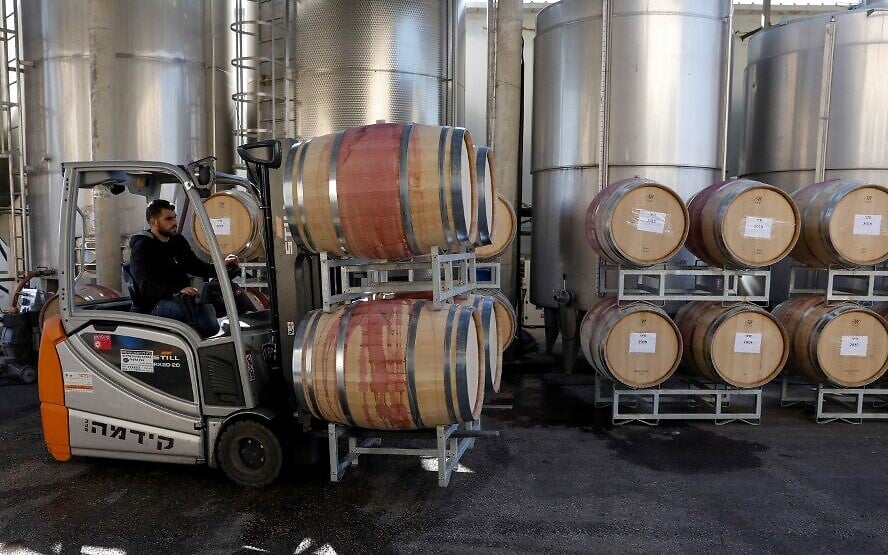
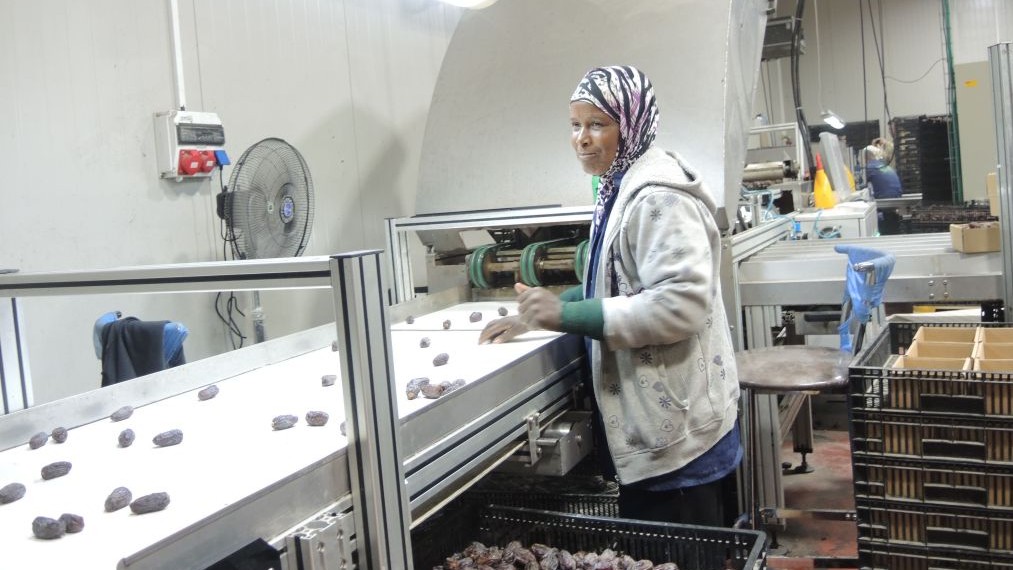
Much of what is produced in the West Bank is agricultural, including dates, wine, olive oil, and Dead Sea cosmetics, though there are also industrial factory facilities in the Barkan, Ariel, and Ma’ale Adumim industrial zones for plastics and electronics assembly.
However, there are open questions regarding the application and enforcement of any ban because of practical difficulties in identifying the origin of goods.
“In today’s economy, no sophisticated product comes from one place or one country,” said Trevor Asserson, senior partner of Asserson Law Offices, an adviser on UK and US law to Israeli and international companies. “The lines of supply and origin status are a very complicated legal area.”
“It is not clear whether a product with input manufactured in Israel but assembled in the West Bank would classify as an Israeli good — or the other way round: a product assembled in Israel, west of the Green Line, and one piece is added by a factory that’s over the Green Line, would that be a product of the West Bank?” Asserson elaborated.
‘Toxic brand’
European countries have long threatened to institute bans on settlement goods and many European Union countries have for years required that such goods be labeled.
Nonetheless, the EU remains Israel’s largest trading partner, accounting for about a third of all exports in 2025. Israeli exports of goods and services make up about 25% of the country’s $565 billion economic output
According to Asserson, Israeli businesses exporting abroad have grown used to keeping where their products are made under wraps.
“Israel is probably one of the only countries that hides its origin, in order to sell,” he said. “Many Israeli companies are set up in Europe or the States, and they sell as a non-Israeli product, and that’s driven by politics.”
“But all that’s happened is that the politics have got much worse,” he remarked.
Landau warned that Israel had “become a toxic brand that people don’t want to touch.”

Miliband’s announcement is “damaging because the language exposes Israel’s global standing to much easier criticism by the anti-Israel movement, and that will reflect on Israeli businesspeople being able to do business,” she said. “There’s a sort of illusion about how long our economy can withstand this kind of reputational damage, which has been a consistent challenge for Israeli entrepreneurs and businesses since the October 7, 2023, war.”
That reputational damage is now being compounded by the threat of actual penalties, giving businesses — and not just those in the countries threatening trade bans — an even stronger reason not to trade with Israel, noted Dror Strum, a former head of the Israel Antitrust Authority who now heads the Israeli Institute for Economic Planning.
“What is worrying is not the UK statement itself, but rather the dynamic it might have in the near future and the probability that other more significant countries in Europe or the US, would also join,” Strum said. “When people are starting to avoid deals or financial transactions with Israeli companies or financial institutions, this creates a chilling effect which doesn’t narrow down to a specific country like the UK or Denmark.”
“It is like a contagious disease,” Strum declared.
West Bankless
The UK’s declaration is not only about a refusal to stock Jordan Valley dates on British supermarket shelves. The threat to sanction those who facilitate settlement expansion could leave Israel’s financial system deeply isolated, experts warned.
“We will take action against specific companies and individuals who provide services such as construction, infrastructure, financing, or real estate for settlement expansion,” Miliband said. “So to those who finance or facilitate illegal settlements, let me say this, you will face the full force of UK sanctions.”
Such sanctions could fall on Israeli banks, pretty much all of which provide services to clients over the Green Line, whether financing public works or offering mortgages for settlement homes. Israeli law prohibits banks from refusing to extend services to clients in settlements.
Meanwhile, all Israelis could find themselves cut off from the global financial system, due to banks preferring to avoid the hassle of complying with requirements that they avoid individuals or businesses with settlement ties.

“All banks and other financial organizations dread the cost, expense, and effect of an investigation by a regulator which might even lead to being fined, which is a reason not to bother with one small country,” said Asserson, whose law firm represented an Israeli organization sanctioned by the UK for allegedly financing violence against Palestinians in the West Bank.
“Every single business that is exporting or importing is using the Israeli banking system and the international banking system, which could be the Rami Levy supermarket chain buying a tomato from overseas, meaning they have to import it, they have to pay shipping, and they have to deal with international banking.”
Strum noted that especially in financial services, operations are built on a network in which banks connect and collaborate as part of consortia or to grant mutual financing for international ventures.
“The British government knows that freezing out Israeli banks from the international banking community would be devastating,” said Asserson.
The UK announced the sanctions just weeks before Israelis will be heading to the polls on October 27 for Knesset elections. The announced measures won’t be implemented till next year, and if Netanyahu is defeated, the willingness of Israel’s next government to curb settlement expansion and settler violence could narrow the scope of the sanctions, UK officials have already indicated.
Strum noted that the mere threat of sanctions was in itself an “incremental punishment as it creates a cloud of uncertainty and a chilling domino effect regarding transactions with Israel.”
“The timing of announcing the sanctions is rather puzzling and conveys a message even to Israeli citizens that the election of a certain type of government might yield unwanted consequences,” said Strum. “The current situation is worrying and Israel should block and narrow it down using intense diplomacy and intense interactions between financial officials from Israel, the UK, and other countries.”
So far, Israel’s reaction has mainly been to hit back at the UK, rather than trying to reach a sort of detente that would head off the strategic risk and catastrophic implications for the economy and national security should the sanctions be implemented on a full scale.
Shortly after Miliband’s announcement, Foreign Minister Gideon Sa’ar lambasted the British moves, calling them “antisemitic” and “morally distorted,” and announced several countermeasures, including the closure of the UK’s consulate in Jerusalem serving Palestinians.
“We are entering into a kind of tit-for-tat retaliation cycle, and this creates escalation, which we don’t know where it’s going to end,” said Catarivas. “Instead of anger and retaliation, from the Israeli point of view, there must be a reflection on the economic implications of Israeli politics and an understanding that the economy is the growth engine of national security.”
KioskNews shows a cleaned-up reading view extracted from the publisher’s page — the original always lives on their site, not ours.