Hong Kong police to launch international academy, reveal details of new degree
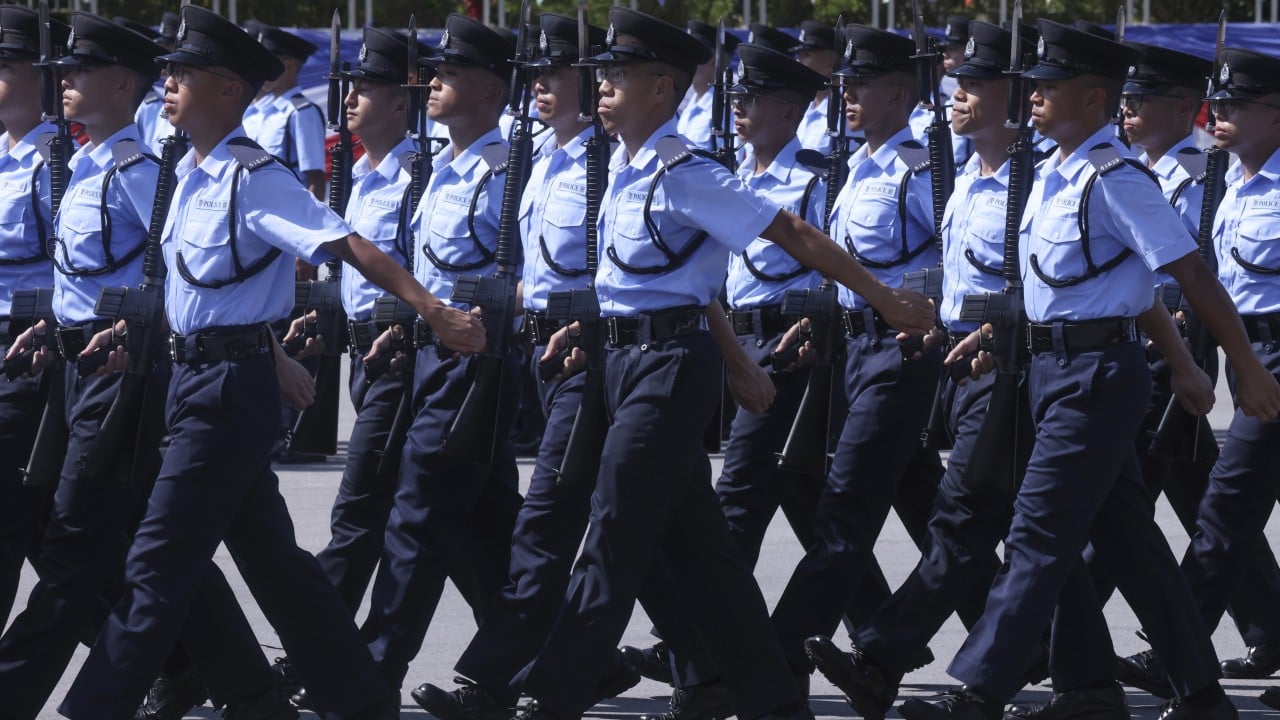
Hong Kong’s police have revealed they will launch an academy offering specialised courses for overseas officers and shared new details about the force’s bachelor’s degree programme, with classes expected to start next March.
Kelly Cheng Lai-ki, director of the Police College, said establishing the Hong Kong International Academy of Policing would consolidate generations of frontline wisdom handed down within the force into an international exchange hub.
“These exchanges can showcase our strengths to the world and we can also learn others’ best practices from this platform, fostering mutual learning,” Cheng said.
The academy is expected to be established on November 11 and will share premises with the Police College in Wong Chuk Hang, which trains recruits and offers continuous education to officers.
Five officers will be redeployed to handle its programmes.
Cheng added that the new academy could help the force fortify its ties with overseas counterparts, bolstering its role as a “superconnector” for global security.
“This can increase the force’s efficacy and boost training cooperation with various countries,” she said.
The academy is expected to offer about 20 courses covering a variety of skills, from tactical leadership to counterterrorism and explosive ordnance handling, as well as organise an international policing leadership forum.
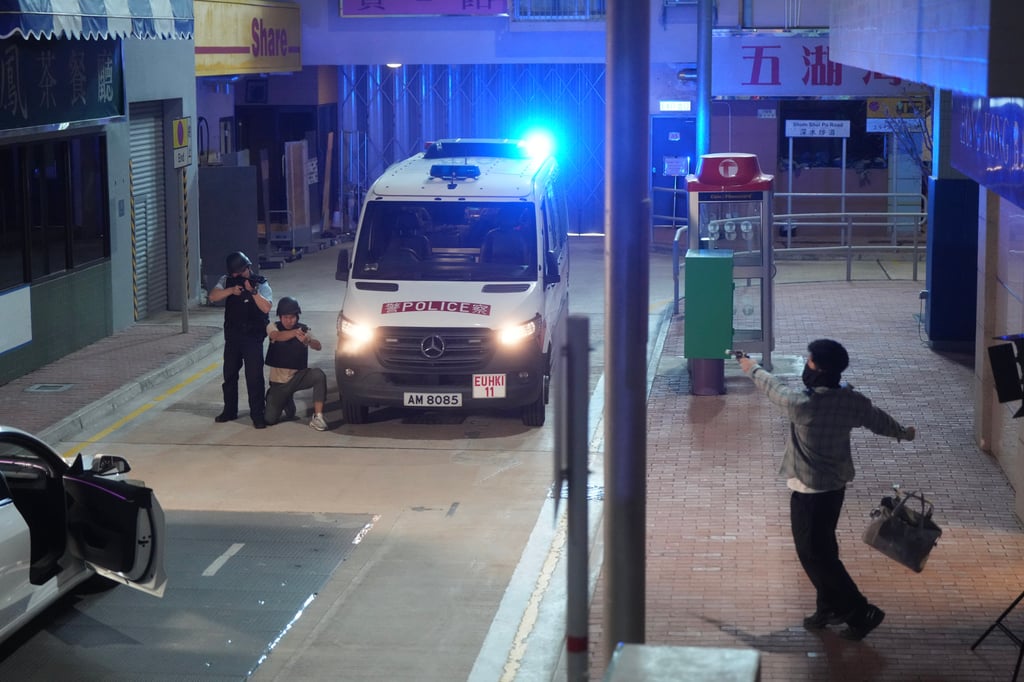
Separately, the Police College will also be accredited to award bachelor’s degrees in security and criminal investigation to selected junior officers.
Students will be chosen at the end of this year and classes will begin in March next year, with the first batch of students due to graduate in 2029.
Senior Superintendent Cheung Hoi-yan, director of the School of Specialised Learning under the college, said the bachelor’s degree would be fully funded by the government and would be an applied education programme combining theory and practice.
Serving officers chosen to enrol would continue with their daily duties but would need to complete additional language courses, undertake a practicum at designated police units and finish a final project under the supervision of superintendent-level officers who had obtained degrees at Tsinghua University or the University of Cambridge.
“After completing the programme, officers will be awarded a bachelor’s degree from the Hong Kong Police College and can move on to apply for master’s programmes elsewhere,” Cheung said.
College director Cheng said the bachelor’s degree programme had already been accredited at Level 5 under the Education Bureau’s qualifications framework.
A Level 5 qualification puts the programme on par with a bachelor’s degree programme at universities in the city.
According to Cheng, 40 per cent of constables recruited since last year did not have a bachelor’s degree.
“Once our officers’ personal qualities have been raised, this will definitely benefit their service quality and will provide career progression opportunities,” Cheng said.
With 80 spots reserved for junior police officers with secondary education qualifications and 40 for those equipped with a higher diploma or associate degree, the degree programme targets recent joiners who have completed basic police training since 2022 or later.
KioskNews shows a cleaned-up reading view extracted from the publisher’s page — the original always lives on their site, not ours.