BUSINESS REFLECTION: Crossed Wires: Farewell Nobel prizes — is AI disrupting scientific discovery and ownership?
At the beginning of last week I wrote a story about the diminishing value of a university degree as artificial intelligence seeps into education, leaving institutions unsure about the soundness of their pedagogical promise.
Then it got worse. The new story has many thrilling plotlines – please stay with me.
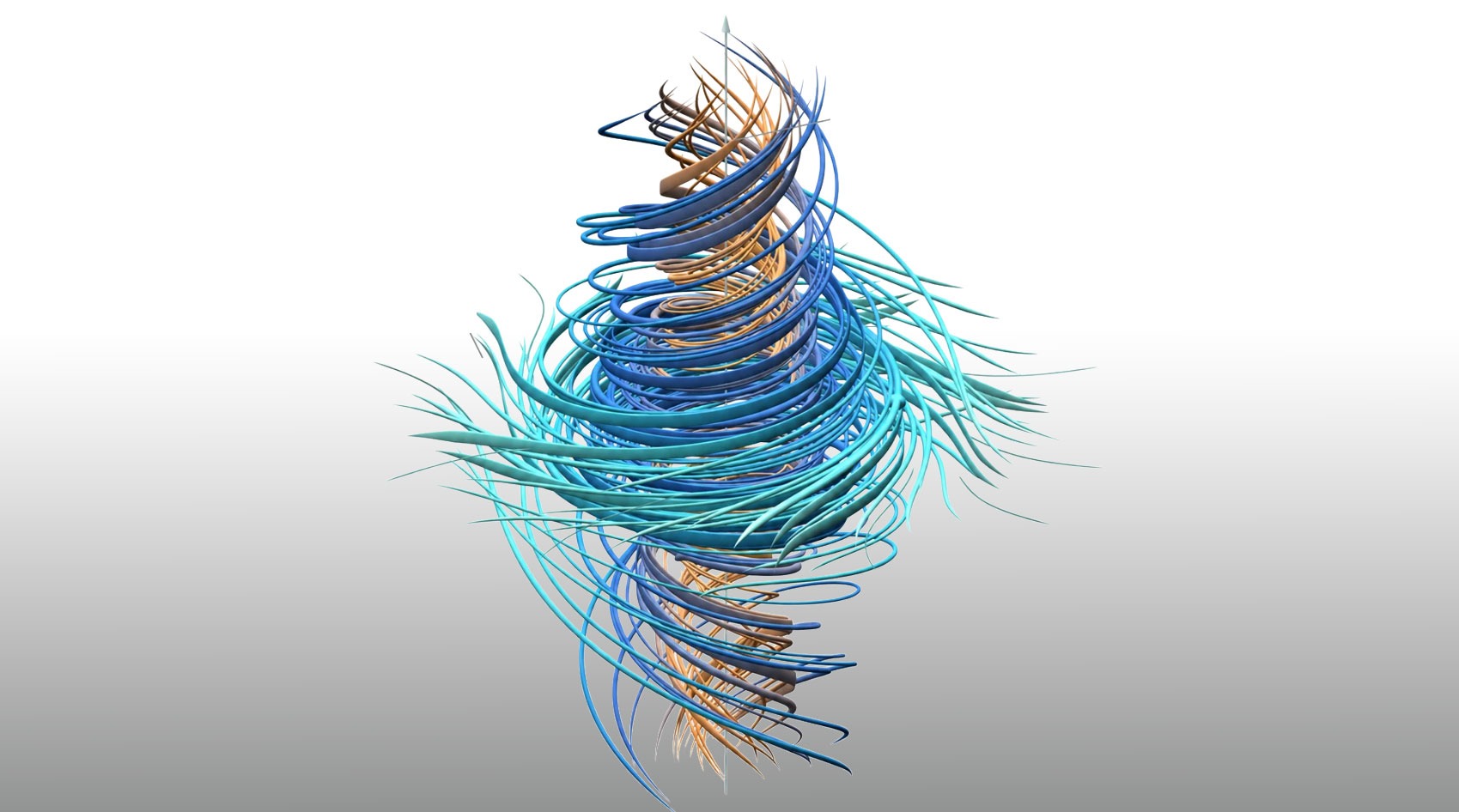
It turns out that the motion of fluids (like water or oil) has been historically thorny for scientists to understand. But in the 19th century, Claude-Louis Navier and George Gabriel Stokes worked out a set of equations that describe how fluids move. They are in your weather forecast, tidal charts, sea current charts, in the shape of an aircraft wing, in the model of blood moving through an artery. They work beautifully, every day, everywhere.
But there has always been a niggling concern that the equations may not work under all conditions. So much of a concern that the problem of proving (or disproving) this entered the hallowed halls of the Clay Mathematics Institute’s Millennium Prize Problems – seven of the world’s most difficult mathematical and physics conjectures, of which six remain unsolved. For the past 90 years thousands of scientists have devoted part (or all) of their careers to solving the Navier-Stokes problem. No one had done so until last week.
On 8 September, OpenAI announced that one of their unreleased models had solved it. It took the model all of 88 hours. The Navier-Stokes conjecture seemed to have fallen to AI (peer review still pending) – this was big news, obviously, but perhaps not that surprising to some given what we now know about the exponentially increasing capabilities of AI. More of the great problems will fall – in maths, chemistry, physics, microbiology, medicine. It will become unsurprising and commonplace, starting now and accelerating into the future. It is predicted that another Millennium Prize problem (something called Yang-Mills theory in physics) will fall within months.
Surprisingly, this is only the surface story, because even before the announcement was made trouble started brewing, and that is where all the meat lies. What happened was that a New York University mathematics professor, Tristan Buckmaster, softly blew the whistle on OpenAI and said: I think you guys have stolen my homework.
In 2023, long before OpenAI claimed the Navier-Stokes scalp, two Spanish mathematicians, Luis Martínez-Zoroa and Diego Córdoba, had been chipping away at the problem, but had not been able to carry their approach through to a general solution that would satisfy the terms set out by the Millennium Prize. Science being what it is, their work was public, if rather obscure. The technique that they were using was picked up by Buckmaster and his colleague Levent Alpöge, who is an Anthropic employee. They recruited AI tools into their efforts to solve the problem. To do their work they had routinely fed their draft ideas, mathematical techniques and unpublished notes into AI models.
Now here is the twist in the plot, because the researchers didn’t only use Anthropic’s model, notwithstanding Alpöge’s place of employment. They also used OpenAI models. Why? Because it is fairly common practice among researchers to use multiple large language models. In any event, it quickly became clear that they were making progress.
OpenAI, having picked up the scent (quite how is somewhat contested, as we shall see), began asking Buckmaster with some urgency for a phone call. When it finally happened, he discovered the company was about to announce that its own machine had solved the problem, using the same unusual approach he and Alpöge had been pushing for months.
He asked, reasonably, whether the machine had been trained on their private working sessions – after all, they had been using OpenAI’s software, so all their inputs could in principle be accessed by the company. He was told the model did not look up user data, and that it was all anonymised. He then asked whether the company had used the anonymised data in its training. He never got an answer.
And then another twist. According to Buckmaster, the OpenAI researcher running the project, Sébastien Bubeck, laid out two options. One was for Buckmaster and Alpöge to publish their own partial result, allowing OpenAI to announce the full solution the following day, generously describing the pair as the humans who got closest. The second was to allow Buckmaster to publish it, claim the $1-million prize, and then say publicly that it was solved using only the OpenAI platform. Oh, and he was asked to remove Alpöge’s name from the paper, because OpenAI is not keen on his employer.
Buckmaster declined and said he would go public. He says he was asked “Why would you ruin your career?” and was informed that if he did not want the other party to be nice, the other party need not be nice.
Oh dear.
Bubeck has called the allegations circulating about him false and inflammatory and says he entered the discussion following ordinary academic norms. OpenAI insists nobody saw the pair’s work before it was published. But its own announcement contains a sentence more revealing than any denial – it cannot entirely “rule out” that anonymised data derived from their use of its products helped make its models better.
We’ll never really know, but I suppose that is the parable. Given the way that AI works under the hood, it is almost certainly true that they could not pinpoint whether the work of the two humans was used in OpenAI’s own solution, or what part of it may have been used.
If one needs to animate an imperfect analogy, it would be like asking Buckmaster how a particular lecture at university informed a solution to a problem many years later. All of the training done and experiences accreted by humans throughout their lives (and those ingested and executed by AIs throughout their digital lifespan) – all of it is turned into a slurry of education, thought, logic, experience, memory and potential – and there is little chance of finding a solid, uninterrupted path back to any one original spark for one particular outcome.
There is a final matter, a tether to the column that I wrote about universities and the disintegrating solidity of their certifications. There is no one now who seriously disputes that AI will quickly start bowling over the many unsolved skittles of our curiosity. Perhaps not all (certainly not questions of meaning or purpose or art), but the episode of Navier-Stokes screams the obvious. To whom do we extend credit for the great advances to come? The prizes we confer – the science Nobel prizes, the Fields Medal, the Millennial Prize, the Lasker and others – were designed for the highest reaches of human excellence, not for matrix multiplications.
What relevance will they still have in our future? DM
Steven Boykey Sidley is a professor of practice (ex-JBS, University of Johannesburg), a partner at Bridge Capital and a columnist-at-large at Daily Maverick, where he writes the weekly Crossed Wires column. His new book, It’s Mine: How the Crypto Industry is Redefining Ownership, is published by Maverick 451 in South Africa and the Legend Times Group in the UK/EU, available now.
KioskNews shows a cleaned-up reading view extracted from the publisher’s page — the original always lives on their site, not ours.