US orders DeepSeek removed from federal systems, citing national security risks
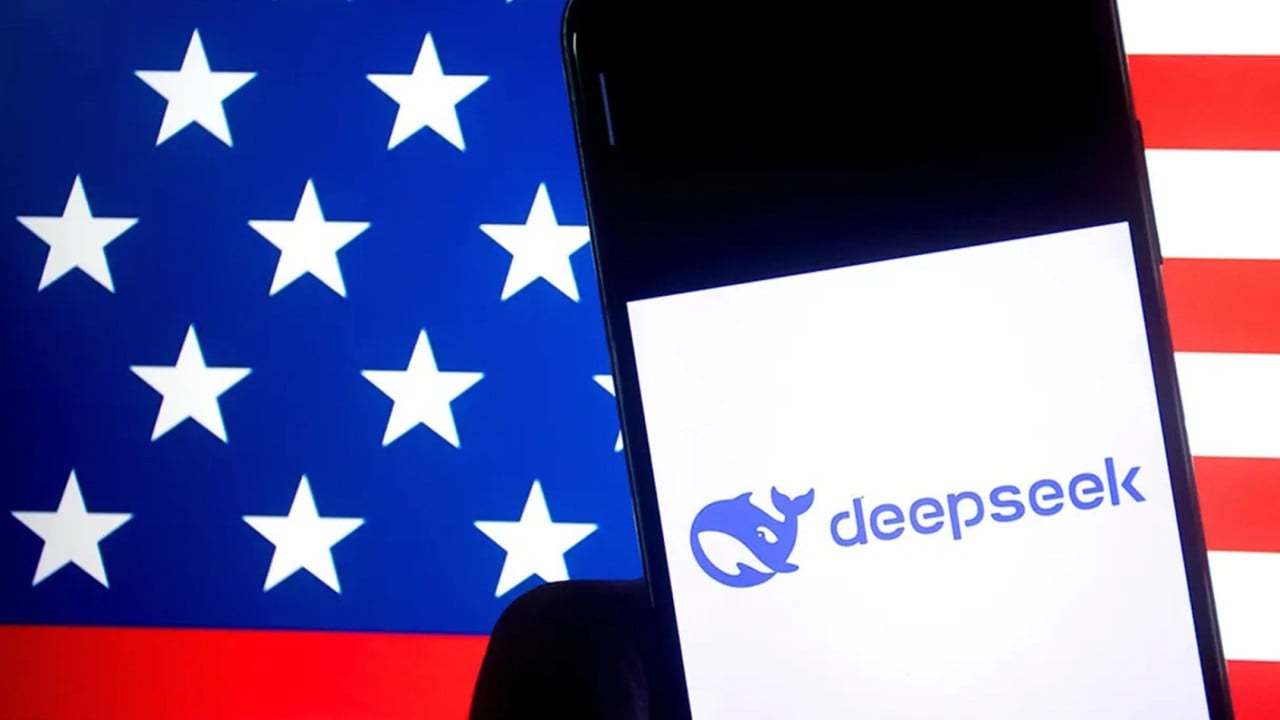
Citing national security concerns, the US government has ordered federal civilian agencies to remove DeepSeek products and any third-party services developed using the Chinese artificial intelligence model from their information systems.
In a notice made public on Monday, the Department of Homeland Security (DHS) also barred agencies from acquiring DeepSeek products and services, including those developed by affiliated entities.
The notice said that using the company’s products “may result in the transfer of sensitive data to the PRC if used by US government employees or vendors”, adding that the models “themselves may contain malware or other security vulnerabilities”.
The underlying order was signed by Homeland Security Secretary Markwayne Mullin on July 24.
The Chinese embassy in Washington did not immediately respond to a request for comment.
DeepSeek shook up global markets and the AI industry in 2025 with the release of its R1 model. US President Donald Trump called the breakthrough a “wake-up call” for America’s tech sector.
02:46
Beijing bar serves customers drinks and access to AI models
The start-up has since faced scrutiny from Washington policymakers who see its Chinese ownership as a threat to America’s national security.
The House Select Committee on China published a report in April 2025 claiming DeepSeek represented a “profound threat to our nation’s security”.
In June 2025, US lawmakers introduced the “No Adversarial AI Act” that sought to restrict the federal use of China-linked artificial intelligence tools such as DeepSeek.
“We are in a new Cold War – and AI is the strategic technology at the centre,” said committee chairman John Moolenaar after the act was announced.
At the time, Liu Pengyu, a spokesperson for Beijing’s embassy in the US, told the South China Morning Post that Congress’ allegations of Chinese technology theft were “nothing but slander and smears”.
“China actively promotes innovation in artificial intelligence, and places high importance on AI safety and ethics,” Liu said in an emailed response.
A separate bill, called the “No DeepSeek on Government Devices Act”, was also introduced in the House of Representatives in February 2025. A Senate version followed later that month. The bipartisan legislation seeks to ban DeepSeek from federal government devices.
SCMP Plus is a new premium news platform that gives you an
all-inclusive edge to stay ahead on China news.
To access our exclusive content you’ll need to subscribe.
Already a subscriber?
LOG IN
Monday’s announcement is part of a broader effort by the Trump administration to restrict Chinese technology as the two countries compete for global AI leadership.
Several other federal agencies, including the Department of Commerce and the Navy, have restricted the use of DeepSeek on government devices.
Meanwhile, DeepSeek topped a “trending software vendors” list from New York-based corporate spending platform Ramp in June 2026, as US businesses seek more affordable alternatives to expensive American AI providers such as OpenAI and Anthropic.
“In probably the biggest sign that companies are looking for cheaper alternatives to OpenAI and Anthropic, some are willing to use cheaper, Chinese models, sending US data back and forth from China-hosted servers,” said Ara Kharazian, lead economist at Ramp Economics Lab, at the time.
KioskNews shows a cleaned-up reading view extracted from the publisher’s page — the original always lives on their site, not ours.