Adam Pankratz: David Eby’s new big idea — food shortages
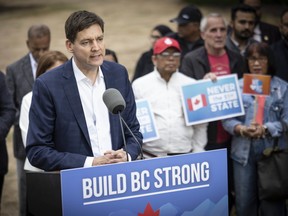
David Eby has looked at his election campaign struggling to find its feet and decided that while socialism is good, even more socialism would be better. And so, last week, British Columbia’s stumbling premier announced a cap on corporate grocery profits on milk, eggs, butter, cheese, chicken and turkey. How this will actually address the affordability crisis that has flourished under Eby’s watch is unclear. What is, however, clear is that under Eby no private business will be permitted to move or operate without government restrictions, involvement or extra taxes.
Sign In or Create an Account
At his news conference Eby did not spell out exactly what capping profits entailed, but one must assume it means price controls. This is for a simple reason. There are ultimately only three ways any corporation can raise its profits: sell more, raise prices or cut costs. Presumably, Eby isn’t going to stop stores selling more if British Columbians want more butter on their bread, nor can he lower a store’s input costs. This means price controls are the only mechanism left to achieve his profit cap goal. Welcome to Soviet British Columbia.

Columnist Jesse Kline keeps you up to date with what’s happening in Israel and the effects of antisemitism on life here in Canada. Friday mornings.
By signing up you consent to receive the above newsletter from Postmedia Network Inc.
A welcome email is on its way. If you don't see it, please check your junk folder.
The next issue of Channel Israel will soon be in your inbox.
We encountered an issue signing you up. Please try again
Price controls have widely been shown by economists to have significant negative effects on an economy as well as the people they are purported to benefit. The reason is straightforward: by artificially capping prices, transactions which would otherwise occur at the higher, market price are not realized. Without a clear price signal (and thus profit incentive) the market will not produce the correct amount of the price-controlled product. As a result, the market will be undersupplied for the products it would otherwise purchase. True demand, in other words, will not be met. This has consequences, and they are not good.
What Eby’s grocery store folly would mean in practice for British Columbians is that grocery stores will shift away from selling the correct, market demanded amount of milk, eggs, butter, cheese, chicken and turkey, and focus on selling other products at likely higher prices to make up for their profit shortfall in the price-controlled areas. The result is terrible for consumers and families. Those who can quickly get the products they want before the stores run out may have lower prices, but families who aren’t as fast won’t get anything because the product doesn’t exist in sufficient quantities to meet market demand. Lower prices resulting in empty shelves isn’t a solution to anything.
David Eby’s economics are both further ludicrous and insulting. Ludicrous because Canadian grocery store profits are extremely low already. In 2025, Loblaws, for example, noted that margins in the sector average three to four per cent. This is not indicative of an industry which is gouging consumers, but rather one which operates extremely efficiently in a competitive, price sensitive market.
The insult comes from Eby choosing to aim his fire at Save-On-Foods, locally owned by B.C. billionaire Jimmy Pattison. Pattison is rich, yes, but also extremely philanthropic. He has donated over $200 million to hospitals and health care facilities, including a $75 million dollar donation to Vancouver’s St Paul’s hospital in 2017. That donation is a Canadian record. Eby doesn’t care because Pattison is rich and therefore by definition evil.
This default move to restrict the open market and despise the successful is a hallmark of what David Eby’s NDP is all about. To address the Vancouver housing crisis, Eby has proposed taxing newly built, unsold condo units. He has claimed developers are “hoarding” the apartments. As with the grocery stores, he says that he is “standing up to developers.” In reality this is just more economic lunacy.
Developers aren’t “hoarding” condos. They can’t sell them because the economic conditions of the province Eby and the NDP have presided over for nine years is so bad there are no buyers. Just as capping grocery profits doesn’t solve the affordability crisis and can create artificial market shortages, all taxing new developments achieves is to create a disincentive for developers to continue building, knowing that any empty units could be subject to Eby’s unsold condo tax. The result is fewer new units coming on the market and an even worse housing crisis in the future.
David Eby’s anti-Trump campaign message for his unnecessary election has fallen flat with British Columbians. In response he is flailing around in a desperate attempt to find something that might stick. So far, all Eby has found to offer British Columbians is more taxes and Soviet-inspired price controls. None of these policies address the real problems British Columbians are facing and only shine a spotlight on how Eby’s government is completely out of ideas.
National Post
Adam Pankratz is a lecturer at the University of British Columbia’s Sauder School of Business.
Join the Conversation
This website uses cookies to personalize your content (including ads), and allows us to analyze our traffic. Read more about cookies here. By continuing to use our site, you agree to our Terms of Use and Privacy Policy.
KioskNews shows a cleaned-up reading view extracted from the publisher’s page — the original always lives on their site, not ours.