Brussels wants industry to ditch Chinese suppliers. Businesses are pushing back
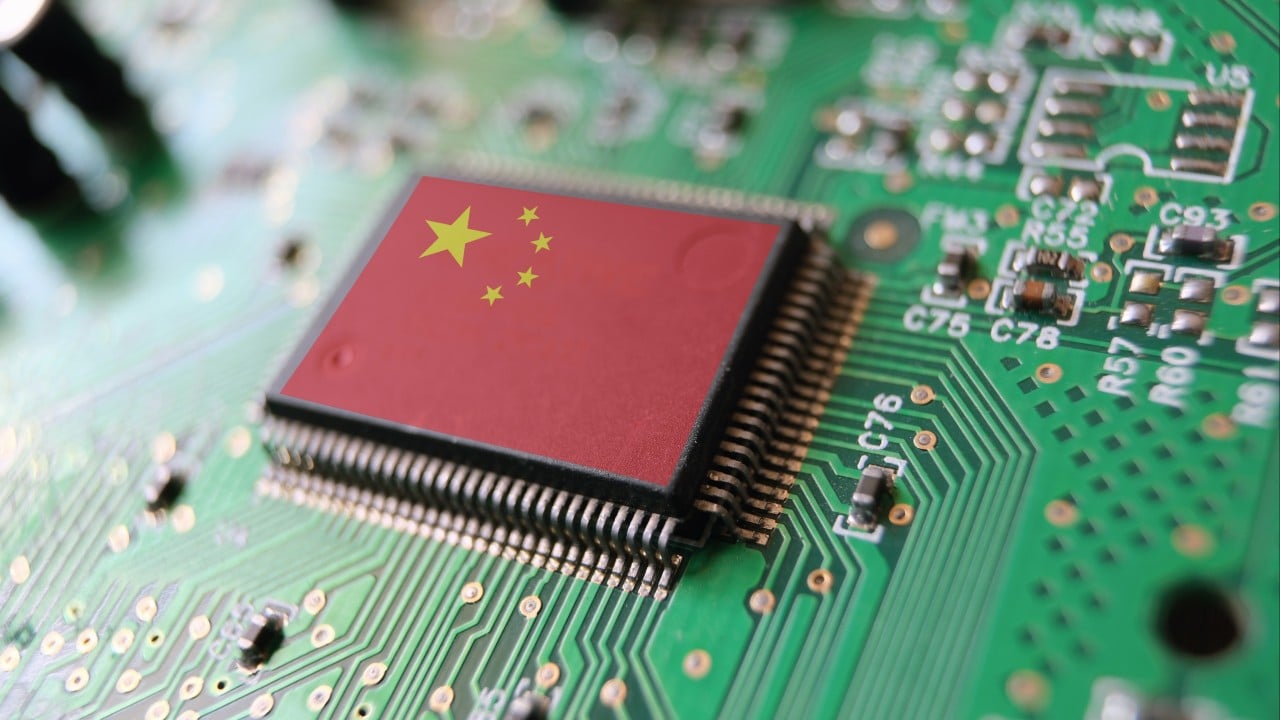
European industry has bristled at EU plans to force businesses to diversify their supply chains away from China, as the bloc gears up for a new package of de-risking measures later this year.
In December, the European Commission will present a trio of new instruments, none of which will name China, but the overall aim is to wind down dependencies on Beijing and allow the EU to punch back in a trade war scenario.
One tool – DiversifyEU – could compel businesses in key sectors to expand their supplier base, potentially through the use of tariffs or by incentivising via access to public contracts and subsidies.
A second instrument – a solidarity mechanism – will provide a pool of compensation for businesses subject to retaliation in a trade dispute. The third will be a rapid response trigger to close the EU market to countries engaged in active distortion or coercion.
But a plethora of business groups and big name individual companies have pushed back against the plans, accusing Brussels of regulatory overreach, potentially driving up costs and forcing them into impossible decisions.
02:05
Emboldened EU readies China company ‘kill switch’ as Beijing warns Brussels not to ‘fantasise’
“For rare earths, magnets, battery materials, displays and some semiconductors, there is little or no alternative supply base, and Europe lacks the ecosystem to provide one,” said the European Automobile Manufacturers’ Association (ACEA) in a submission to the commission’s request for evidence for DiversifyEU.
“The objective should be realistic: Europe will not match Chinese costs or become fully independent of China, nor does it need to … diversification succeeds where alternatives are commercially viable and qualified; it does not where it is mandated against a supply base that does not yet exist,” the ACEA wrote.
The Federation of German Industries – which has generally supported the EU’s tougher approach to China policy – said it viewed the plan “with scepticism”.
“While we support the goal of strengthening diversification and resilience, we oppose new reporting requirements or binding mandates. We also consider tariffs, which are currently being discussed in this context, to be an inadequate tool for promoting diversification,” read the feedback from the powerful German lobby group.
European Commission President Ursula von der Leyen confirmed this month that DiversifyEU “will be country-agnostic, and help European companies diversify their supply chains. The principle is simple – no critical dependence on a single supplier”. It is understood that these plans will be presented on December 9.
Behind the scenes, officials are happier to admit that their main concern is China. European companies are seen to have been too slow to voluntarily broaden their supplier base, leading to deep reliance in sectors that officials worry can be easily weaponised. Now, regulators want to step in to force their hands.
The feedback demonstrated, however, the challenges they will face in protecting industry from the market distortions coming from China without penalising European companies in the process.
SCMP Plus is a new premium news platform that gives you an
all-inclusive edge to stay ahead on China news.
To access our exclusive content you’ll need to subscribe.
Already a subscriber?
LOG IN
Many of the organisations that responded have come around to the idea of a more robust approach to China.
German car companies, for example, have recently lent qualified support to the use of tariffs and quotas against Chinese rivals, but a submission from the official industry association warned that “diversification must not become synonymous with autonomy, protectionism or economic isolation”.

Dozens of submissions offered support to the overall goal of broadening supplier bases, but there was widespread doubt as to the feasibility.
“As Europe cannot regulate alternative supply into existence, DiversifyEU should focus first on creating qualified, scalable and competitive alternatives, and sequence any restrictive or mandatory measures accordingly,” said Traton Group, a subsidiary of German car giant Volkswagen.
Finnish telecoms company Nokia warned that “imposing trade restrictions, component bans, or tariff-driven cost increases before alternative sources exist merely penalises trusted vendors and inflates costs for critical digital infrastructure”.
Orgalim, a Brussels group representing the European technology industry, said that “sourcing obligations introduced without a prior assessment of viable alternatives and/or adequate transition periods will most likely backfire”.
The group noted that “identifying suitable alternative suppliers does not always reduce underlying dependencies” since the alternatives may also be reliant on supplies from the original supplier country.
Referring to the plans to create a solidarity fund for companies caught in the crossfire of future Chinese retaliation, meanwhile, the German Chamber of Commerce warned that “a blanket compensation fund can create false incentives and should not replace companies’ own risk provisioning”.
Across hundreds of submissions, dozens raised the potential of the legislation to increase costs for European industry at a time when it is already struggling to compete with cheaper Chinese imports.
Furniture retail giant Ikea warned that “higher costs and less reliable supply make it harder to keep our range affordable and available for the many people”.
“For Ikea, the obstacle to faster diversification is not a lack of price signals. Supply risk is already part of our sourcing decisions, which is why we build supplier networks across multiple geographies. What limits the pace is the time and investment needed to develop alternative suppliers at the required scale, quality and cost,” the Swedish firm wrote.
German telecoms tower operator Vantage Towers said “abrupt changes in sourcing requirements can generate significant replacement costs and deployment delays without immediately creating alternative supply options”.
Nonetheless, political support behind the measures is gathering. At this month’s European Council summit in Brussels there was no pushback from the bloc’s 27 member states as von der Leyen laid out her plans for the geoeconomic package.
This is despite many of those same capitals supporting a drive to bolster EU industry through cutting red tape and slashing reporting requirements. For example, rules around supply chain auditing and deforestation have been gutted following corporate complaints.
KioskNews shows a cleaned-up reading view extracted from the publisher’s page — the original always lives on their site, not ours.