Asian-Americans rejected Trump’s ICE raids, but will anything change?
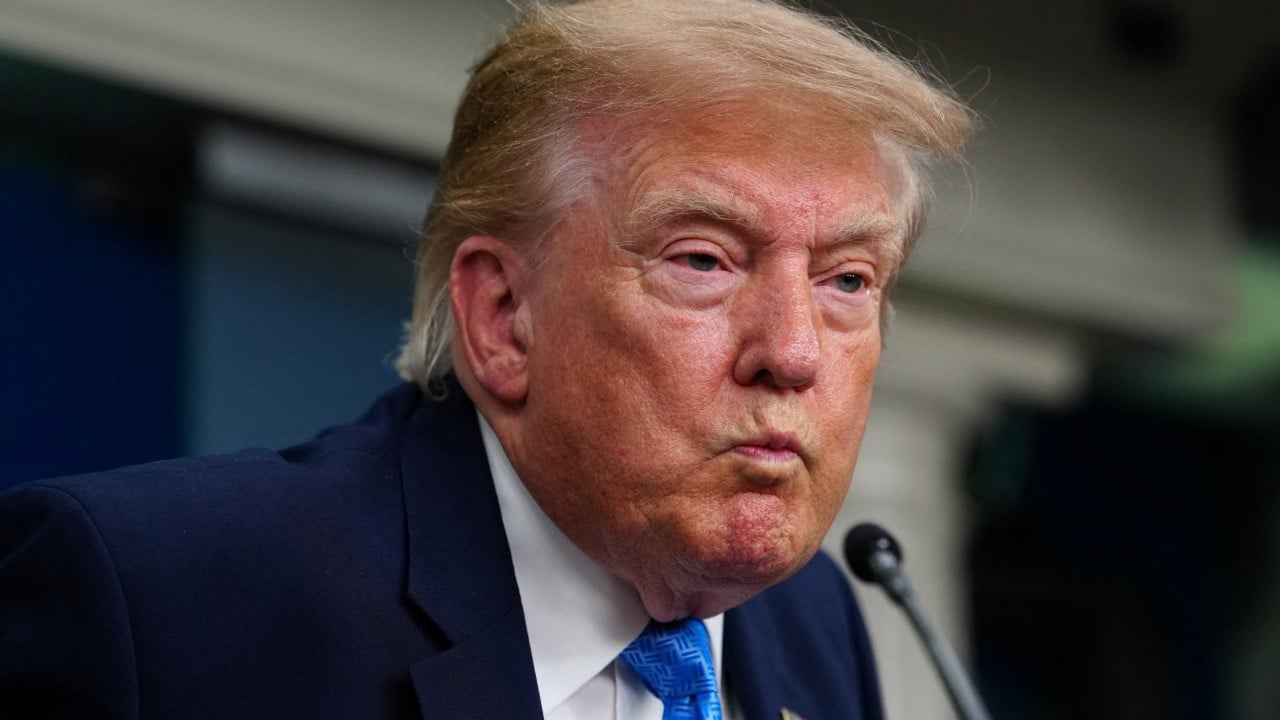
US President Donald Trump has conceded that his mass deportation drive may have been “too tough” after his Republican Party’s heavy losses in the midterm elections, but analysts doubt the remark signals a change of policy.
Asian-Americans, who were among the communities heavily targeted in the immigration crackdown, swung sharply towards the Democrats on November 3.
Trump made the comment in an interview with CBS’ 60 Minutes programme, recorded after the vote. Democrats won control of both chambers of Congress, riding a wave of anger over the economy and higher prices linked to the unpopular war with Iran.
Analysts say Trump’s heavy handed immigration crackdown, marked by indiscriminate raids, aggressive enforcement and draconian legal penalties, also played a part.
It helped Democrats win even in states that had voted Republican for decades, said James Zarsadiaz, an associate professor of history at the University of San Francisco who studies conservatism among Asian-Americans – citing Kansas, South Carolina and Texas, in particular.
In a voter poll published on Thursday, civil rights group Asian Americans Advancing Justice found that about 89 per cent of Asian-American and Pacific Islander (AAPI) respondents wanted changes to the US immigration system, suggesting this “was a key issue influencing their vote”, Zarsadiaz said. The poll surveyed 2,130 AAPI voters.
Vincent Wei-cheng Wang, a political scientist and former dean of Adelphi University’s College of Arts and Sciences in the US, said Trump’s remark was a reflection of the fact that immigration “was one of the top factors for the election defeat”, alongside the cost of living and the war.
Other than Latino voters, Asian-Americans swung the furthest from Republicans to Democrats in the polls, said Valerie Francisco-Menchavez, a sociology professor at San Francisco State University.
She said raids by Immigration and Customs Enforcement (ICE), the federal agency that arrests and deports immigrants, had not only hit communities with “large numbers of undocumented immigrants” but also led to the detention of citizens.
“So it makes sense that the Asian-American swing would go towards Democratic votes,” she said.

Zarsadiaz said the ICE raids and detentions – and the deaths linked to them – had “horrified people across the country”, even those who would have typically backed Trump on immigration. Democrats, many independents “and even some Republicans” saw the crackdown as “haphazard, indiscriminate and cruel”, he said.
At the peak of the immigration raids this summer, tens of thousands of people were being detained every month, with The New York Times reporting in August that asylum seekers, people with temporary legal status and those married to US citizens were also being targeted.
Meanwhile, the share of detainees with a previous violent criminal conviction – the supposed focus of the crackdown – fell below 4 per cent.
Stop AAPI Hate, a US non-profit coalition, reported in September that ICE arrests of Asian immigrants had surged 436 per cent, and deportations 1,103 per cent, in the first 80 weeks of the second Trump administration, compared to an equivalent time period under Joe Biden.
ICE arrested 1,950 Asian people in July, the coalition found, the most in any month of Trump’s second term. Immigrants from India and China accounted for the largest share of those detained and deported, followed by Vietnam, Uzbekistan and Laos.

Will anything change?
Analysts say Trump’s appointment of Stephen Miller, widely regarded as the architect of his immigration policy, as White House chief of staff after the midterm defeat points to the crackdown continuing.
Wang said a Democratic-controlled Congress had raised hopes of cross-party cooperation to rein in the president’s worse impulses, but Miller’s elevation now “raises the spectre of his doubling down on his policy agenda” in the final two years of his term.
He expects lawful immigration enforcement to continue, even as the excesses of the past two years are likely to diminish.
Other observers were not so sure. Francisco-Menchavez said Miller’s appointment did “not bode well” for any “easing of the criminalisation of immigrants” in the near term.
“Unpredictability has been this administration’s modus operandi,” Zarsadiaz said, noting that Trump had said he would work with the Democrats while “in the same breath” vowing to veto legislation introduced by them. “In other words, it’s too soon to tell.”
Unpredictability has been this administration’s modus operandi
Proposed legislation, such as the Abolish ICE Act introduced by a Democratic representative in January, remains stalled at the committee stage and will take time to pass even if picked up by the Democratic-led Congress once it takes its seats come January.
Chaumtoli Huq, a professor of law at the City University of New York School of Law, said Democrats could “put the brakes on aggressive enforcement policies” sooner by using Congress’ control of funding and its oversight powers.
“A lot of funds were put behind ICE enforcement, including hiring untrained agents,” she said. “The agency staff can be reduced with a goal of total abolition.”
Democrats faced a difficult choice when it came to exercising their new majorities in both houses of Congress, Zarsadiaz said.
“On the one hand, promises to end cronyism through congressional probes or a possible third Trump impeachment motivated voters to back Democrats,” he said.
“On the other … this new batch of elected Democrats hopes to focus on the kitchen-table issues that swept them into office and some fear that relitigating the past could backfire on them.”
If the party could resolve this issue by successfully linking corruption and the defence of democracy to affordability and quality of life then they would “truly walk and chew gum at the same time”, he added.
KioskNews shows a cleaned-up reading view extracted from the publisher’s page — the original always lives on their site, not ours.