Bare metal boom: On-prem server sales for HPC and AI up 20% this year
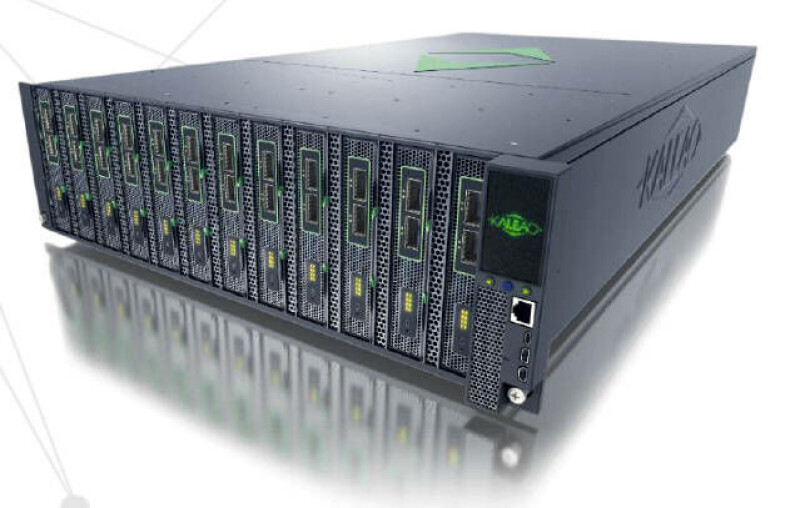
Firms still want kit on-premises, but spike in revenue is as much about increased costs as higher sales
On-premises high-performance compute (HPC) is still in demand, according to Hyperion Research, which estimates the market is expanding at almost 20 percent year-on-year, often driven by requirements for AI processing.
What Hyperion calls the "on-premises HPC and AI-for-Science" server market showed significant growth in the first half of 2026, with revenues hitting $16.5 billion, up 19.9 percent.
However, the analyst says unit shipments over the same period grew only 4.4 percent, meaning that systems are carrying a higher price tag due to greater use of costly components such as GPUs and other accelerators, not to mention the effects of higher memory costs, which have tripled or quadrupled since last year.
REG AD
Its tracking of the HPC market is based on multiple surveys conducted of both buyers and suppliers, the firm says. The latest data shows a major change in the overall HPC market growth, heavily driven by a combination of the use of AI, large language models (LLMs), and purchases of large GPU/accelerator-based systems.
REG AD
This trend was noted a couple of years ago, with Omdia reporting in 2024 that revenue growth from server sales was racing ahead of actual units shipped, as customers prioritized investment in highly configured server clusters for AI.
Much of that spending was by hyperscalers and cloud providers, seeking to profit from selling AI services to enterprise customers, but Hyperion’s figures focus on on-prem shipments, showing that many enterprises prefer to do their processing in-house.
According to Hyperion, Dell has now surpassed HPE as the biggest HPC vendor, with server revenues of $4.2 billion for the first half of 2026. HPE, which picked up supercomputing specialist Cray for $1.3 billion in 2019, had long been pack leader in the global HPC arena in terms of market share and revenue.
The figures put Dell on a 24 percent share, while HPE is not far behind on 21 percent. Lenovo and China-based Sugon trail behind at 4 percent share each, while 45 percent of the market is just labelled as "others" by Hyperion. This includes names such as Bull, which re-emerged from the shadows of Atos this year, plus Supermicro, Penguin Computing, and NEC.
The HPC infrastructure market is inherently cyclical. HPE recognized significant revenue in 2025 with sales of multiple exascale-class leadership machines, but procurement of that scale is intermittent and doesn't necessarily come along every year, Hyperion notes.
"Organizations and institutions are continuing to invest in their advanced computing infrastructure due to both replacing aging machines and the desire to adopt AI into their workflows to support their businesses and missions," said Hyperion Research CEO Earl Joseph.
"The growth reflects both a nominal increase in units being purchased and significant increases in system prices."
HPC systems are considered the backbone for many AI and AI-related applications, which has driven the overall HPC market to a new growth level, Joseph added. ®
KioskNews shows a cleaned-up reading view extracted from the publisher’s page — the original always lives on their site, not ours.