7 Great Fantasy Books Where Every Chapter Is Perfect

Jeremy has more than 2800 published articles on Collider to his name, and has been writing for the site since February 2022. He's an omnivore when it comes to his movie-watching diet, so will gladly watch and write about almost anything, from old Godzilla films to gangster flicks to samurai movies to classic musicals to the French New Wave to the MCU... well, maybe not the Disney+ shows.
His favorite directors include Martin Scorsese, Sergio Leone, Akira Kurosawa, Quentin Tarantino, Werner Herzog, John Woo, Bob Fosse, Fritz Lang, Guillermo del Toro, and Yoji Yamada. He's also very proud of the fact that he's seen every single Nicolas Cage movie released before 2022, even though doing so often felt like a tremendous waste of time. He's plagued by the question of whether or not The Room is genuinely terrible or some kind of accidental masterpiece, and has been for more than 12 years (and a similar number of viewings).
When he's not writing lists - and the occasional feature article - for Collider, he also likes to upload film reviews to his Letterboxd profile (username: Jeremy Urquhart) and Instagram account.
He has achieved his 2025 goal of reading all 13,467 novels written by Stephen King, and plans to spend the next year or two getting through the author's 82,756 short stories and 105,433 novellas.
Sign in to your Collider account
It’s a pretty easy observation to make that fantasy is a rather big deal, if you're looking at literary genres in particular, but that doesn’t make it wrong. Obvious, yes, and undeniably right all at once. People have always seemed to dig stories about unusual landscapes/worlds, otherworldly creatures, and other magical things that can’t really be explained or understood without looking at them through a fantastical lens.
There are so many fantasy books, as a result, but what about absolutely perfect ones? They are admittedly harder to come by, but they do exist, as the following titles demonstrate. These aren’t the only great fantasy books that have nothing but perfect chapters, but they are some that can be characterized as such (so, not an exhaustive or objective list, by any means… more just seven really great fantasy novels, in the opinion of one humble/overly-caffeinated writer).
7 'Mistborn: The Final Empire' (2006)

Now, this book is part of a trilogy that eventually gets apocalyptic and truly grand in scope, and then also, the trilogy isn't really where things end, since Brandon Sanderson has made Mistborn a whole series at this stage… but there is an original trilogy, like Star Wars or whatever, and the best entry in that original trilogy is The Final Empire. Despite the word “Final” being in the title, it’s the first book of said trilogy.
What can be said is that this is probably more of a dystopian fantasy novel than a full-on post-apocalyptic one, and also, it’s a bit of a heist-type book at the same time.
It’s also something of a prologue for the rather wild things that happen in books #2 and #3, albeit in ways that are hard to describe without spoiling things. What can be said is that this is probably more of a dystopian fantasy novel than a full-on post-apocalyptic one, and also, it’s a bit of a heist-type book at the same time, too. The Final Empire is a great time, and a rather effortless read, holding up as maybe the best thing Sanderson has ever written, Mistborn-related or otherwise (and an understandable hard novel to top, as a result).
6 'Northern Lights' (1995)
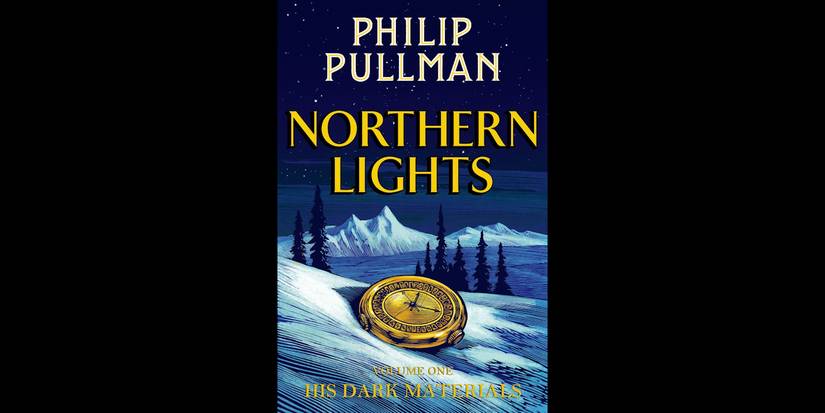
Sometimes known as The Golden Compass, Northern Lights is the official title for the first book in the His Dark Materials series, but also, like Mistborn, His Dark Materials is a saga that was originally a trilogy, but has grown beyond that. But the stuff beyond Northern Lights isn't as important, for present purposes, because the two other books in that original trilogy aren’t quite as perfect, and then the books beyond that… eh, that’s a conversation for another time altogether.
With Northern Lights, you have a bit of a coming-of-age story set in a very strange but well-constructed fantasy realm, and then there are tons of great side characters and a conflict that gets off to a very intriguing start, all the while getting wilder and bigger in scope later on. This one does the most things right of the bunch, and is easily the most effortless read, not to mention standing as a book that’s great regardless of how old you might be when you sit down to read it.
5 'IT' (1986)

Yes, it’s more horror than fantasy, but IT does lean into the latter genre more than most other supernatural horror books Stephen King has written, with the massive page count here being an undeniable factor as to why that’s possible. There are more than 1000 pages to IT, and it takes place partly in the 1950s and partly in the 1980s, plus it also finds time to explore the history of the very cursed town of Derry further back in time.
Throughout, it’s undoubtedly gripping and unsettling, and then as it approaches its rather gonzo conclusion, it also incorporates more fantasy elements that tie IT to the overall Stephen King multiverse. You really do get a bit of everything here, and some might say that’s for better or worse, but the person typing these words is of the opinion that it’s all for the better, rather than the worse. IT rocks.
4 'A Storm of Swords' (2000)

It’s easy to fault parts of the TV series adaptation of A Song of Ice and Fire, since Game of Thrones had its final few seasons prove quite controversial (to put it very mildly), but if you're looking at the books, they're yet to truly fail. Maybe the fact they haven’t ended yet is something of a failure, if you want to be cynical (or realistic) about the chances of George R.R. Martin ever concluding it, but for now, the five books all have things to offer, undeniably.
But it’s A Storm of Swords, which is the third of the bunch, which is going to be singled out here thanks to it containing the most by way of great stuff. Lots of the conflict built up throughout books #1 and #2 gets paid off here excellently, with some of the most exhilarating and distressing chapters in the history of A Song of Ice and Fire co-existing side-by-side in bizarrely perfect harmony. This is representative of the series at its absolute best, and remains Martin’s masterpiece.
3 'The Odyssey' (8th Century BC)
Books don’t get much older than The Odyssey, to the point where calling it a book might be a bit inaccurate, since it was originally performed and appreciated that way, rather than being strictly written down. Still, it’s recognized as one of the oldest and greatest works of literature, and can indeed be read nowadays, so it feels like a rather obligatory pick, for present purposes.
The Odyssey also feels like it does a lot more than “just” fantasy, genre-wise, and describing it as such feels like underselling the whole thing. It influenced so much in terms of fantasy that came after it, and then it’s also groundbreaking as far as adventure and war-related narratives go, while breaking quite a bit by way of ground when it came to various other genres, too. If you weren’t made to read it in high school, it’s still very much worth seeking out and reading (or listening to) nowadays, owing to the timelessness of it all and stuff.
2 'The Stand' (1978/1990)
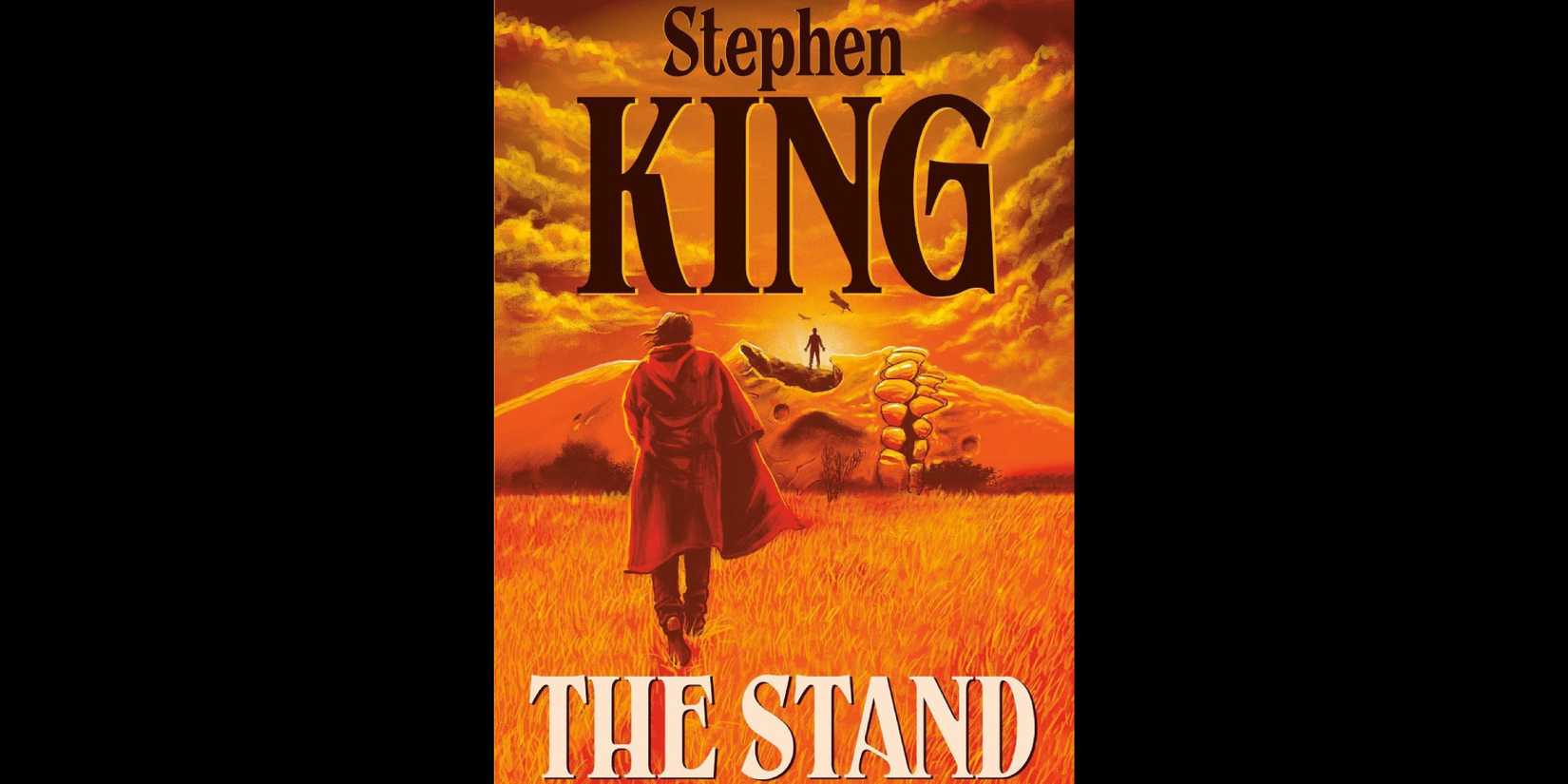
IT was Stephen King flirting with fantasy, but The Stand saw him embracing it fully, albeit it’s dark fantasy for sure here. It’s a post-apocalyptic novel that stays away from science fiction more so than most, but you could potentially still call it a little sci-fi-ish if you wanted to, just because of that end of the world stuff it’s got going for it, and then there are ties here to The Dark Tower, and that series is one that blurs sci-fi and fantasy pretty compellingly throughout.
But with The Stand, most of it’s fantastical, and once the world ends (and most of the population’s devastated), it’s also about a battle to control what’s left of the planet’s future, fought between one side made up of people who are good of heart, and the other side made up of more flawed people who have their flaws exploited. It sounds cheesy when you try to summarize it in less than 200 words, but in execution, it’s phenomenal, and well and truly one of the very best things Stephen King has ever written.
1 'The Lord of the Rings' (1954–1955)

Unlike with Mistborn and the His Dark Materials series, The Lord of the Rings is technically just the one novel, albeit a massive one that was originally divided up into three books, and then the fact that it was made into a massive film that was split into three furthered the idea that it was a trilogy. You can call it one if you want, but J.R.R. Tolkien did write it as one huge novel, and the “series” it belongs to expands beyond The Lord of the Rings without anything else technically being called “The Lord of the Rings.”
This book’s got it all, and to an even greater extent than you might expect for something more than 1000 pages long. It is the definitive fantasy epic, and it stands as truly impressive because it stays great for such an incredibly long stretch of time. There are no faults to be found with The Lord of the Rings, and re-reading it – or diving into other works of Tolkien’s that involve Middle-earth – just makes it all the more impressive and rewarding.
KioskNews shows a cleaned-up reading view extracted from the publisher’s page — the original always lives on their site, not ours.