Murder in Belfast: Sisters Seeking Justice review – a family’s astonishing bravery helped make history

The documentary Murder in Belfast: Sisters Seeking Justice, about the McCartney siblings’ fight to bring their brother’s killers to justice, makes you wonder. As it outlines the five women’s ceaseless, fearless actions over the last 20 years, you can’t help but ask: when did the IRA and Sinn Féin realise they had picked on the wrong family to cross?
Robert McCartney, a Catholic father of two, was 33 when he was killed in 2005. He was trying to extricate his friend Brendan Devine from a brawl involving members of the local Provisional IRA at Magennis’s bar in the nationalist Short Strand area of Belfast, where the McCartney family had lived for five generations. Devine was seriously injured. Robert was stabbed, brutally beaten and had an eye gouged out. “I’m not going to make it,” he told Devine as they tried to escape the alleyway in which they had been attacked. “Our Gerard needs me. I have to go.” (Gerard McCartney was Robert’s brother, who had killed himself a few years earlier after struggling with mental illness.)
Soon after uttering those words, Robert died in hospital. “Utter disbelief,” says Gemma, the eldest of the sisters, as she remembers realising that she would have to tell their parents another son was gone. “The two most tragic ways to die – and we’ve got both?”
There were about 70 people in Magennis’s that night and – thanks to a campaign of intimidation by the IRA – no witnesses. Apparently, they had all been in the toilet at the time. Instead, the bar was cleared of all forensic evidence – glass swept up, bloodstains bleached, CCTV tapes removed – and a wall of silence erected. “Like a bloody cult,” says Donna, one of Robert’s sisters. Everyone knew what had happened – “the dogs in the street knew who was involved”, as Bertie Ahern, Ireland’s prime minister at the time, puts it – and names were gathered by the family, but without physical evidence or witnesses nothing could be done.
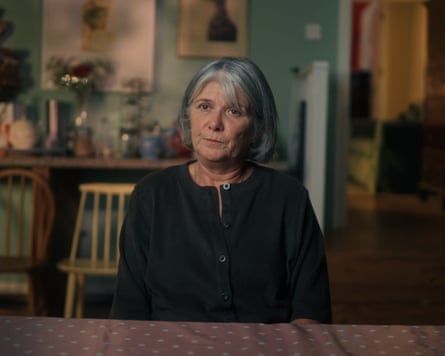
The first hour of this three-part series concentrates largely on the impact on Robert’s family – sisters Gemma, Paula, Donna, Catherine and Claire, and his cousin Gerard Quinn all appear – and friends, including Devine. The remaining two episodes chart the sisters’ refusal to give in to the IRA’s wishes, the Police Service of Northern Ireland’s frustrated investigations as Sinn Féin refused to allow its members to confess to involvement or come forward as witnesses to the police (such is the tentacular reach and power of the party in a place where religion, politics and history are so enmeshed). We see what the family’s astonishing determination and bravery eventually meant for the peace process in Northern Ireland.
A few weeks after the murder, Sinn Féin invited the sisters to its annual conference. The sisters knew it was in the hope of placating them (“It’s like being lovebombed,” says Claire. “Meant to get swept away, aren’t you?”) and of getting a propaganda coup from appearing to have their support as its leader Gerry Adams paid lip service to the idea of witnesses coming forward. What the party got instead was a televised shot of the sisters lined up in the front row refusing to join in the applause that greeted his speech.
The usual playbook wasn’t working. Just as the sisters refused to be intimidated, they also refused to be charmed. They stepped up the publicity. “I was too angry to be afraid of the IRA,” says Catherine. “I still am.” A few months after the murder, they went to the US to meet President George Bush and senators including Hillary Clinton and Ted Kennedy, while Adams was refused an invitation to the White House. It was a signal to the party that the US required them to start doing more to move towards genuine conciliation and power-sharing with the British government.
On and on through the years it went, with the IRA and Sinn Féin gradually having to cede enough ground to enable a court case to be brought against three men in 2008, although it fell apart due to the continuing flimsiness of the physical evidence and flawed witness testimony.
The sisters still look shattered by their ordeal. They are clearly mired in many kinds of grief – for their brother, for the homes they had to move out of after the killing, for the community they had once believed in unquestioningly – although they say they still gain comfort from the memory of the vigils held and the rallies attended following Robert’s death.
The McCartney sisters are inspiring, but Murder in Belfast is not a heartening story. It is a reminder of the undemocratic, unaccountable powers still at work across the Irish Sea and how long the evil that men do – British, Irish, Protestant, Catholic – lives after them.
KioskNews shows a cleaned-up reading view extracted from the publisher’s page — the original always lives on their site, not ours.