‘Systematically dismantled’: Hegseth’s new offensive against China’s Confucius Institutes
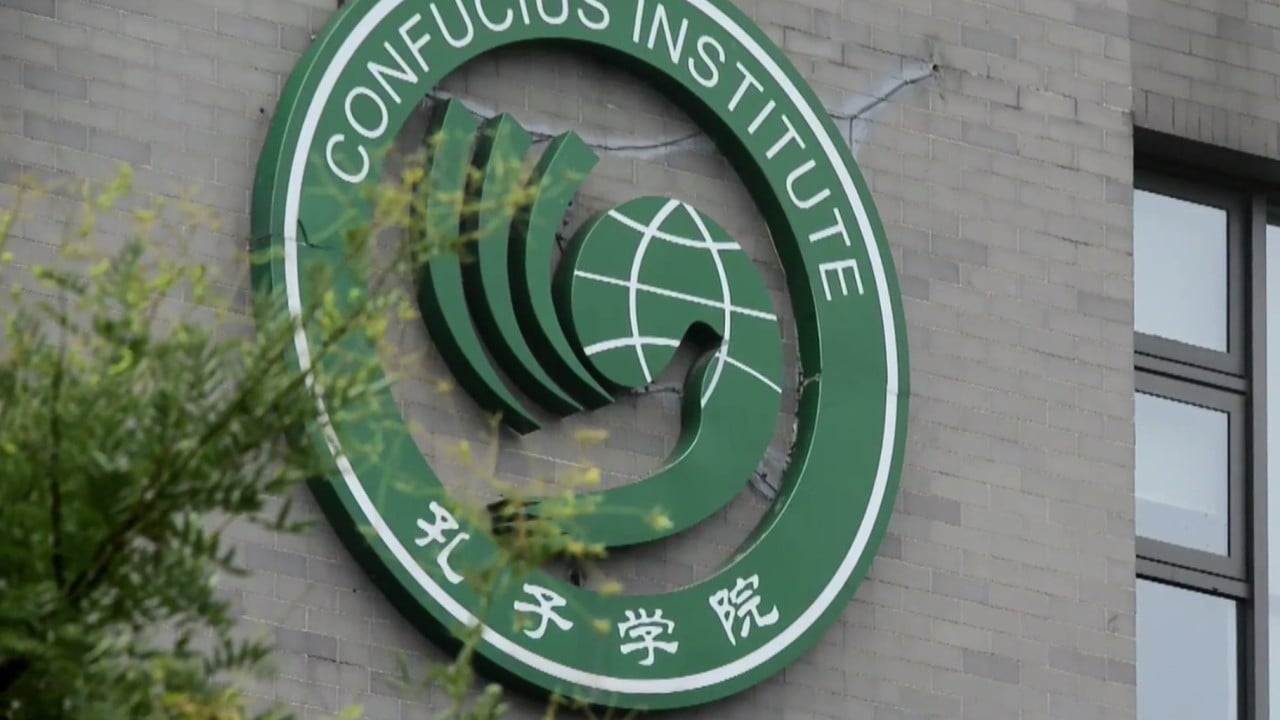
Just weeks before Donald Trump’s second trip to China this year and his third meeting with President Xi Jinping, whom he has called a “truly great” friend, his administration is intensifying its crackdown on Confucius Institutes – Beijing-backed centres that promote Chinese language and culture at universities abroad.
Long viewed by critics as instruments of Beijing’s soft power and cultural diplomacy, the institutes are back in the crosshairs of US Defence Secretary Pete Hegseth, who says the Pentagon has “systematically dismantled” organisations that resurfaced under new names.
Hegseth announced on Friday that the Pentagon had added what he described as Chinese government-backed organisations operating on American campuses to its list of institutions deemed threats to national security.
“Eighty new propaganda cells across 30 universities had popped up using different names and different charters, but with the same mission: to steal intellectual property and to infiltrate the minds of American students,” Hegseth said in a video posted to his official “Secretary of War” social media account.
The department had spent the previous two months dissolving the organisations and had “systematically dismantled every single one”, he said.
Hegseth called the action a “lesson to any country trying to steal our hard-earned inventions or turn our young people against their own country”.
02:22
US defence chief Hegseth says Trump seeks ‘peace through strength’ in Shangri-La speech
The Chinese embassy in Washington did not immediately respond to a request for comment.
Launched by Beijing in 2004, Confucius Institutes promote Chinese language and culture abroad as part of China’s soft-power push. Their model is loosely comparable to institutions such as the British Council, Alliance Francaise and Goethe-Institut.
But critics have increasingly accused the institutes of serving the Communist Party of China’s United Front and influence operations, raising concerns over academic freedom, transparency and potential political interference.
By the late 2010s, Chinese official figures put the global network at roughly 500 to 550 institutes and more than 1,000 of the smaller Confucius Classrooms across over 140 countries.
After the first US institute opened at the University of Maryland in 2005, the network eventually expanded to over 100 institutes across American college campuses, alongside numerous Confucius Classrooms in primary and secondary schools.
US scrutiny intensified in the mid-2010s, with congressional restrictions on Defence Department funding to universities hosting the institutes, including measures in the 2019 and 2021 National Defence Authorisation Acts, adding to the pressure. Most US institutes closed or rebranded between 2019 and 2022.
“Thankfully, Congress banned them a few years ago, these Confucius Institutes, but they came back disguised in new forms,” Hegseth said, accusing the organisations of attempting to evade restrictions by adopting different names and charters.
SCMP Plus is a new premium news platform that gives you an
all-inclusive edge to stay ahead on China news.
To access our exclusive content you’ll need to subscribe.
Already a subscriber?
LOG IN
The latest crackdown comes as Washington and Beijing continue to explore areas for cooperation alongside their strategic rivalry.
Chinese Foreign Minister Wang Yi on Friday called for the two countries to work together on artificial intelligence (AI) development and governance, saying they “have both the capacity and the responsibility to work together” to ensure the technology “remains under human control and benefits people”.
Wang made the remarks during a meeting with John L. Thornton, co-chair of the Asia Society’s board of trustees, and New York Times columnist Thomas L. Friedman, who were visiting China to attend the Global Governance Forum near Beijing.
According to a Chinese foreign ministry readout, Thornton and Friedman said the malicious use of AI posed the greatest risk to building a constructive US-China relationship of strategic stability and expressed hope that the two global powers would strengthen cooperation.
Meanwhile, critics in the US welcomed Hegseth’s move as a long-overdue step against Chinese influence operations, whereas others who have worked closely with these institutes called it a strategic own goal.
Peter Mattis, president of the Jamestown Foundation, a Washington-based defence policy think tank, replied to Hegseth’s post directly, saying “the Confucius Institutes are part of a political apparatus the CCP [Chinese Communist Party] uses to ‘break and shatter the enemy’”.
“Keeping the pressure on the United Front system’s efforts to evade US countermeasures is an unequivocal good”, added Mattis, a former staff director of the Congressional-Executive Commission on China.
Denis Simon, former executive vice-chancellor of Duke Kunshan University, who was involved with three Confucius Institutes – at Pennsylvania State University, the University of Oregon and Arizona State University – argued that Washington had “sacrificed an important instrument of engagement with China”.
A 2023 National Academies of Sciences, Engineering, and Medicine review, he said, found no unclassified evidence linking US Confucius Institutes to espionage or intellectual property theft. Simon served as a consultant to that committee.
04:12
US education says no to Chinese resources
The review acknowledged risks to academic freedom, university governance, curriculums and research security, but distinguished these from allegations of espionage and theft. It recommended safeguards and waivers rather than blanket closures, Simon said.
Instead, Washington “confused a legitimate influence concern with an overriding national security threat”, he argued. Closures, driven largely by the threat of losing Defence Department funding, have curtailed Chinese-language learning and China expertise just as strategic competition in technology and AI intensifies.
“A United States that knows less about China is not necessarily a more secure United States. It is a strategically weaker one,” he cautioned.
KioskNews shows a cleaned-up reading view extracted from the publisher’s page — the original always lives on their site, not ours.