Malta and Ghana set sights on practical AI partnership
Malta and Ghana have an opportunity to build a forward-looking partnership in artificial intelligence, combining Malta’s institutional agility and European regulatory experience with Ghana’s talent, scale and regional influence.
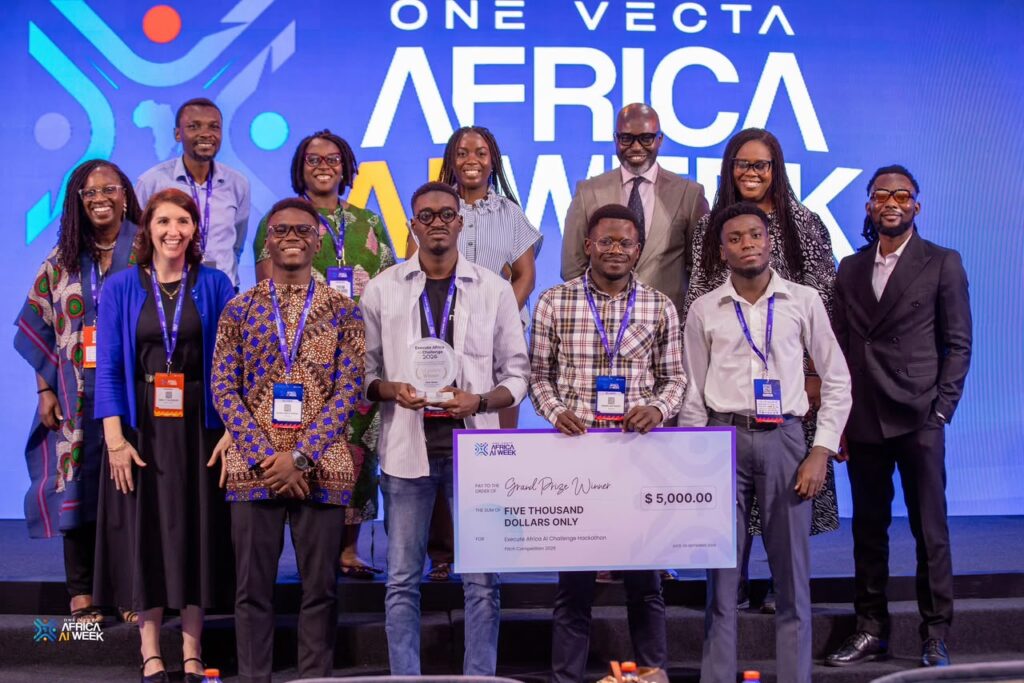
Malta’s High Commissioner to Ghana, Ronald Micallef, made the call at One Vecta Africa AI Week 2026 in Accra, where he proposed a structured dialogue bringing together governments, regulators, universities and the private sector.
He said the dialogue should move beyond broad declarations and identify a small number of practical initiatives with responsible institutions and measurable outcomes.
“Malta’s experience offers three broad lessons: build institutions people can trust, give everyone the capacity to understand and question artificial intelligence, and keep human values and national purpose at the centre,” High Commissioner Micallef said.
Malta launched its national AI strategy in 2019 with a vision extending to 2030. The country has since strengthened the institutional foundations needed to regulate and support the responsible use of emerging technologies.
Central to this effort is the Malta Digital Innovation Authority, established by law and designated as Malta’s notifying authority and principal market-surveillance authority under the European Union’s AI Act, working alongside other sectoral regulators.
“A strategy needs more than ambition. Every commitment must have a responsible institution, a budget and a measurable result,” the High Commissioner stated.
He also highlighted Malta’s AI for All programme, developed by the Malta Digital Innovation Authority in collaboration with the University of Malta. The free online programme enables citizens and residents aged 14 and above to acquire foundational AI knowledge in eitherMaltese or English.
According to High Commissioner Micallef, AI literacy is rapidly becoming a civic necessity. People must be able not only to use artificial intelligence, but also to question its outputs, recognise its limitations and understand how it may affect their lives.
Drawing on Ghana’s tradition of Sankofa, he warned that the development of artificial intelligence raises important questions about whose histories, languages and knowledge are preserved.
He quoted the Asantehene, Otumfuo Osei Tutu II, who recently observed: “The palace must remain a guardian of memory. But it must also become a workshop for the future.”
“Sankofa has a direct relevance to artificial intelligence,” High Commissioner Micallef said. “If societies do not make deliberate choices, their languages, memories and ways of understanding the world may be diminished rather than strengthened.”
Project Ethics
He linked this thinking to Project ETHICS, a Malta-supported initiative developed with Step Up Nigeria and partners in Ghana. The project encourages young people to examine integrity, empathy, responsibility, fairness and service within their everyday lives and communities.
The High Commissioner said Ghana’s interest in strengthening ethics education offers fertile ground for cooperation, particularly as young people prepare to engage with increasingly powerful but fallible technological systems.
He also invited Ghanaian institutions to participate in shaping the proposed Sovereign Technology Centre on Malta’s sister island of Gozo.
The centre, which remains at a formative stage, is envisaged as a solar-powered platform for research and testing in sovereign technologies, including artificial intelligence.
“Sovereign AI does not mean isolation,” he explained. “It means retaining meaningful control over essential data, computing infrastructure, standards and critical systems.”
Potential areas for Malta–Ghana cooperation include AI assurance and regulation, AI literacy, ethics education, data governance, joint research and collaboration with the proposed Gozo centre.
High Commissioner Micallef stressed that the partnership should not involve simply transferring one country’s model to another.
“Malta and Ghana bring different but complementary strengths. The purpose is to learn from one another and build approaches suited to our respective national realities.”
He concluded: “The future will belong not to those with the most intelligent machines, but to those with the wisdom to decide what intelligence is for.”
DISCLAIMER: The Views, Comments, Opinions, Contributions and Statements made by Readers and Contributors on this platform do not necessarily represent the views or policy of Multimedia Group Limited.
Tags:
DISCLAIMER: The Views, Comments, Opinions, Contributions and Statements made by Readers and Contributors on this platform do not necessarily represent the views or policy of Multimedia Group Limited.
KioskNews shows a cleaned-up reading view extracted from the publisher’s page — the original always lives on their site, not ours.