‘Chinese can actually fly’: man pilots homemade hoverboard over mountains, across Yangtze River
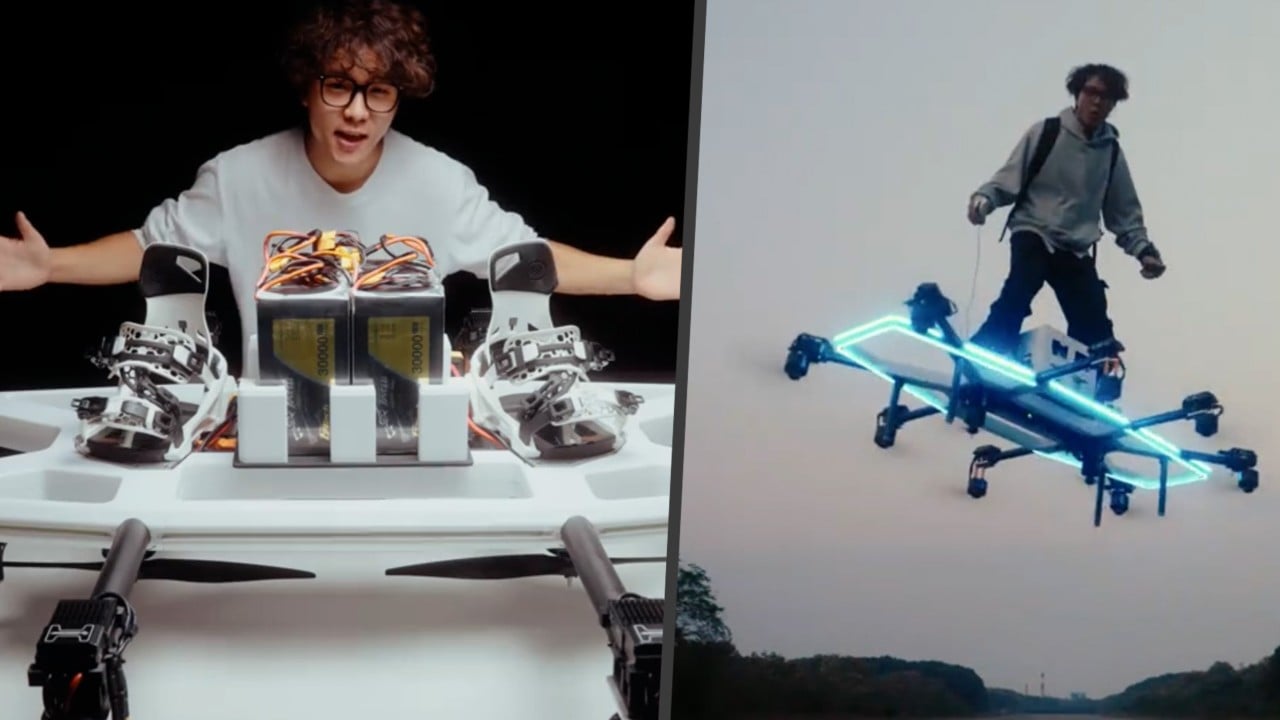
A Gen Z tech influencer from central China has brought science fiction to life by handcrafting a manned hoverboard and teaching himself flight control and mechanical engineering.
Song Xingyu, 26, from Enshi, Hubei province, is known online as “Amazing Ayu.” He has amassed more than 3 million social media followers by sharing videos of his aerial inventions.
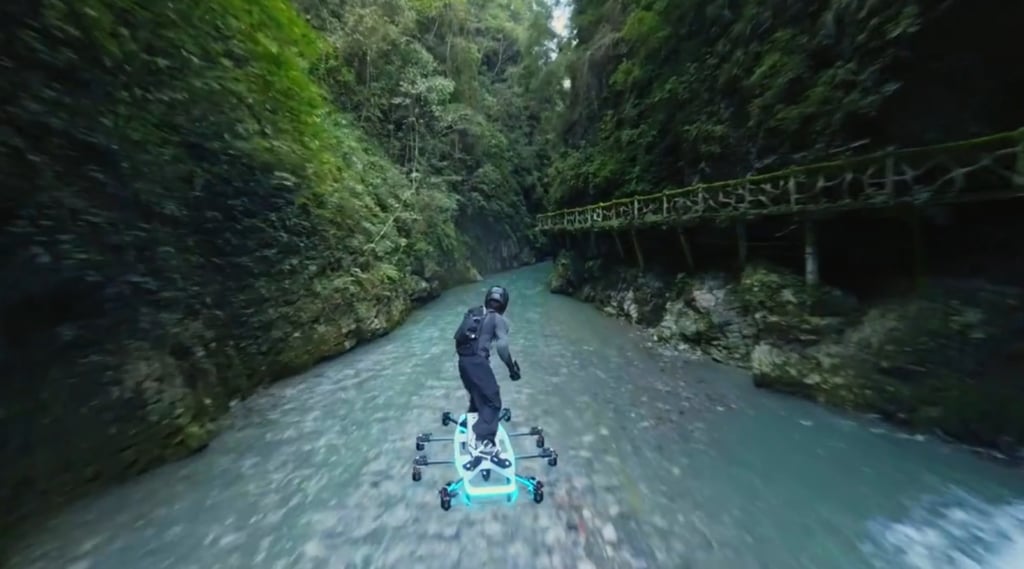
On October 15, Song stunned the internet with a video of himself riding a hoverboard he had spent about two months building, soaring over mountains and the Yangtze River.
His stunt coincided with Tesla’s debut of its redesigned Roadster in the US on the same day. The car made headlines after climbing a curved vertical ramp and performing a mid-air kickflip over parked cars.
Chinese tech enthusiasts were quick to compare the two innovations, with one commenter quipping: “Tesla probably made a giant flying toy for show, while we Chinese can actually fly.”
The SCMP contacted Song for comment on Tesla’s Roadster but had not received a response by press time.
According to Jimu News, Song grew up in a rural family and left school at 14 to work at his father’s lumberyard.
After becoming fascinated with aviation while watching a flight-testing show, he scavenged scrap materials to build his first model aircraft, using donations from online aviation enthusiasts.
In June 2022, he took out loans to turn an abandoned shed into his personal laboratory.
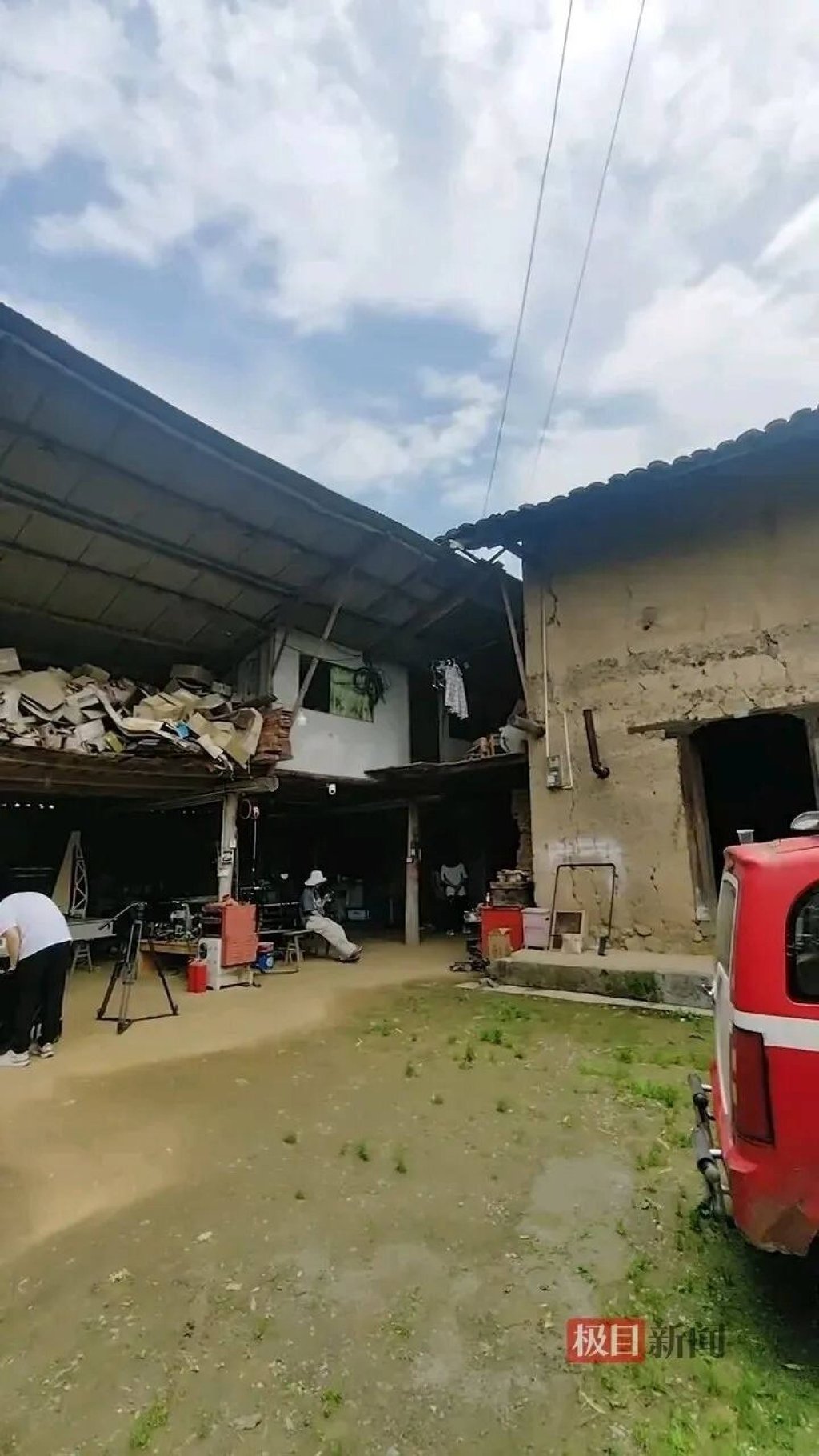
His journey, however, was fraught with setbacks. After being scammed, Song was left with 2.4 million yuan (US$360,000) in debt before tech company Insta360 stepped in with 1.8 million yuan in funding.
In May 2024, after spending 22 days building a remote-controlled plane, he tried to launch it into the upper atmosphere using a helium balloon. Violent winds destroyed his campsite and launch rig.
Six months later, wearing a homemade jet-powered flying device, he leaped from a helicopter at an altitude of 5,000 metres. His main parachute failed to open, and the backup chute deployed only 600 metres above the ground.
Hours before the near-fatal jump, Song recorded a last will: “Only when doing these things do I feel truly alive. Please, everyone, do not follow my example.”
Undeterred, Song used a hot-air balloon in September last year to lift a fully furnished living room into the clouds, where he fried eggs and made sandwiches mid-air.
This year, inspired by Spider-Man, Song set out to replicate the Green Goblin’s glider.
After his first version, powered by micro turbojet engines, caught fire during testing, he switched to an electric propulsion system.

He eventually built an AI-monitored hoverboard capable of carrying four adults and underwent rigorous balance training before taking flight.
During China’s National Day holiday in October, Song completed his landmark test flight in Enshi, gliding over the Yangtze River, mountain peaks and city streets before landing safely in a canyon.
“I started with nothing, so what do I have to fear from failure? Moving forward courageously is the best choice,” Song said, adding that he hoped to keep testing the limits of physics.
After gaining national fame for his hoverboard, Song has reportedly shunned media and commercial deals, focusing instead on testing ways to make it fly higher.
His feats have sparked widespread awe online, with the video garnering more than 5.1 million likes on Douyin.
“Unbelievable that his video is not AI-generated. I admire his courage and creativity,” one netizen remarked.
“I hope this hoverboard can be mass-produced in the future for search and rescue operations,” another wrote.
KioskNews shows a cleaned-up reading view extracted from the publisher’s page — the original always lives on their site, not ours.