Protecting Western Ghats: K’taka seeks a ground survey, environmentalists back eco-zone
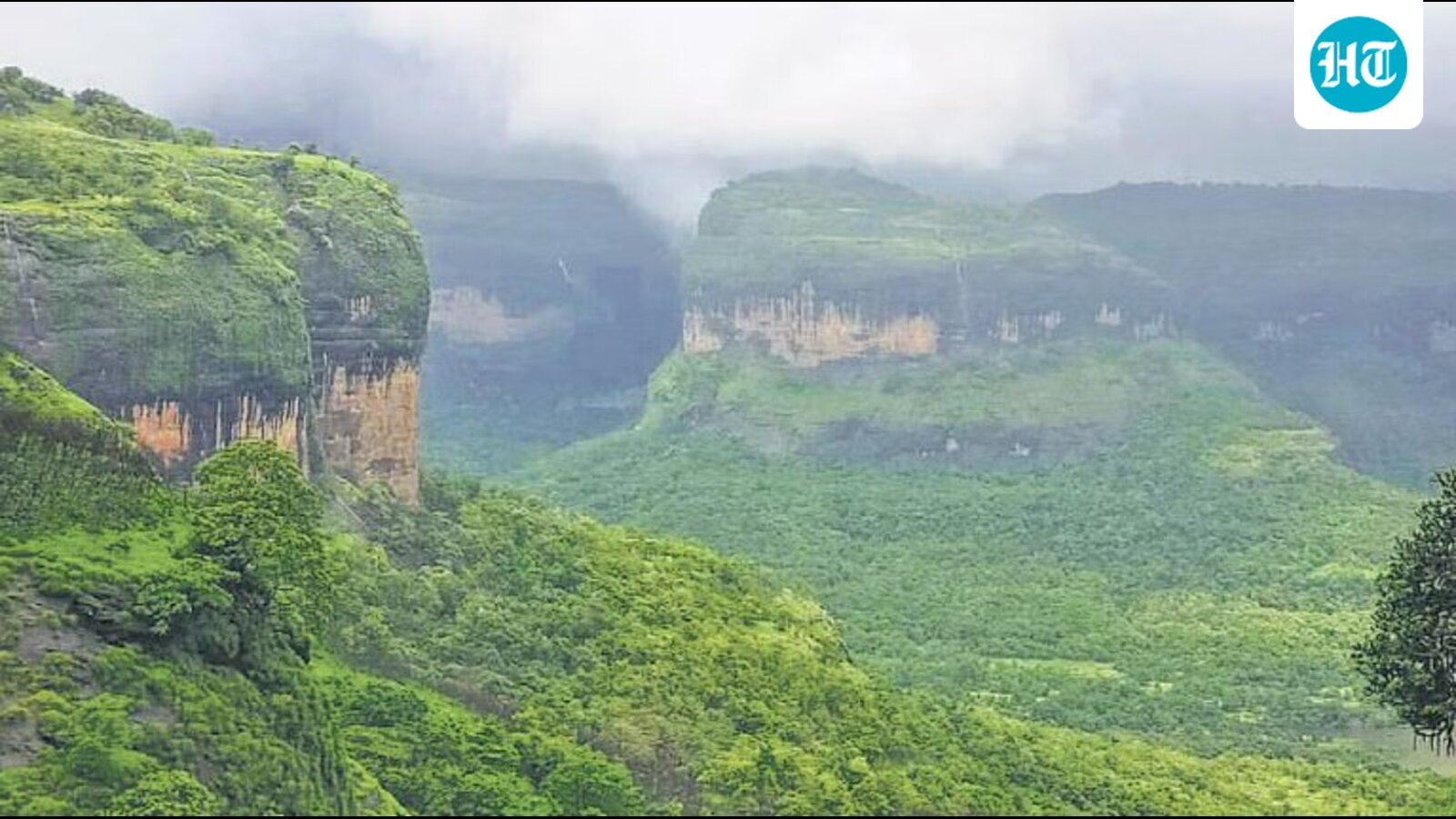
The Karnataka Assembly on Tuesday unanimously adopted a resolution seeking a review of the Kasturirangan report on ecologically sensitive areas in the Western Ghats, and sought one year to conduct a physical survey before the final notification is issued.
The latest draft notification to implement the July report proposes to declare 20,668 sq km of Karnataka’s Western Ghats an Ecologically Sensitive Area (ESA), covering 1,449 villages across 10 districts.
Karnataka’s opposition is centred on questions about where the boundary of ecological protection should be drawn, and what happens to the people living within it. The state says the proposal risks bringing farms, plantations, homes and public facilities into the ESA without first establishing their exact location through ground surveys.
Environmentalists argue that much of the land identified in Karnataka is already notified forest, and that the restrictions would primarily target mining and highly polluting industries rather than residents.
Protecting the ghats
In 2010, the Centre appointed an expert panel under ecologist Madhav Gadgil to strengthen protection of the Western Ghats. Its report proposed a graded system of ecological protection with greater participation by local communities.
State governments opposed the recommendations. The Centre then appointed a high-level working group headed by K Kasturirangan, former chairperson of the Indian Space Research Organisation (Isro), for another proposal.
The group’s 2013 report proposed an ESA covering about 37% of the Western Ghats, or 59,940 sq km across six states, of which Karnataka accounted for about 20,668 sq km. The restrictions it proposed included a ban on mining and sand extraction, limits on large construction projects and a ban on highly polluting industries.
Seven draft notifications have since been issued to implement the report; the July draft is the latest.
Each draft specifies the area to be notified as an ESA and the activities to be restricted within it, such as red category industries (the most polluting class), mining and quarrying, thermal power plants and major development projects.
The Union environment ministry receives comments, objections and suggestions on each draft and forwards them to the state governments. A draft lapses 725 days after it is issued.
The first was issued on March 10, 2014, and the six drafts before the latest all expired as the states differed over the final area to be demarcated and the restrictions on development. Since 2022, an expert committee constituted by the ministry has been examining the states’ suggestions before the notification is finalised.
Karnataka and other Western Ghats states, including Kerala and Maharashtra, have opposed them.
The Western Ghats stretch 1,600 km along India’s west coast, across Gujarat, Maharashtra, Goa, Karnataka, Tamil Nadu and Kerala. The range is home to at least 325 globally threatened species, and was declared a Unesco World Heritage Site in 2012. The restrictions proposed under an ESA are meant to conserve this biodiversity.
The boundary question
Karnataka’s key objection is to the method used to identify the proposed ESA. The state says the boundaries were prepared using satellite data, without a joint physical survey or precise demarcation based on survey numbers.
As a result, the government says, the proposed zone could take in agricultural and horticultural land, plantations, houses and public amenities along with forest areas, which it says could create difficulties for construction, division of family property and inheritance.
The state has also objected to the proposal that an entire village could be brought within the ESA if one-fifth of its area falls under forest limits. The state assembly has called this method unscientific and said it has caused discontent among residents.
Karnataka wants the ESA restricted to notified forests and other land that is actually forested, with cultivated areas, plantations, settlements and land used for public purposes kept outside the zone.
The state also says that the boundary exercise cannot be separated from thousands of existing disputes over land. Bagar Hukum claims (applications to regularise cultivation on government land), forest rights, deemed forests (land with the characteristics of forest that has not been formally notified as forest), land grants, appeals and cases before courts remain unresolved in several parts of the Western Ghats. The state wants these matters considered before the final boundaries are fixed.
What environmentalists say
Environmentalists argue that much of the 20,668 sq km identified in Karnataka is already notified forest land, and that the remaining area forms only a small portion of the proposed zone.
Akhilesh Chipli, an environmentalist from Karnataka’s Sagara, said extending protection to these areas should not affect ordinary residents, and pointed out that the restrictions would primarily target activities such as mining and highly polluting industries. He also argued that the proposed push towards organic farming would benefit rather than burden farming communities.
Why residents are wary
The resistance has also been shaped by the experience of villages that live under forest regulations.
In Shivamogga district, families displaced by the Linganamakki dam decades ago live without a proper road, school or primary health centre. Residents say forest clearances have repeatedly prevented road and electricity works in the area.
Similar problems have been reported from remote settlements in Shivamogga, Chikkamagaluru and Hassan, where residents have sought roads, electricity and access to healthcare. In Karimane village in Hosanagara, even the gram panchayat building stands on forest land, leaving the office without an official khata, or property record.
What’s next?
The state government says it is not rejecting ecological protection. “We are not disrespecting the recommendations made by the Kasturirangan committee regarding ecologically sensitive areas of Western Ghats. Instead, we are requesting they be scientifically revised, keeping the interests of our state in mind,” chief minister DK Shivakumar said on Wednesday.
The state plans to appoint a committee headed by a retired judge, with government officials, farmers, industry representatives, environmental experts and scientists, while gram panchayat committees provide local inputs. Karnataka is seeking one year to complete the exercise, and wants the Centre to consider financial assistance and alternative livelihoods for people affected by ESA restrictions.
KioskNews shows a cleaned-up reading view extracted from the publisher’s page — the original always lives on their site, not ours.