Can India turn wartime ammo sales into lasting European defence ties?
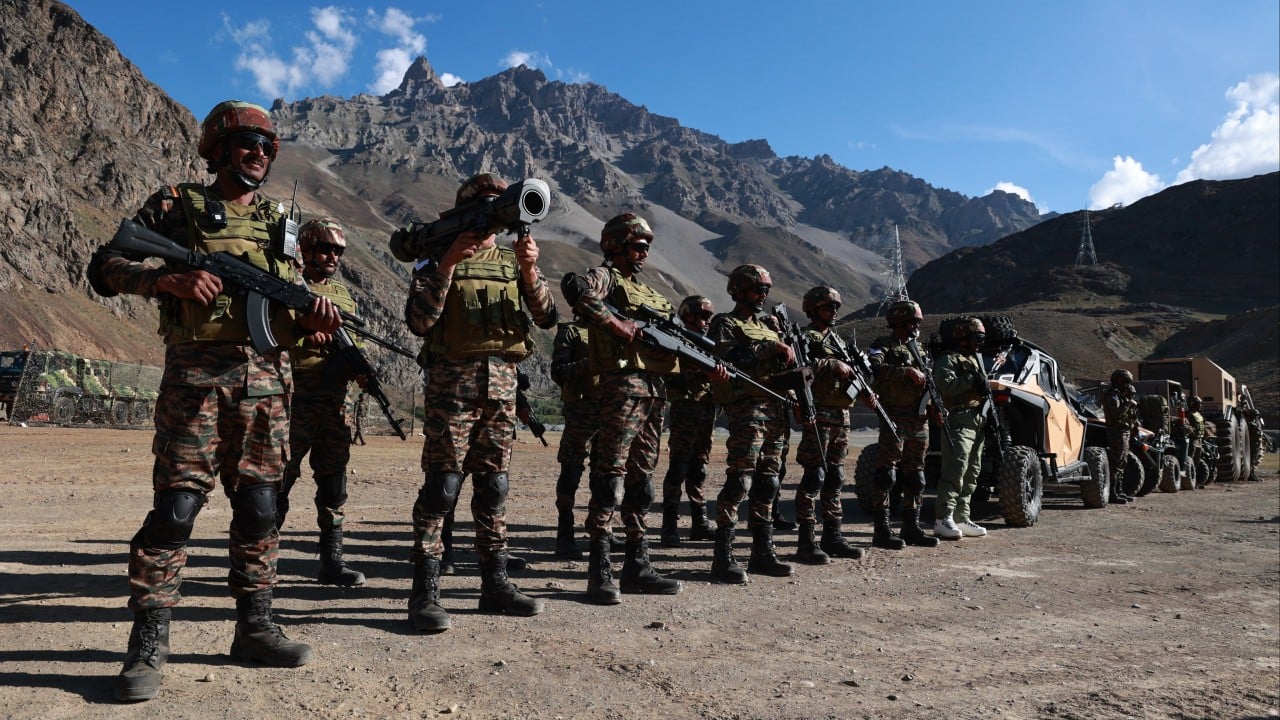
India has emerged as a major exporter of ammunition and other weapons to Europe since the outbreak of the Ukraine-Russia war, but analysts caution that New Delhi has yet to secure a lasting foothold in Europe’s defence market.
Defence Secretary Rajesh Kumar Singh cited a Bloomberg report last Friday stating that India had become the third-largest arms exporter to Europe under the “ReArm Europe” initiative – also known as Readiness 2030 – largely because of ammunition demand.
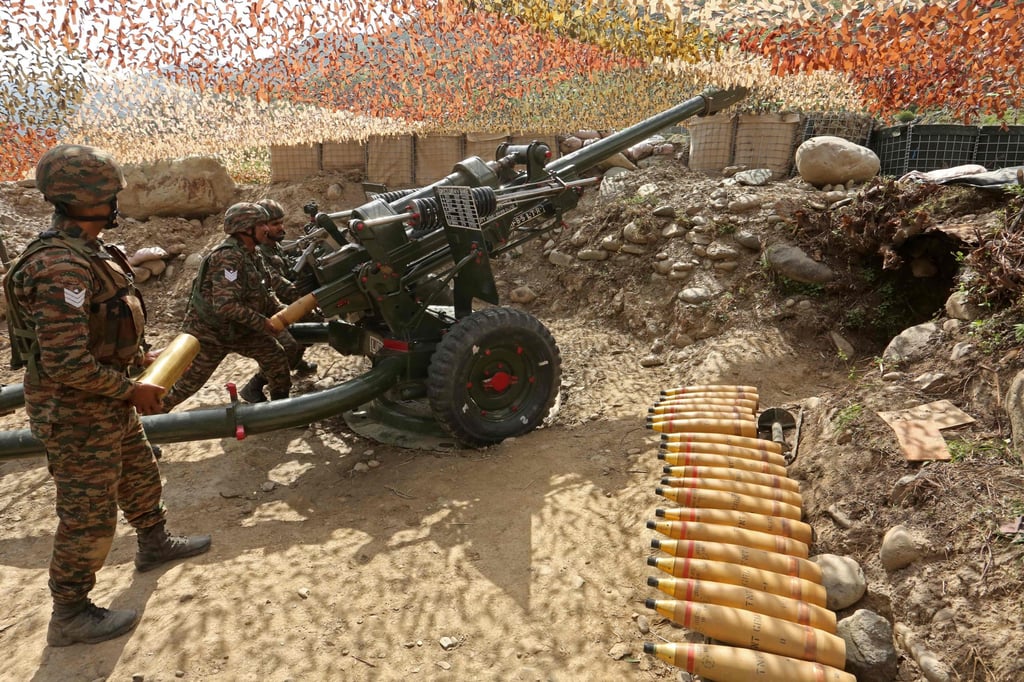
Bloomberg, citing Trade Data Monitor data sourced from India’s Ministry of Commerce and Industry, reported that Indian arms manufacturers had exported about US$872 million worth of ammunition, including artillery shells, mortar shells, propellant and explosives, to European countries since the Ukraine war began.
This marked a 1,600 per cent increase from the US$49.2 million exported to Europe in the four years leading up to February 2022. Most of these exports reportedly went to countries that have been major arms suppliers to Ukraine, although the nations were not named.
The South Asian nation ranked as the second-largest supplier of shells, mortars, propellants and explosives to Europe over the four years since 2022, rising from 28th place in the preceding four years, the import and export statistics from tracking platform Trade Data Monitor showed.
Singh said Delhi was now looking to expand its presence in Europe’s defence procurement programmes through joint ventures with European companies, while encouraging European partners to establish ventures in India to tap into its domestic market.
Lasting foothold?
Europe’s rearmament drive offered India a way into a market dominated by established suppliers, but securing a lasting position would require more than filling ammunition shortages, said Srinivaasan Balakrishnan, director of strategic engagements and partnerships at the Indic Researchers Forum, a Delhi-based security think tank.
“The real opportunity is to turn wartime orders into long-term industrial partnerships, trusted supply chains and technology collaboration,” he said. “India’s success will ultimately depend on whether it remains a reliable supplier when the urgency of war subsides.”
Balakrishnan said that “India can compete selectively” to become a serious defence supplier to Europe, noting that its advantage lay in combining competitive costs with scalable production, proven systems and selective technology partnerships.
The next step would be to move towards co-developing platforms and becoming a long-term partner in Europe’s defence industrial base, he said.
The United States and South Korea remain Europe’s top two non-European arms suppliers. According to the Stockholm International Peace Research Institute, South Korea accounted for 8.6 per cent of European Nato members’ arms imports between 2021 and 2025, reaching US$11.03 billion last year to cement its position as their second-largest supplier after the US. Poland alone sourced 47 per cent of its arms imports from South Korea over that period.
Last year, European countries spent US$38.6 billion under the US Foreign Military Sales programme – which facilitates the purchase of American arms and other military equipment by foreign governments – representing 37 per cent of total US defence exports in 2025, according to the EU Institute for Security Studies. This marked a sharp decline from 2024, however, when European procurement stood at US$76.7 billion.
Rajiv Kumar Narang, a senior fellow at the Manohar Parrikar Institute for Defence Studies and Analysis in Delhi, urged India’s defence sector to capitalise on the opportunity afforded by Europe’s rearmament and work closely with European partners to identify their requirements.
“India and Europe should have mutual acceptance of defence equipment standards and certifications for ease of export,” Narang said. “India should also continue to make investments in core technologies and pursue a spiral development approach for building world-class defence systems.”
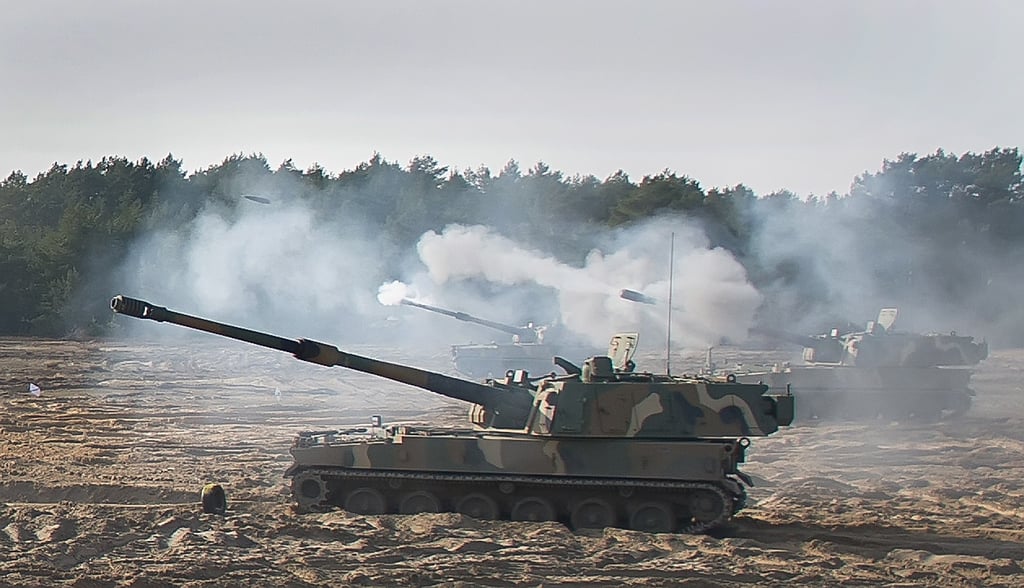
South Korea serves as a template for India, analysts say, having expanded its footprint in Europe beyond ammunition to encompass major weapons systems, such as K9 self-propelled howitzers, K2 Black Panther main battle tanks and Chunmoo multiple-rocket launchers.
Antoine Levesques, senior fellow for South and Central Asian defence at the International Institute for Strategic Studies, said India’s defence industrial base was seeking to reposition itself as more than just a buyer or licence assembler.
“It [India] wants to become, as a higher aspiration, a co-developer with European defence primes or at least a major contributor to their supply chains present and future,” he said, adding that increased exports and a strategic normalisation of the country’s status as a trusted defence partner would help in this regard.
“But this will take time due to significant political-strategic, technological, capacity or funding gaps, in a wider context of rapidly evolving global economic and diplomatic patterns creating new push and pull factors on either side of India’s ties to Europe.”
Still, Levesques pointed to “steady progress” in India-EU ties, suggesting cooperation had surpassed the baseline of “civilian or potentially dual-use, trusted de-risked critical supply chains”.
He added that a drop in talent emigrating to the US in recent years meant more Indian engineers and technical specialists were now working for domestic companies, including established defence firms.
“The value proposition India is bringing to Europe’s defence recapitalisation is therefore slowly but truly changing,” Levesques said.
Romania, Slovenia and the Czech Republic were among the top European buyers of Indian arms and ammunition in 2025, taking in a combined US$288.6 million worth of exports, according to the World Bank’s World Integrated Trade Solution data platform.
India’s emergence as a leading arms supplier to Europe is more than a short-term windfall arising from the Ukraine war, according to Ambika Vishwanath, co-founder and director of the Kubernein Initiative think tank and a Maitri research fellow at La Trobe Asia.
“The EU is realising that a more self-sufficient and diversified Europe is a smarter move forward,” Vishwanath said. “The new EU Readiness 2030 road map reflects this well through more structural defence expansion. This is not only in weapons or manufacturing but also in partners and technology.”
India had yet to reach a point where it could act as a comprehensive defence partner for Europe, she said, pointing to challenges such as interoperability, standards and capabilities.
“[But] we are seeing an upwards trend, and by entering the supply chain space along with small parts manufacturing, we have a good chance for a more lasting foothold” and gain more flexibility against future geopolitical risks and shocks, Vishwanath said.
KioskNews shows a cleaned-up reading view extracted from the publisher’s page — the original always lives on their site, not ours.