Guillermo del Toro Officially Settles the Debate Over ‘Pan’s Labyrinth’s Ending
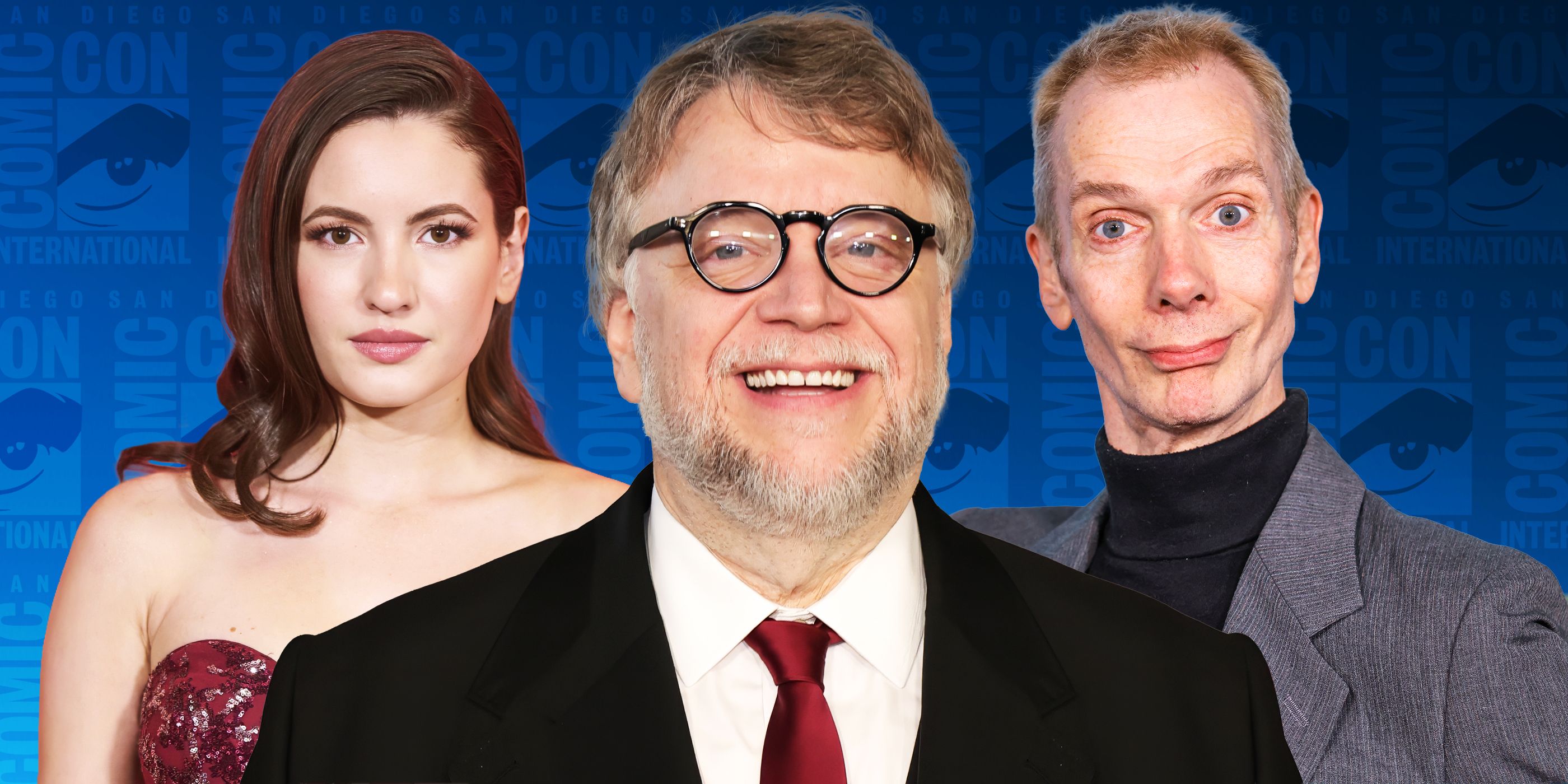
Not every movie has the honor of receiving the longest recorded standing ovation at the Cannes Film Festival — a whole 22 minutes, in fact. But that distinction belongs to the 2006 dark fantasy Pan's Labyrinth, directed by Guillermo del Toro. At San Diego Comic-Con this year, the filmmaker, actors Ivana Baquero and Doug Jones, and cinematographer Guillermo Navarro gathered for a panel commemorating the film's 20th anniversary, coinciding with its upcoming 3D and 4K re-release by Barco. The re-released version is set to premiere on October 9, 2026 — del Toro's birthday.
Nominated for six Oscars and winning three, Pan's Labyrinth is the stuff of nightmares for children and adults alike. Set five years after the Spanish Civil War in rural Spain, the movie follows the young and defiant Ofelia (Baquero), who is drawn into a mysterious fantasy world by the Faun (Jones) and confronted by the horrifying Pale Man (Jones). Yet, in true del Toro fashion, the filmmaker's haunting fairy tale isn't a self-indulgent showcase of shock factor and grotesque creatures. A devoted believer in the power of art—as he repeatedly reminds audiences at San Diego Comic-Con — del Toro uses the film's horrors to examine human cruelty, worldly struggles, and the power of perseverance to overcome them, whether in 2006 or 2026.
Collider's Steven Weintraub moderated the panel, where the Pan's Labyrinth cast and crew discussed del Toro's "second most difficult" shoot, Baquero's tear-jerking audition, Jones' struggle with Spanish, and Navarro's tease for a third movie. The panel also featured fan questions from The Boys showrunner Eric Kripke, Mad Men actor Jared Harris, IT director Andrés Muschietti, and Mimic actor Josh Brolin. Watch the full video or read the transcript below for the complete conversation.
Guillermo del Toro Admits That 'Pan's Labyrinth' Was His Second-Most Difficult Shoot
Ivana Baquero's father knew there was something special about the 'Pan's Labyrinth' script.

COLLIDER: It's now been 20 years. Pan's Labyrinth is widely considered one of the greatest films of the 21st century. For each of you, at what point in the production did you realize you were making something special?
GUILLERMO DEL TORO: When we had a lot of adversity in the movie as the second most difficult movie to shoot I've ever gone through, and a lot of the crew was very skeptical. And they would see–I've wanted to come in in the middle of a Civil War movie. And they were saying, “This fat guy is crazy.” But I remember the first time I knew, as we were shooting the Pale Man, and the Pale Man did this, and the whole crew went, “Huh!” and I said, “Ha ha ha, see?” But it changed.
Doug, would you like to continue answering my original question?
DOUG JONES: When I read the script. Honestly, I'm not kidding about that. Guillermo sent me a script in the English translation, and I didn't realize it was going to be in Spanish. That's another issue altogether. But I was reading the script, and he said, “Get back to me by 11:00 tonight.” I read the most beautiful story I'd ever read in my life, and I closed the last page, I wiped away tears and said, “Oh my gosh.” This is my third film with Guillermo after meeting him on Mimic and then doing Hellboy together. I knew that this is the man who could bring those pages that he had written to life on screen with. I knew then that it was going to be a masterpiece.
IVANA BAQUERO: I think for me it started with the script too. But funny enough, I actually got asked the other day what it feels like when you read the script for the first time. And I don't actually remember because I was 11 years old. But what I do remember is my father—who's a cinephile—he read the script, and I remember I was up between Pan's Labyrinth and there was another project circling me too. He read the script and he was like, "This is a really special movie. This is the one. This is going to be magic."
And my dad immediately saw it when he read the script, so we knew we were in for something special. Obviously, I was a child. I didn't realize how big of a movie it would then go on to be, but we all knew that it was going to be something special, and I could see everyone fighting so hard to get the movie made that, I think early on we realized we were making something really special.
GUILLERMO NAVARRO: Well, for me, working on Pan's Labyrinth with my brother was an extraordinary experience. We put to the test this movie of several narratives and color coding. And now, 20 years after, it proves to be still very relevant. We're still fighting dictatorships, and we still have things to believe in, and we have to carry on. It's very alive.. Good film, and all of you involved.
I should also point out, if you're not familiar with Guillermo Navarro, he is the Oscar winning cinematographer of Pan's Labyrinth.
'Pan's Labyrinth' Premieres in 3D For Its 20th Anniversary
Guillermo del Toro used "absolutely no goddamn AI" to convert the movie.
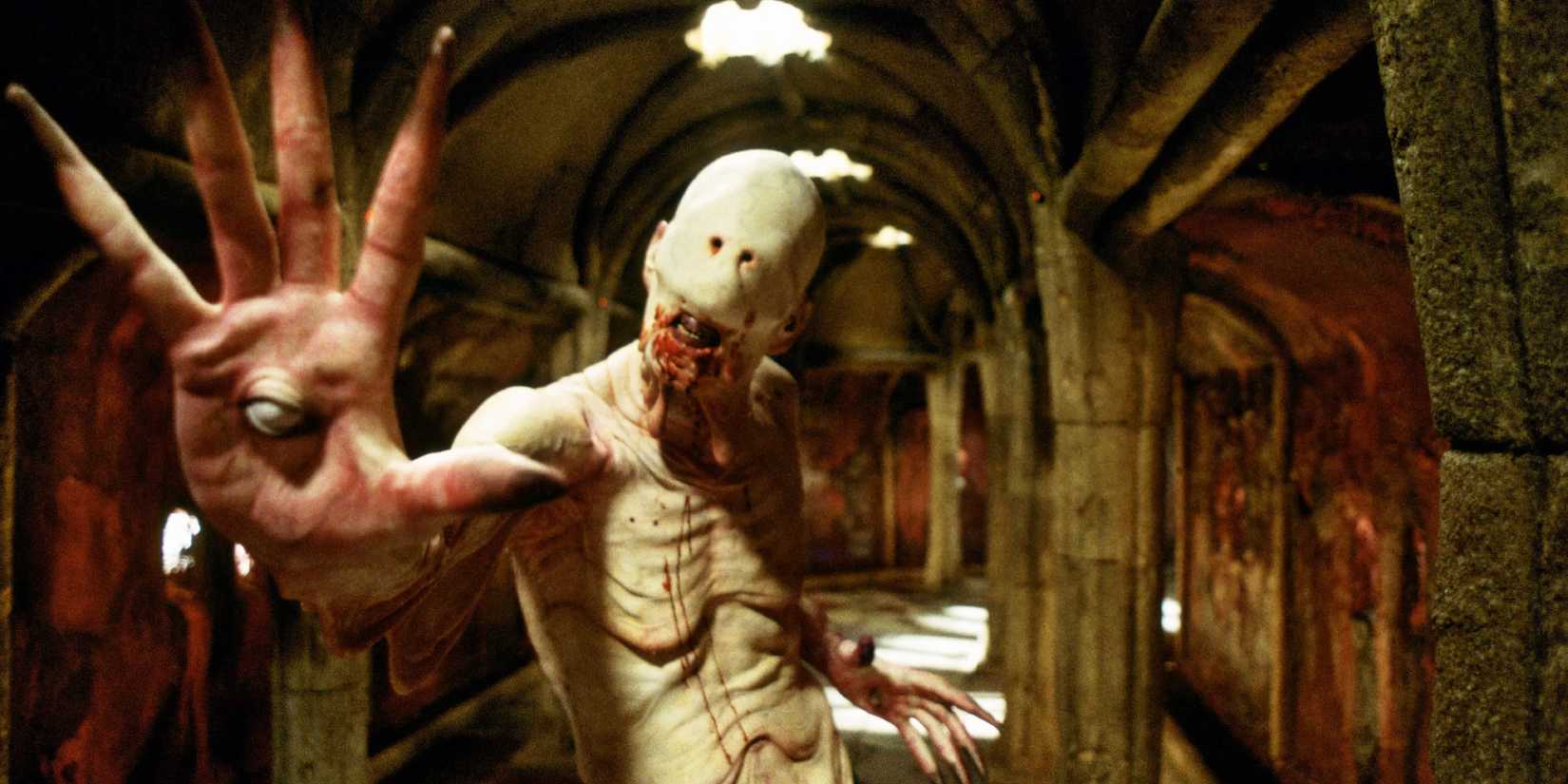
One of the things that I'm really excited about with the 20th anniversary is seeing the film in 3D. And the reason I want to see it in 3D is because I know you personally did the conversion yourself with your hands. Can you talk about what you did to make sure that people want to see this in 3D?
DEL TORO: Well, first of all, the way I shoot—and the way I've been shooting all my life—is there's always foreground. Crossing, coming to the lens, going away from the lens. So when we converted Pacific Rim to 3D, the way to see that movie, if you ever have a chance, is in IMAX. 3D is a different movie. And the same company, I said, "Why don't we try to do a test now?" Cinemas and I are paying for the conversion. So I said, "Let's see. I think we can make it." So that is expressively powerful. So the real world is a little flatter, and the fantasy world has a huge depth.
So thematically, I was honestly not expecting how it was going to affect me seeing it. It's incredible. It really, really changes—we're going to show it tonight here at Comic-Con here and there—and when we're going to the Pale Man or the toad, it becomes... When I was a kid, I used to have a View-Master. And that was my favorite thing—to lay on the ground and look at the View-Master against the sky. It has such an incredible depth. I think that we always color-coded and shape-coded—the real world is cold and straight lines and blah, blah, blah—and the light is a lot colder. And then the fantasy world has warmth and uterine colors, and it has rounded shapes.
Well, this adds to that. And the conversion scenes were bang. Obviously, I said, "absolutely no goddamn AI." I said I wanted done—is much more expensive, I don't care. We're protecting the beauty and the redeeming power of art. It's not about who gets the job. It's about we are protecting our lineage of art. If we got a generation of people from learning their craft, you're cutting the rest of the history of that medium away from them for what? So we have about a thousand people rotoring the movie. When you convert to 3D, here's the two ways you can do it: quick, or you can do it good. And I chose good. Like when I talked to Jim Cameron about the conversion, he said, "If you take less than 300 days, I'll kill you." Because you have to put the time in. Then you really hand-roto every element by hand.
A human made a decision. Then you make the decision of depth. We are redoing some sound elements. We are remixing it in Atmos, and we are doing a new color pass, which I've seen some tests of, and the tools are much better than when we did the first pass. I guarantee you one thing: you haven't seen it. When you see it in 3D. It's extraordinary.
I know the film is now in 4K and premium HDR by Barco. Can you talk about how this version that's going to be in theaters, either in 3D or 4K, is going to be the best-looking version of this movie there's ever been?
DEL TORO: Well, what happens is, Navarro and I love to have information in the blacks. These are not just flat blacks that are milky. There's information there. And the highlights are not just white; there's information there. And with Barco, you go in with the new capacity to color-time this movie, you're going to see the best contrast, the best saturation. The information is there.
And it's a huge leap. And we're betting on it not to just have a second life. We're going to have a second life because it's relevant today. Because if you can renew it visually and in audio, you can attract people that saw it as kids, and they might be fathers now, maybe. You have an intergenerational possibility to re-experience the movie through a new audience.
The other day I saw 70 minutes of the movie. We are still away from finishing, and it's very hard for me to watch this movie because I remember everything that was going wrong, everything that didn't happen, everything that went wrong. And it's the first time I've gone, "I want to see more."
Guillermo del Toro Still Believes Ofelia Wins in 'Pan's Labyrinth'
The cast reflects on how the movie has evolved over 20 years.
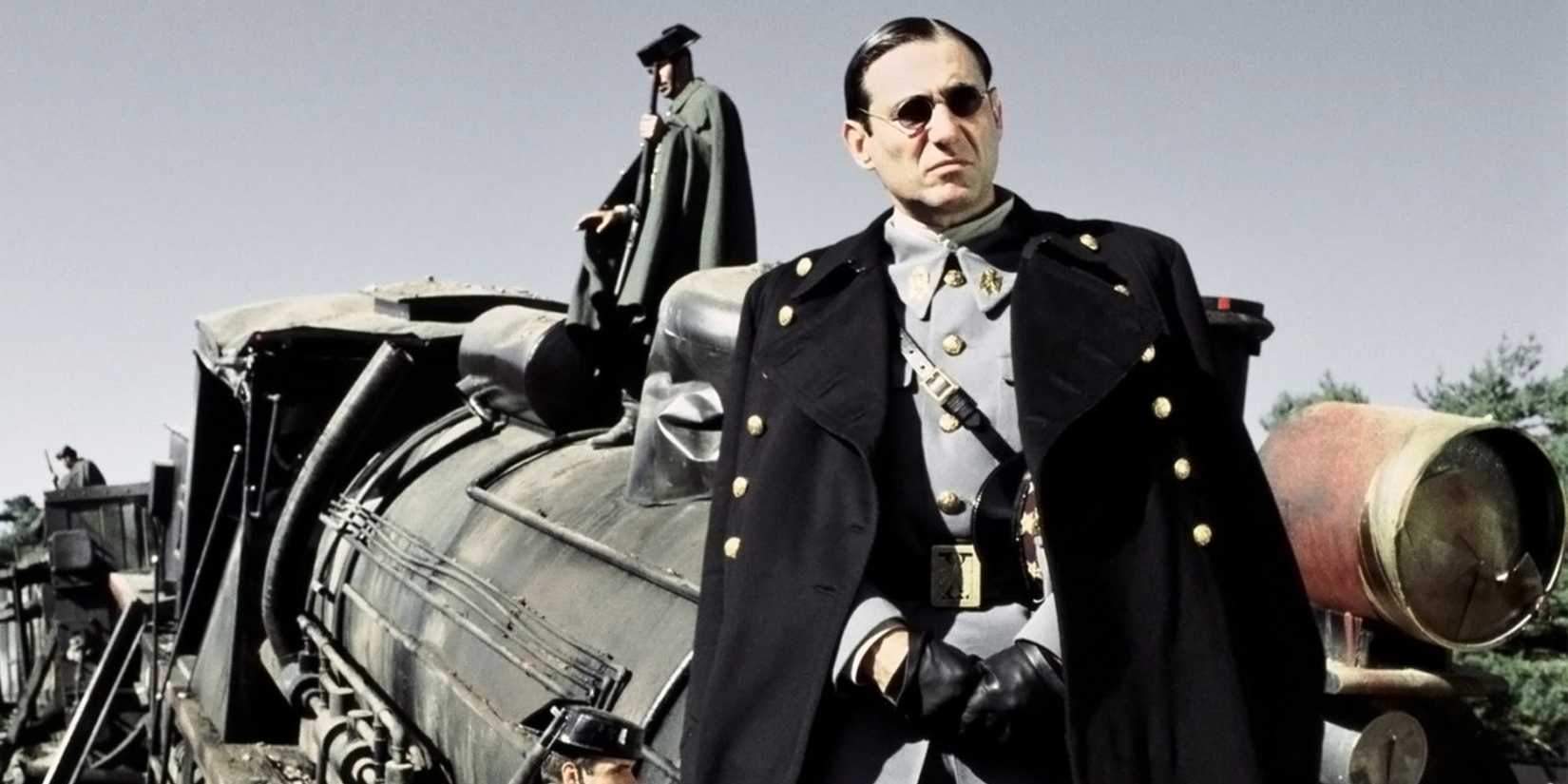
We actually have a sneak peek of the retrospective documentary that dives into the untold stories of making Pan's Labyrinth and celebrates the film's cultural impact. If we can run that through.
(Plays clip)
DEL TORO: We are releasing it on my birthday. 63 Motherfuck-, I'm sorry. I mean 63, guys.
One of the things that I think everyone loves—and pardon me if you haven't seen the movie; cover your ears. The ending is deliberately ambiguous about whether the fantasy is real.
DEL TORO: Not to me.
Obviously. But I'm curious if, over the past 20 years, you look at the ending the same way, or because of the 20 years passing, you see the ending in a new light?
DEL TORO: No, I think it's a movie about the clash of two wills: the will of a girl that has no power in the real world, and the will of a fascist that has all the power in the real world, but nothing inside. And I still think the girl wins. Because I think the moment you sing while they're boiling you alive, you've won. The moment you have your last two seconds of light to say thank you or no thank you to the choices of life. I think that you win. I mean, they tell us what they think we are, but we know what we are. And I think that's a power evil doesn't have. When they tell you, "Oh, this is inevitable," I say, "We'll see about that. We'll see." I still see it that way.
The reason they want to take away art is the reason... Look, when they tell us, "You can do it with this." Look, Usain Bolt—here's the news: I'm faster than Usain Bolt. I can do the hundred meters faster in a car. If you need a thing to do art, then you are not an artist. I'm sorry, you have to understand that it comes from your experience, your pain. I think that this thing—the sacredness of imagery, the sacredness of stories—they want to take it away because they make us more vulnerable, more divided, or stupid. They want us that way. Art and beauty, and the human spirit, are resistance.
I'm not sure if any of the other panelists want to talk about the ending and if their thoughts on it have changed over the 20 years.
BAQUERO: I think for me, it's always been ever-evolving, and it's a treat to be able to experience it as a child and watch the movie as a child, and then see how I've evolved as I've grown older, and how whatever's been going on for me, whether it was pain, loss, or heartbreak, and whatever's been going on in the world around me has shaped the way I view the movie. And it's kind of... I do find it a little bit ironic how, when I was first watching the movie while I was promoting it, and I was 11 years old, I didn't want to believe that her inner world was real. There was a part of me that was like, "Well, you know, maybe she was kind of evading herself from reality." Truly.
But then, as I've grown older, as opposed to being jaded, I want to believe even more and more that that was, in fact, the real world, that that was her reality. And that's how she was, in fact, not hiding away from the world, but fighting for the world. So for me, I've become more and more of a believer in just having the luxury of being on that journey as I've grown older, remembering all the different versions of the same movie that I've been able to rediscover is really unique. And that's one of the reasons I'm so excited for people to watch it—for people to not just watch it for the first time, but to rediscover the movie and to hopefully, maybe, discover new things in it because it's just got so many layers, and that's one of the beauties of it.
JONES: For me, over the past 20 years, it's been you guys, actually, that have evolved the movie for me in my mind. By doing lots of fan meet-and-greets over the years, I hear from you, one at a time, what the movie meant to you or what it means to you today as opposed to yesterday. A lot of young people who watched the movie as teenagers said it helped them find their voice and fight the evils of the world. If you feel like the underdog, maybe you have a chance to be the one on top at some point. This movie proved that you can be.
I love seeing that evolution. And also, playing the Faun character for this lovely young Ofelia, I find more mentorship in that now than I used to. At first, he was more kind of devious and trying to trick her, but at the same time, no. In the end, he had the ultimate design, which was to get her where she needed to be and help her find her way. So thank you for that.
Guillermo, do you want to add anything?
NAVARRO: Well, for me, just to think of the opportunity, 20 years after, and what impact it can have on these new generations that haven't seen it—what is that going to be like? It's a movie that has moved the hearts of so many people, and I feel a great joy that I was part of this process.
I am looking forward to this re-release 20 years after. Hopefully, I'll get to see the 40-years-after, because every generation is going to get something out of this. It's full of wisdom, full of sensibility, and the human condition is really a little bit of a representation of our life—that it's all adversity, and being able to move forward and conquer, day by day, your stuff.
So for me, it's an incredible opportunity for the work that we have done to see it in the light of the people that haven't seen it. And I'm very curious to see what the impact is today, in the living conditions that we're surrounded by.
Eric Kripke, Jared Harris, and More Have Questions About 'Pan's Labyrinth'
Jared Harris admits 'Pan's Labyrinth' "scared the sh-t" out of him as a child.

I reached out to a few fans of the movie to see if they wanted to send in some questions, and the first one comes from someone named Eric.
ERIC KRIPKE: Hey, Comic-Con. I'm Eric Kripke. I'm the showrunner of The Boys and Supernatural. It's an honor to even be asking Guillermo del Toro a question about Pan's Labyrinth. It's one of my top five movies of all time, Sir, you're one of my top five favorite directors of all time.
Pan's Labyrinth is such a distinctive, unique world. I'm really curious about how you pull it off. Because it's so singular in its vision, and yet I know that filmmaking is a team sport. I know it's between you, Guillermo Navarro, it's between Eugenio Caballero, the production designer, and I'm sort of curious what that byplay is. How do you communicate what is clearly a pretty specific vision you have in mind, while they also bring lots to the table? How do you create that byplay in that environment, so that all of you together can create such a singular work of art?
DEL TORO: To me, the shooting of the movie is the game. People think that directing is vision, inspiration. It's a contact sport, making a movie. You prepare your team, you lay your strategy. I take months and months and months with a very small group many times before anyone comes on board, classifying the shapes, designing this, designing that. And then everybody—the best players in the world—come together, and then the strategy is alive. It's on the field.
You get the beats and the downs and the ups, but the visual conception of the movie is stainless steel. It's absolutely structural. These are the shapes, these are the colors, these are the reasons. Then Navarro comes in and says, "Well, look, I think we can use this light. We can use these lenses.” Guillermo taught me on our first movie together, which was my first movie, Cronos. Guillermo said, "Wardrobe is set design, set design is cinematography, cinematography is nothing without those, so they have to all be expressed at the same time." So directing is about what it means audiovisually. How does it communicate what the character means?
When a monster enters a movie, the way it looks is not just visual. He's telling you what he symbolizes: the depravity, the perversity, the voracity, the greed, and the repugnance. The Pale Man is instantly recognizable, and you understand this instinctually. You understand his appetite is not human. These are things you understand because of the set design. It's a table full of food, and yet he eats only children. It's how do we cipher the storytelling through audiovisual information? So when the team comes, we lay out the strategy and we go, "Let's go." And it's a contact sport. It's brutal. Filmmaking is not... It's not a prompt. You're not prompting. You are having a full-on battle with reality, with circumstance, with budget, and with adversity. Every day, you have to succeed 100%, 100% of the time. It's absolutely grueling. But I've been doing it for 30 years, so, you know, I can survive.
The next fan that came sent in a question. His name is Jared.
JARED HARRIS: My name is Jared Harris. I'm just on my way to see my younger brother, Jamie [Harris], in The Odyssey. Very excited about that. I saw that you're hosting a panel celebrating Pan's Labyrinth at 20, and I just wanted to say to Guillermo, thank you for scaring the shit out of me. I've never been able to look at the Pale Man in the same way. I have a question. I read somewhere that you said your dreams inspire your films. I was just wondering whether or not you ever woke up from a nightmare, and decided it wasn't scary enough and went back to sleep.
DEL TORO: All right, well, actually, I have the most boring dreams on Earth. My dreams are never interesting. The only dream I have that was similar, and I used it in a movie, is Frankenstein. The Burning Archangel, I dreamt of—a burning human being in front of my bed that got up and came toward the bed and said, "I'm alive." And I got scared. And that's where the Burning Archangel comes from in Frankenstein. Other than that, I dream a lot about zombies chasing me through rooftops and sharks trying to eat me. I think things are trying to eat me, but they don't invent the movies that much.
The next fan that sent in something, is named Andy.
ANDRÉS MUSCHIETTI: Hello, Comic-Con. I'm Andrés Muschietti. Happy birthday to Pan's Labyrinth, an extraordinary movie about sacrifice and disobedience. My question to Guillermo is: What do you think were your acts of sacrifice and disobedience while making this movie?
DEL TORO: Andrés and I paint model kits sometimes on Sundays. I think the entirety of this movie was sacrifice and disobedience. The entirety of this movie. There were 40, 50, 60 times when the thing to do was not to make the movie and to give up on things. And it was the first time in my life where I said, "I don't care. I'm going to do it exactly as I needed, exactly as I wanted." It's not about making friends, it's about making a goddamn movie. I went against people that I had collaborated with in the past. I said, "Look, you're going to hate me now, but you will thank me later because we'll have a better movie."
Disobedience means everything. On this movie, we were not allowed to fire blanks. We were not allowed to have a fire in the forest. This is a war movie, and we had to find ways to do that with different instruments. But on the last day, the fire department was not around, and I did blow up a truck. I think it's too late. So you know why? Because I'm Mexican. We get the job done, goddamn it.
I have one more fan question that was sent in from someone named Josh.
JOSH BROLIN: Guillermo, it's Josh. Here's the question for you, or the rest of the panel. How do you navigate allowing actors to be able to kind of go off on tangents, knowing that there's magic that can come out of that, and not letting them start to power trip and overwhelm your vision of this story, ultimately?
DEL TORO:I gave Josh one of his earliest jobs when he was very, very young. I think it was one of his less-than-double-digit movies. It was Mimic. I met him, and we became really, really close—really good friends. He's a super smart guy. I'll answer very quickly. I think the most important thing on the screen is the actor. He's alive. He's the ambassador to the entire audience. I cast eyes, and the eyes of Ivana—when I saw her, I said, "Those are the eyes of Ofelia." You know, she has to see things.
Through the years, I understood one thing: no matter how great the makeup effects are, if the actor in front of the creature doesn't look at the creature as if it's a real living thing, that is a rubber monster. Ivana had that capacity to react to everything. By the way, Ivana was always an adult. She was always the most intelligent, cerebral, precise actor I've ever worked with. And I think you treat the actors with the love and respect that their magic deserves, and you guide them. But guiding is not dictating. At the same time, you don't want the car to go off the road, and you are on the road. So you say, "Stay on the road and drive as fast as you can.”
Ivana Baquero Studied Hayao Miyazaki's Movies to Prep for 'Pan's Labyrinth'
Doug Jones received an interesting director's note for Faun: "more Bowie, less Jagger."

Doug, this is a question for you. Guillermo creates detailed histories for his monsters. What did he tell you about the Faun's life before Ofelia entered the labyrinth?
JONES: First of all, he said I should study the hindquarters of barn animals. How heady is that? You want me to look at the back of a cow or a goat and see how their hooves meet the ground and how they shake off flies. So if you ever see me going “eek” like this in the movie, that's because of that note.
But also, he was a trickster, sort of, the Faun. The ambiguity of him, I think, was discussed. “Is he good? Is he evil?” Don't let that answer out just yet. Until the very end of the movie, you finally see that I was on the good side all along. I think that's the most—
DEL TORO: What we talked about is also the Faun ages backwards.
JONES: That was a great note.
DEL TORO: Because we wanted to show him like a foolish old man at the beginning. End off, like, sexy and young and dangerous.
JONES: Right. Because Ofelia was the key to getting the underworld back to its full life again. So the Faun was representing—the more she believed, the younger and healthier I got. In my very first scene, I was more arthritic and older-looking. And then the makeup changed incrementally throughout the movie until the very end. I started off grayish, and I ended up auburn and gorgeous.
DEL TORO: And moving differently, yeah?
JONES: Moving more fluidly. Right.
DEL TORO: And then at the end, when he's bringing the greatest proposal, we talked about rock stars. I said more [David] Bowie, less [Mick] Jagger, more Jagger, Bowie.
JONES: Yeah, yes. Yeah.
Ivana, Ofelia’s defiance in refusing the Faun’s final task is the moral crux of the film. Did you understand that choice as heroic, tragic, or both when you were shooting it?
BAQUERO: Oh, that's a really good question. I think it was heroic in every possible way. Guillermo did an amazing job of prepping me, and kind of going back to the question we were just answering before, I think one of the reasons I was able to really put my best foot forward and perform, for lack of a better word, is because he gave me so much trust.
Mind you, Guillermo knows exactly what he wants. Always. I remember he walked around with his notebook, and you would never fail because he always had your back and would always end up executing his vision. But at the same time, he gave me and the rest of the cast so much trust, and he treated me like an adult. I felt the freedom to really contribute to the project in my own way. That was really interesting for me as an actor. And just to answer your question, I do think what Ofelia was doing was definitely heroic.
DEL TORO: And we wrote her biography together.
BAQUERO: We did. We did so much prep. And the thing is, and we've spoken about this a lot, but on set, it was crunch time. There were so many difficulties and so many challenges. Doug was obviously wearing all his prosthetics and the costume, there was a lack of time sometimes, and we needed to make sure that when I was on set, I could execute.
I knew exactly what the vision was and what I was expected to do. We did a lot of prep. We worked on the biography, and you gave me a lot of material—comic books, I remember, Nausicaä of the Valley of the Wind and Grave of the Fireflies. There was a lot for me to study and really understand the level of depth that was required for Ofelia because I was a child. I didn't know that amount of sorrow, and somehow I was able to connect to it through all the preparation we did.
DEL TORO: And Nausicaä is that type of character?
BAQUERO: Yeah, much, much like that, that sort of “monsters versus humanity” and finding that compassion.
DEL TORO: Yeah.
NAVARRO: I want to say something about her because, for us, the film language of the movie was very strong and very particular. The camera was always searching and moving and finding, connecting dots, etc. The fact that she understood her space in the set and the proportion in the frame allowed us actually to keep that level of scrutiny.
The shots that we were performing were very, very elaborate, and without her understanding that, the movie would have lost a lot of focus and formal quality of storytelling. She was a little girl, you know? And suddenly we would throw at her, "Well done. Now the fairies are around you. And now this insect just landed. And now this. Ba ba ba ba ba." And the camera's moving on top of it. It was remarkable that she allowed us to keep going in that very, very complicated task.
DEL TORO: This was your first starring role or a second, third role, right Ivana?
BAQURO: Yes. Starring role. It was. Yeah. It's like second or third. I had done a few movies before Pan’s, but—
DEL TORO: But like the fragile, and…
BAQUERO: Yeah. And I remember, I think I was doing another movie, and you had been inquiring about my job on that movie. But yeah, I had done a fair amount of movies before Pan's. I think it was like six movies. But Pan's Labyrinth was definitely the one that really instilled in me that discipline and sort of that respect for the craft because of the amount of learning that I did, and just learning how to behave on a set, was—
DEL TORO: You were the most serious actor in the bunch.
There Wouldn't Be 'Pan's Labyrinth' Without 'The Devil's Backbone'
Guillermo Navarro shot the movie entirely on 35mm film.

Guillermo Navarro, the film uses a very deliberate color coding—cold blues and greens for the real fascist world, warm golds for the fantasy world. How early in prep did that palette get locked in, and how did you execute it practically, like with lighting? How did you do it practically on set?
NAVARRO: The task was very hard. So we had—we worked—I mean, we had done a prior movie, right? That is The Devil's Backbone. There's no Pan's Labyrinth without The Devil's Backbone. We got our feet wet working in Spain, and we pushed as much as we could. Then, in Pan's Labyrinth, we excelled at the use of the language. In terms of how we accomplished all these lighting situations and differentiated the narrative of the fantasy world and the real fascist world, we came up with different color decisions also, based on the emotions of what was happening. There were many, many ingredients that we had to be considering all the time.
Fortunately, this movie was shot on 35mm film. And that allowed us... I don't think you can do what we did in digital. Many will discuss this against me, but I think that the world of darkness and the things that you were referring to at the beginning—how there's information—it's a little more than information. It's actually pieces of light that help define the darkness. We were happy with what we were doing. We were enthusiastic about the day, and we were learning as we were going as well because we were exploring things that we had not done before.
DEL TORO: Most of the things, we did it by hand. I was watching the movie the other day in 3D, and we... This is ridiculously elaborate. We fabricated the furniture. We fabricated the props because the dining room of the Captain had to be exactly the same shape and form as the dining room of the Pale Man. The bench where they lie is full of symbols of the old tree of the Faun.
So we handmade—I mean, it's absolutely insane—we handmade basically everything in this movie. We were able to color-code the color of the wood. There's no warm wood, and the furniture-colored wood is grays, greens, and light. We were able to color-code everything.
We do have another video and it's Pan's Legacy featurette. If we could roll that.
(Plays video)
DEL TORO: The beauty of—I think art saves your life sometimes. Especially when you're young, you're vulnerable and you're down or crushed, and in comes a piece of music, a song, a movie, an illustration, an image, a character that tells you, "Hang on. Hang on. It gets better," you know? And this movie connects like that with artists. It's a movie that inspires artists and inspires them, sometimes, to continue creating art and find their own path. And I think it's the movie that does that, for whatever reason. And I'm very grateful for that.
You can actually see more fan stories and join the conversation yourself with the hashtag #PansLegacy.
Doug Jones Thought Guillermo del Toro Got the Wrong Guy to Play Faun
The actor isn't the most fluent in Spanish.

I asked our panelists to each pick a clip from the movie that had a memory for them or a story that they wanted to share. And up first is Doug Jones. If we could run Doug's clip.
(Plays Doug Jones' clip)
Doug, why did you pick this clip?
JONES: That was one of my first scenes that I filmed in this movie. And talking about what we just talked about with the preparation that goes into a character, first of all, when Guillermo offered this role to me and I heard that it was going to be in the Spanish language, I freaked out and said, "You've got the wrong guy."
And he said, "Dougie, you can count to ten for all I care. I'll dub over it later. But you're playing the Faun." So I couldn't leave you with me counting to ten. I knew that if I went, "One, two, three, four, five, six, seven, eight, nine, ten," that would be a lip-sync issue. I thought I'd better buckle down and learn the language.
I think you knew I was going to do that, probably, to learn the language of the film. And I was always able to... Now, what you heard was a voice-over. It was a Spanish actor who could hear the nuances that I couldn't hear. But I got to set the tone and the pace of his dialogue, and I was terrified and so nervous about this. I was sure that I was going to ruin this beautiful film for him.
That first scene, I got very little direction from Guillermo as we were filming. About a week into filming, after this scene was done, he approached me on set one day between shot setups, and he said, "Dougie, I know you have not heard much from me, my friend,” as a director. And he said, "It's because you're getting it right."
BAQUERO: I do wonder if your original voice exists somewhere—what you did. Because he was doing it phonetically, word by word, so that I could also perform opposite him. I wonder if that exists somewhere, because...
DEL TORO: It sounded like an American tourist ordering beer.
JONES: Here I thought I was doing such a good job until you said that.
DEL TORO: He said, instead of "negligencia," he says "nalgragencia." We had to dub it.
BAQUERO: We need that version.
Guillermo del Toro Fought with the Makeup Department Over This 'Pan's Labyrinth' Scene
It ended up becoming the movie's signature centerpiece.
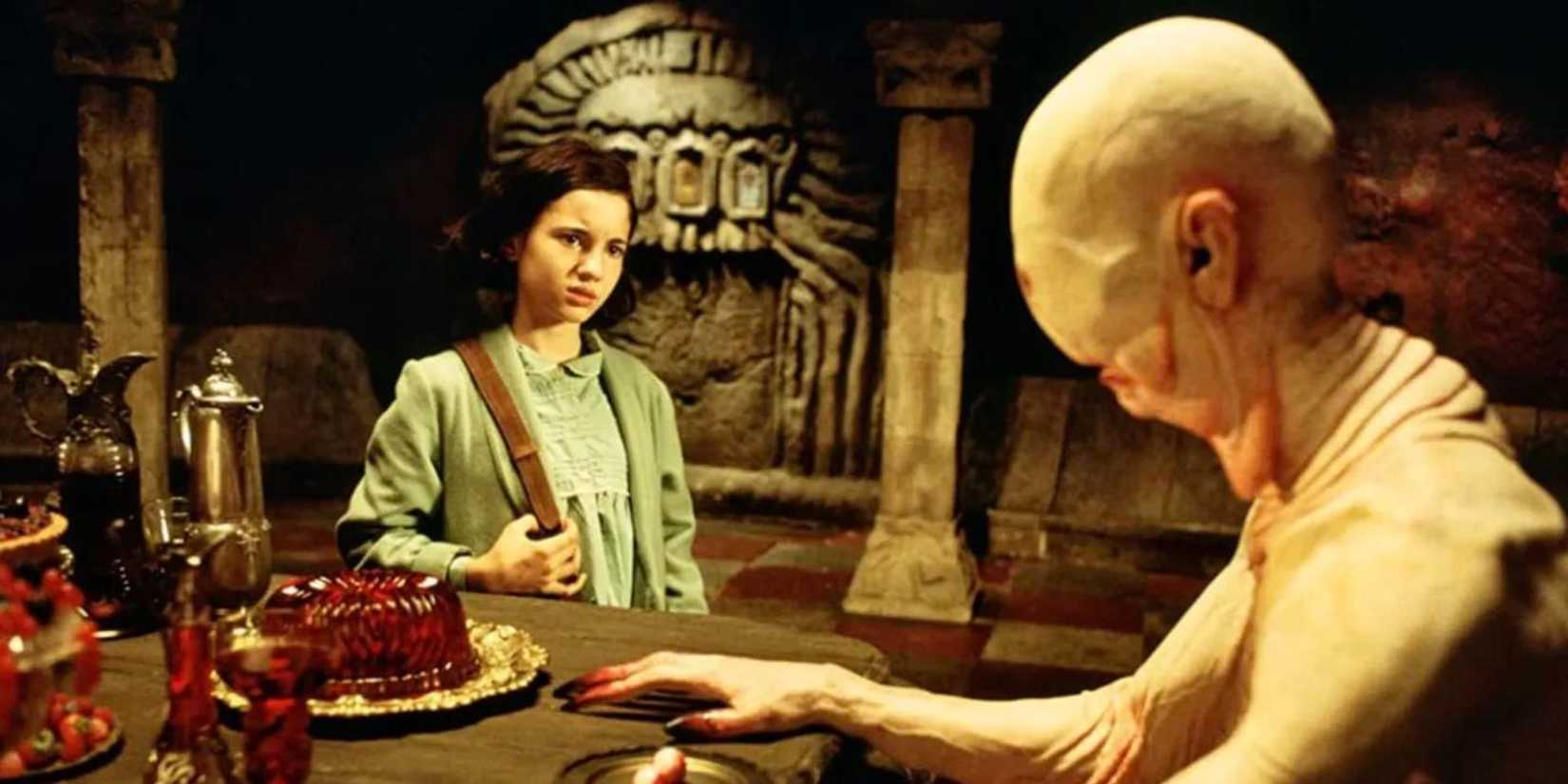
Guillermo del Toro, you're up next. Let's run his clip.
(Play Guillermo del Toro’s clip)
DEL TORO: Well, I love the... We knew from the beginning. When you're making a movie, you cannot make everything the same way. You cannot shoot some scenes... You have to shoot fast. Some, you have to give them the time. When we were talking about this scene, we always knew we were going to have to give it many days.
It was always the centerpiece of the film. To me, you have to have the audience in your mind. For example, you see the fascist captain, right? And he's Sergi López. Amazing performance, all contained. But then he grabs a bottle and destroys the face of a person, destroys the face of a man with that bottle. That makes the audience, from then on, be afraid of him. And they say, "This movie is serious. It means business." Otherwise, you have a guy with a bad temper. That's it. So I knew that this came in the middle of the movie, and you have to understand that her death required her to be very brave.
This was the set piece that was going to hold the first part of the movie, and it was going to give fuel to the second part of the movie. I always just ran it in my head and said, "Well, what am I feeling as an audience?" We shot many scenes in one morning, half a day, a quarter of a day, in order to give this scene many, many days. We knew that we were going to need that.
It's memorable to me because it's sort of the signature of the film, you know? This is one of the scenes where I had a huge fight—a huge fight—with the makeup effects company because originally the Pale Man had a face. The face of an old man. And it was just that. And I said, "No, no, no. We're going to erase the face." And they came back, and they got really angry. Really angry. And they said—you know, I'm sorry about this, kids. Kids, cover your ears. They said, "You don't care about our work."
And I said, "I don't, actually. I care about the movie." And it got really violent, but it became the signature piece of the film. The way that character was designed was very haphazard, very beautiful, very instinctive. And it ended up being that. That's why I wanted it.
JONES: And of all the characters I've played in my entire career, this is the one that I get people coming up to me to this day going “Hi!”.
DEL TORO: And by the way, when Doug and I talked, I said, “You're playing both characters.” And he said, “You cheap bastard.”
JONES: Yes.
DEL TORO: And I said, "It's not that. It's the Faun disguised as the Pale Man." Because he's trying to trick Ofelia into making the wrong choice. There was a reason.
DEL TORO: And he is a cheap ass.
Ivana Baquero Fell in Love With Acting Because of 'Pan's Labyrinth'
Baquero's audition scene left Guillermo del Toro in tears.

Let's run Ivana's clip.
(Play’s Ivana’s clip)
The reason you pick the clip is….
BAQUERO: It's actually funny because it's pretty on theme with the things we've been speaking about today. I picked that clip because, for me, as an actor, it was a turning point. So I had, as we just spoke about, done a few movies before Pan's Labyrinth. And when you're a child, you're encouraged, in order to perform and for them to draw emotion out of you, to use substitution. So they make you think about all these horrible things, which is not necessarily a really pleasant process.
But with Guillermo, for the first time ever, I was able to connect so deeply to the story and to Ofelia that I was just truly able to channel her and to be present and to feel all those feelings that she was feeling, which now, as an adult, I actually find quite remarkable because I hadn't gone through that level of pain and sorrow.
I think that comes as you grow up and as you become an adult and you experience pain. You're able to deepen that emotional toolkit that you can then apply to your craft. But I didn't have that back then. When it happened and when it all clicked, I remember thinking, "Oh, this is what it's actually about. This is addictive. This is what it feels like. This is the point of what we do and of performing." From then on, truly, I think that's when I fell in love with acting and when I decided that that's what I wanted to do because I wanted to chase that feeling.
DEL TORO: And that was your audition scene.
BAQUERO: It was also my audition scene. That was a very special scene..
DEL TORO: I remember you read it, and all of us were crying. And I said, "Hired."
BAQUERO: You might have been crying a little bit.
Guillermo Navarro Proved His Doubters Wrong with 'Pan's Labyrinth'
Navarro is the first Mexican cinematographer to win the Oscar.

Guillermo Navarro, can we run his clip, please?
(Plays Guillermo Navarro’s clip)
What was it about this clip?
NAVARRO: Wow. I remember so many things. The original set for the toad scene was going to be bigger.
DEL TORO: A giant chamber.
NAVARRO: And the toad, when we started playing with him, or they were demonstrating it to us, it was very heavy and couldn't really move it. So we canceled the big set. And we did the opposite thing, which is now put him and us in a tight environment where he couldn't really move because he couldn't really move. But now he's contained by the set that was sort of a tunnel for the mud. And that's where the camera had to fly through things. It was actually a pretty complicated set that we could cut in half and be able to shoot, like the shots that you just said, that were the parlor shots.
It was that kind of thing that we were connected with. Okay, we don't have the solution we wanted, and we turned it around, and we created... So let's do the opposite. Now let's bring it to a set where it's tight and there's no room for him.
DEL TORO: But the movie dictates itself. If you learn to talk to the movie, and it's a contact sport, that's what I mean. You think, "Oh, they planned it like that." No, it happened like that. But what is remarkable for me is this was originally just a tunnel she was going to go by and get to that giant chamber where the frog was. If she goes by, well, that's not a problem, as I called the shots. But it's a whole sequence, so we had to cut the set as we shot it, destroy it, and Guillermo have to light it now—not for her to go by, but for her to have a whole scene with.
BAQUERO: And that's what got the Oscar.
DEL TORO: By the way—and by the way, if I may—the first Mexican cinematographer in the history of cinema to win the Oscar. I want to tell you... You have to understand this. Wherever you come from, whatever is told to you that is against you, you can power through. When Guillermo and I came to the United States in the early '90s, Guillermo went to a talent agency for cinematographers. And they said to him, "Why would we hire a Mexican? We already have a gardener." So what do you say to that? I won't say it because there are audiences under 18 years of age. But I say, you know what I'm thinking. For a cinematographer to win the Oscar from Mexico.
Guillermo del Toro Is Open to Making a Third Movie to Complete His 'The Devil's Backbone' and 'Pan's Labyrinth' Trilogy
The Board of Directors of Comic-Con presents Guillermo del Toro with the Inkpot Award.
Guillermo, I am sure—
NAVARRO: Hold on a second, I have a question for you guys. We did The Devil's Backbone. Then we did Pan's Labyrinth, and this was meant to be a triptych—a three-piece history of Spain. Would you guys watch the third one?
DEL TORO: Well, we will try and make it.
This is my last question for you. I know that you have a hell of a collection. You like to keep things from set. What did you actually take home from the set?
DEL TORO: That's a very good question. I actually kept the original book. That's the one with the drawings of Ofelia. I kept the monolith with the eye in it. It was not a movie where I kept a lot of things because the experience was so terrifying. I mean, with the movies, you just don't know. There are certain movies I've done where I say, "This is my last movie."
Because... and I'm going to put everything into it. The first one was the last one — Cronos. Then came this one. Then came The Shape of Water. And I said, "That's it. I'm retiring after this. But this one I'm going to get right." I didn't keep many things, but I kept those two things. And I will never, ever in my life part ways with those. Ever.
Before this panel ends, I'd actually like to invite Eddie [Ibrahim] back on stage for something special.
EDDIE IBRAHIM: One of the things I think that draws us all together and has, since probably back in the caveman days, was the ability to tell stories. Stories continue to be told even if they're being told on paper, or film, or radio. But in the end, the story is what's the important component, and it is the thing that brings the magic, the monsters, and the myths.
Guillermo del Toro has given us stories that not only look at humanity, but also teach us about compassion, resilience. And the interesting thing is that we learn that sometimes from the monsters that we meet. They sometimes are the ones that can really show us what our humanity is. He has been someone that has championed so many art forms, like comics and animation, just as much reverence as he has put into cinema.
His stories have given countless of us the courage to embrace our own imaginations and to remind us that it's not just about entertainment, but also about empathy, about feeling for others. On behalf of the Board of Directors of Comic-Con, it is truly my honor to present Mr. Guillermo del Toro with the Inkpot Award.
DEL TORO: I don't have one of these. Now, I do. It really is really an award I wanted very, very much. I've been coming to Comic-Con before it was this Comic-Con. It was like a big dealer's room, and the spirit back then was us—a bunch of us believing that comics were a genuine form of expression.
I still think the same. I think that the reason they are is because they're always in the hands. It's like rock and roll. They're always in the hands of people that want to shout something strong. There are big corporations, big music, publishing houses, but there's always a streak of independence, not wanting to do something with them. I remember back then, you had the greats. You had Neal Adams, walking around with people that were coming off of Scott Morris and so forth.
Comic-Con is still that. There is a large component that is about things that are established, but there's a large component that many of them are in this room—people that are doing their own independent thing. I accept this because I believe in comics as a form of storytelling. No matter how big it gets in terms of media and properties and all that, it always belongs to people with a genuine story to tell. Thank you very much. Thank you.
KioskNews shows a cleaned-up reading view extracted from the publisher’s page — the original always lives on their site, not ours.