20 years of ‘Pan’s Labyrinth’: 5 facts about Del Toro’s masterpiece
Two decades after its theatrical release, “El Laberinto del Fauno” (“Pan’s Labyrinth”) remains Guillermo del Toro’s magnum opus and a timeless classic of popular culture. What began as a modest, independent project between Mexico and Spain ended up breaking records and conventions on a global scale: It moved the Cannes Film Festival with a legendary 20-minute standing ovation, grossed over US $80 million worldwide at the box office, and cemented its critical success by winning three Oscars and numerous awards at national and international ceremonies.
Set in the postwar period of 1944, this R-rated film follows Ofelia (Ivana Baquero), a young girl sent to an oppressive military camp controlled by her violent stepfather, Captain Vidal (Sergi López), a Francoist officer obsessed with eradicating the guerrilla resistance. In this hostile environment, Ofelia discovers a labyrinth where an ancient faun (Doug Jones) reveals a delicate truth to her: She is Princess Moanna, ruler of the underground kingdom, and must complete supernatural tasks to reclaim her throne.
Weaving historical horrors with fantasy, “El Laberinto del Fauno” serves as a profound allegory about the loss of innocence and the importance of ethical disobedience in the face of injustice and oppression.
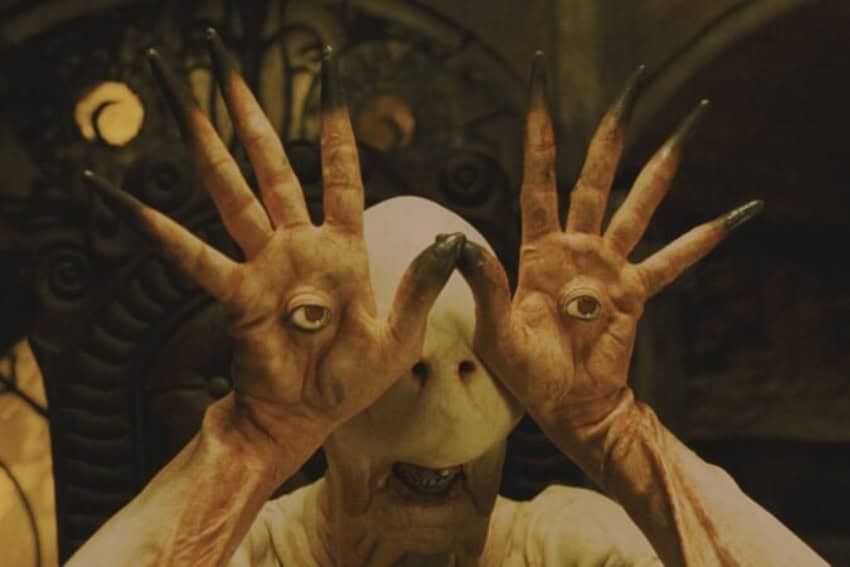
To mark its 20th anniversary and re-release in theaters, we’re delving into the depths of this legendary labyrinth to bring you the most amazing and unexpected behind-the-scenes facts: from its original conception and its connection to “El Espinazo del Diablo” (“The Devil’s Backbone”), to how the story managed to make Stephen King himself squirm in his seat.
1. The original script was darker and more sexual
Little Ofelia’s journey — forced to overcome dangerous, fantastical challenges after moving to a military setting — did not always have the tone or the ending that we have come to love and admire. Few people know that, in its early stages of development, “El Laberinto del Fauno” did not feature a young girl as the protagonist, nor was it set in postwar Spain.
In the original version, Guillermo del Toro wrote a much rawer, darker and more erotically charged draft set in the Victorian era. The protagonist was an adult, pregnant woman who discovered the labyrinth after moving with her husband into an old mansion. There she met the faun, but instead of undertaking fantastical tasks to reclaim her throne, she became entangled in a dark, passionate relationship with the creature.
In the official DVD commentary, the director shares details of this concept: “They made passionate love, she fell in love with him, and he asked for the blood of the firstborn in return for the labyrinth to open and for her to go to the magical kingdom with him.”

By shifting his focus to childhood, Del Toro transformed that idea of adult horror into the fascinating gem of innocence, resilience and rebellion that made it to the big screen. Fortunately for the history of cinema, the Mexican director changed his mind just in time.
2. Two films connected
“El Laberinto del Fauno” was conceived by Del Toro as a companion piece to his 2001 film “El Espinazo del Diablo” (“The Devil’s Backbone”). Although they lack a direct narrative connection or shared characters, the director has formally defined them as “mirror films” due to their profound parallels. Together, they function as a diptych that explores the horror of war through the vulnerable and unspoiled eyes of childhood.
Beyond the historical context — with “El Espinazo del Diablo” set in 1939 during the Spanish Civil War and “El Laberinto del Fauno” in 1944 during the postwar Franco era — the closest connection between the two films is that neither uses horror in a superficial way.
The supernatural appears in Del Toro’s films from a profound and metaphorical dimension to help us process social tragedies and shed light on the darkest corners of the human condition. As the filmmaker explained to Voices of Monterey Bay: “In fairy tales, monsters exist to be a manifestation of something we need to understand, not just a problem we need to overcome.”
Inside ‘Facing El Chapo’: An interview with screenwriter Bernardo Esquinca
Like its predecessor, “El Laberinto del Fauno” demonstrates that true monstrosity does not stem from the supernatural realm — symbolized by the faun and the creatures of the underworld — but rather from the cruelty of human beings.
In both stories, the authentic villains are bloodthirsty, heartless men — such as Jacinto and Captain Vidal — who are obsessed with money, weapons and absolute control. It is in the face of these oppressors’ brutality that the child protagonists use their imagination and sensitivity to come to terms with the world they find themselves living in, defy the tyrants and defend their very existence.
3. The origin of the faun
Long before becoming an iconic figure in modern fantasy, the faun was already haunting Guillermo del Toro’s mind. During his childhood, the director used to have intense lucid dreams in which this creature came to life, emerging from the back of an old family wardrobe.
“I used to sleep at my grandmother’s house … And every night, right at midnight, in my bedroom, a faun would come out of the armoire. It must have been lucid dreaming, but for a child, it was as if it were real,” he told The Guardian. “I would see the faun’s human hand emerge from the armoire, then the smiling face of a goat, and then the hairy leg of a goat. I could clearly see him pulling his body out of the armoire, and I would start screaming.”
For Del Toro, bringing the monster that made him scream at night to the big screen was his way of coming to terms with his childhood fears. Although the faun we see in the film underwent countless changes in appearance, the idea was born from that peculiar childhood experience. Who would have thought that those terrifying sleepless nights would be the origin of the fantastical universe that would ultimately establish him as an international star?
4. The bold rejection of Hollywood that preserved the film’s identity
When the major studios read the story of “El Laberinto del Fauno,” they tried to entice Guillermo del Toro by offering to double the budget, on the condition that he relocate the story to the U.S. market.
However, true to his artistic vision, the filmmaker flatly refused. He believed that if he accepted the change in language and setting, the story would lose all its political power, its historical context and its authentic identity.
During an interview with KPBS, he clarified the direction the film would have taken under the industry’s commercial demands: “I never would have attempted to make ‘Pan’s Labyrinth’ in Hollywood because we would have audience-tested it, and we would have had a super-happy ending with dancing little creatures.”
5. The movie terrified the ‘master of horror’ himself
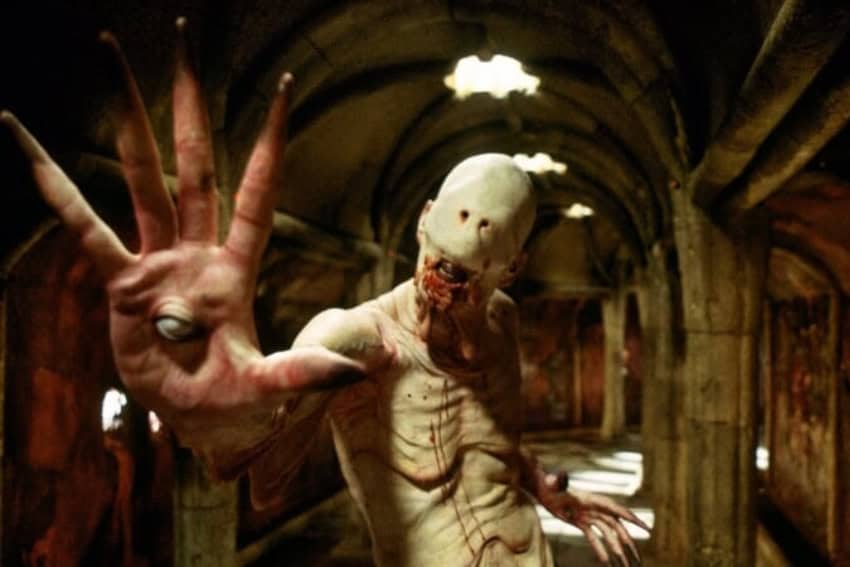
Sharing your work with an icon like Stephen King is a dream come true for any filmmaker, but to make the master of horror himself squirm with fear at your own movie is an achievement reserved for very few. That’s exactly what Del Toro experienced in New England during a special screening of “El Laberinto del Fauno.”
During the iconic scene where the unsettling Pale Man comes to life to chase Ofelia, the Mexican director noticed that the celebrated writer began shifting uncomfortably in his seat, completely overwhelmed by the tension.
As you can imagine, witnessing the obvious unease of one of his greatest artistic influences was one of the most significant moments of recognition in his entire career.
As Del Toro explains in the film’s official commentary: “I must say, it remains the single best screening experience of my life — sitting next to Stephen King and watching him squirm during the Pale Man sequence. That, for me, is an Oscar. That’s absolutely the best thing that ever happened to me in my life.”
Disobedience as a legacy
Two decades have passed since Ofelia first entered the labyrinth, and the good news is that this dark fairy tale retains its ability to delight and unsettle us. Beyond its global box office success and a historic awards season — in which it won three Oscars (art direction, cinematography and makeup), three BAFTAs, seven Goya Awards, and nine Ariel Awards, among others — the deepest impact of Guillermo del Toro’s masterpiece lies in its power to engage with the challenges of modern times.
Far from being a childish escapist fable, this film stands as a manifesto on individual sovereignty and civil disobedience in the face of the dangers of blind, mechanical and unconditional submission. The lesson the film continues to impart to us today is that, in the face of overwhelming and dehumanizing authority, dissent is not an act of immature rebellion, but rather a moral virtue and an indispensable tool for survival.
As Dr. Ferreiro so aptly put it before his execution: “To obey just like that, for the sake of obeying, without questioning … That’s something only people like you can do, Captain.”
Twenty years later, that call to think for oneself and to challenge tyrants — both on and off the screen — remains more alive and urgent than ever.
Carolina Alvarado is a Venezuelan journalist who has devoted much of her career to creative writing, university teaching and social work. She has been published in Lady Science, Latina Media, Global Comment, Psiquide, Cinetopic, Get Me Giddy and Reader’s Digest, among others.
KioskNews shows a cleaned-up reading view extracted from the publisher’s page — the original always lives on their site, not ours.