Facing 2 years as a lame duck, what can Trump do to stay in control?
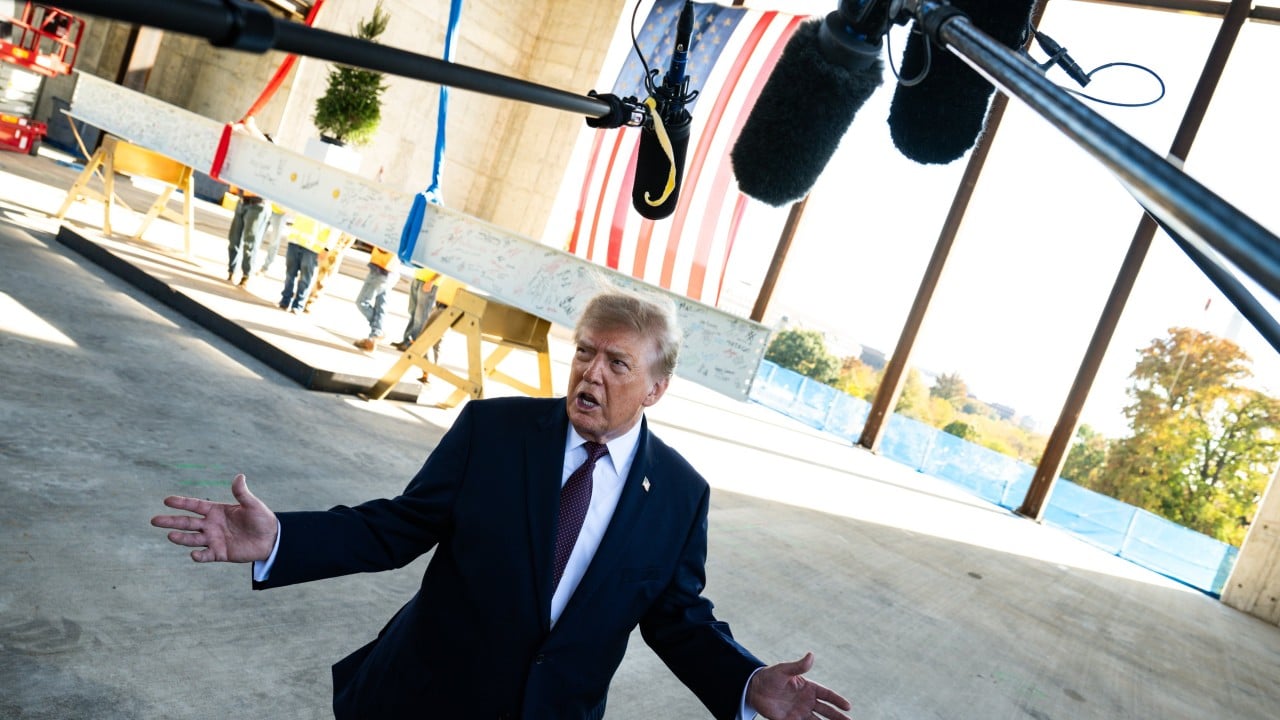
Following disastrous midterm elections that cost Republicans congressional control, President Donald Trump faces serving the rest of his term as a “lame duck” and battling constant resistance to his agenda.
The loss is expected to steer the White House towards a more aggressive foreign policy and even greater reliance on executive orders. Trump has already suggested he could brandish his veto pen for “a month or two” before negotiating agreements with Democratic leaders.
Here, we explain how executive powers and legislative limits may shape the final two years of Trump’s presidency.
Can Trump lean on the veto?
Confronted with what some have described as a blue tsunami, Trump posted a photo to social media showing his iconic red campaign cap with a single word emblazoned across the front: “VETO”.
As president, Trump can reject any bill passed by the incoming Democratic Congress. Overriding him requires a two-thirds vote in both chambers – a threshold far beyond Democrats’ reach.
Facing a divided government, the White House is widely expected to double down on unilateral action.
03:00
The global impact of the coming US midterm elections under Donald Trump
According to data compiled by The American Presidency Project under the University of California, Santa Barbara, Trump has issued an average of 166 executive orders per year of his second term, more than any president since Franklin D. Roosevelt and far outstripping his recent predecessors.
Trump’s plan was always to lean heavily on his executive authority while treating Congress as an optional partner, said Lindsay Newman, an associate fellow at Chatham House.
“Much of his remaining domestic policy priorities – including on artificial intelligence, immigration, deregulation and energy – will be funnelled through the president’s office in his final two years,” Newman said in a Wednesday note.
Where can Congress rein in Trump?
Democrats hold their most potent leverage in the fiscal arena, as Trump cannot bypass lawmakers to secure federal funding or lift the national borrowing limit.
The scenario mirrors Trump’s first term, when Democrats reclaimed the House in 2018 and effectively suffocated his signature domestic projects, from border-wall appropriations to major federal infrastructure spending.
Congress’ powers of the purse give Democrats an exceptionally strong hand, noted Josh Lipsky, a former International Monetary Fund adviser, in a research note on Wednesday.
The first clash looms almost immediately: existing federal funding runs out on December 11. While the outgoing Congress may pass a continuing resolution, a budget fight appears inevitable in 2027.
Beyond its fiscal control, Congress can also stall Trump’s momentum by blocking his personnel appointments.
What are Trump’s remaining levers?
Trade policy and foreign affairs represent two areas where lawmakers will struggle to constrain the president.
Boxed in at home and unshackled from re-election concerns, Trump is likely to pivot abroad to burnish his presidential legacy, argued Jorn Fleck, senior director of the Atlantic Council’s Europe Centre, in a note on Wednesday.
While Democratic lawmakers will seek to reclaim the broad trade and tariff powers that Congress ceded to the executive branch during Trump’s second term, hard limits on his power are unlikely, Fleck noted.
Trump’s overtures to Moscow could also trigger friction between the branches of government, with lawmakers potentially erecting hurdles to any further energy-focused deals on the Ukraine war.
Trump open to nuclear talks with Xi and Putin
Diplomatic compromise on this issue may face legal and political barriers, warned Landon Derentz, vice-president for energy and infrastructure at the Atlantic Council.
Writing in a Wednesday note, Derentz pointed to cross-party resistance on Capitol Hill to easing sanctions on Moscow, compounded by the European Union’s legally binding commitment to phase out Russian gas imports entirely by 2027.
Will Trump face investigation?
Representative Robert Garcia, the California Democrat in line to lead the powerful House Committee on Oversight and Government Reform, delivered an ominous two-word warning to Republicans on Tuesday night: “Lawyer up.”
Garcia had previously mapped out an oversight agenda should Democrats take the gavel, signalling plans to investigate Elon Musk’s role in the Department of Government Efficiency, the Trump family’s business interests, alleged abuses within Immigration and Customs Enforcement and the Jeffrey Epstein scandal.
Congress could also attempt to impeach the president, but this also has structural limitations.
During Trump’s first term, two high-profile impeachment proceedings consumed vast political energy only to collapse into Senate acquittals as Democrats lacked – and still lack – the two-thirds supermajority needed to remove Trump from office.
Sub-impeachment inquiries, however, pose risks to the West Wing’s day-to-day operations. Committees in both chambers possess broad subpoena powers to probe alleged conflicts of interest, executive ethics and actions taken by Trump and his inner circle.
KioskNews shows a cleaned-up reading view extracted from the publisher’s page — the original always lives on their site, not ours.