Is Philippines geared for El Nino? Critics say water-planning has run dry
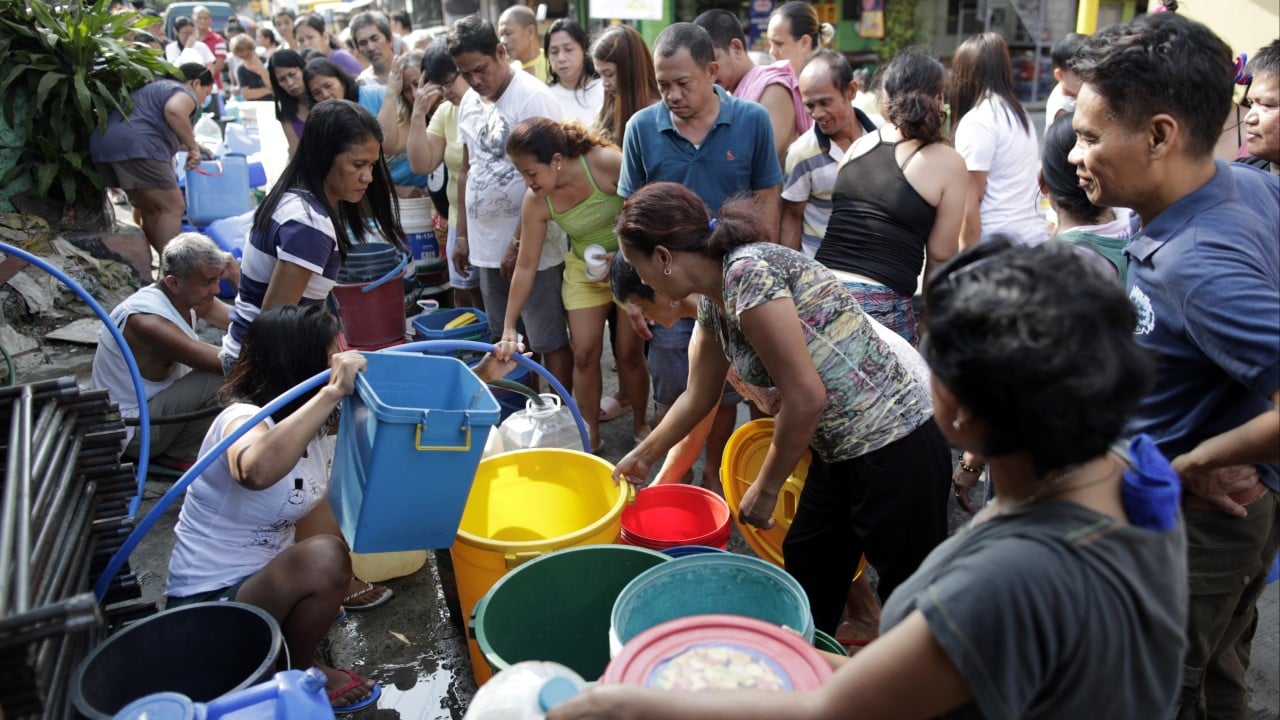
As the Philippines braces for months of drought and shortages in key resources due to the current El Nino season, questions are mounting over whether it could have prepared better to deal with a crisis that has been predicted well in advance.
The government’s haphazard response to El Nino reflects its persistent track record of failing to do adequate disaster and infrastructure planning, according to climate and risk specialists.
El Nino is a weather phenomenon that causes changes in winds and rainfall and erratic weather around the world due to warmer-than-average sea surface temperatures in the central and eastern tropical Pacific Ocean. The 2026-2027 El Nino event was declared in June by the World Meteorological Organization and is expected to peak in November and December.
On Thursday, Philippine Trade Secretary Cristina Roque told reporters that there was no need for residents to hoard bottled water and that supplies and prices of basic goods remained stable, following social media posts showing that Filipinos were buying water and other items in huge quantities at supermarkets.
“There is no need to panic, there is no need to hoard. We have enough to supply,” Roque said.
However, a suggestion on Wednesday by Rex Gatchalian, secretary of the Department of Social Welfare and Development, to buy buckets to collect rainwater and help prevent water shortages did little to assuage the public’s concerns.
The department said it would be distributing water treatment kits, with Gatchalian demonstrating that water filtered by one such kit was safe for drinking at a media briefing.
One social media user complained: “Telling citizens, many of whom are already struggling with rising living costs, to rely on buckets is a temporary band-aid.”
Analysts question Manila’s readiness to deal with a prolonged drought, amid reports that the government has cut Metro Manila’s water allocation in anticipation of El Nino peaking later this year.
Ven Paolo Valenzuela, a research fellow at Singapore Management University’s College of Integrative Studies, said the Philippines experienced one of its strongest El Nino events in 1997 and disaster planning had not improved almost 30 years later.
He said the problem was not the filtration technology, which he described as “very good” in helping communities hit by super typhoons and other natural disaster events. Rather, it was the absence of a broader plan to address an event with potentially far-reaching effects, he added.
“Thirty years later, you still haven’t solved these problems, still haven’t put [the infrastructure] in place.”
Patrick Manuel, country director of Waves for Water, a non-governmental organisation supplying the filtration kits to the government, said the devices alone could not address the challenges posed by El Nino.
His organisation first introduced the kits to remote communities whose access to clean drinking water was disrupted by the destruction caused by Typhoon Haiyan in 2013.
Manuel said addressing the impact of El Nino required a whole-of-society approach involving government agencies, local governments, the private sector, civil society organisations and communities to boost the country’s water infrastructure and promote responsible water use.
“Through our work with communities from all across the country, we’ve seen that there’s much more work to be done to provide Filipinos with the right tools and infrastructure to be able to have reliable access to clean and safe water,” Manuel said.
Pamela Cajilig, a Philippines-based disaster anthropologist and a fellow of the Atlantic Institute, said the government’s stopgap measures had fuelled distrust as they were seen as transferring responsibility for dealing with extreme weather to ordinary Filipinos.
While Filipinos should do their part, the government’s overemphasis on household measures without implementing a systematic national disaster plan appeared to show its preference for “romanticising resilience”, Cajilig said.
“There is also the practical question of how these filtration devices will work on a mass scale and for a prolonged period. A quick demo for the press does little to help us imagine actual scenarios,” she added.
Keith Paolo Landicho, a research associate of S. Rajaratnam School of International Studies’ humanitarian help and disaster relief programme, said Filipinos should be told how they would be protected by the state instead of being given another reminder on how to cope with the next disaster.
“Filipinos are tired of their resilience being celebrated while the systems that leave them exposed remain unfixed. Being told to collect rainwater in buckets is not a sustainable solution; it is a stopgap dressed up as preparedness,” Landicho said.
Compared with its neighbours, the Philippines appears to be lagging in preparation ahead of natural disasters, according to analysts.
Valenzuela cited Vietnam, which invested in infrastructure projects such as irrigation systems and sluice gates to regulate water flows from the Mekong River following the 2015–16 El Nino event.
Across the region, countries have been preparing for this season’s El Nino, such as Thailand’s enhancement of its climate databases and Indonesia’s establishment of a drought emergency mechanism in several districts, according to media reports.
What is a ‘super’ El Nino?
The Philippine government’s move to limit Metro Manila’s water supply was a clear sign that it had planned poorly to deal with El Nino’s effects, Valenzuela said.
“We can’t even figure out how to put systems in place when it comes to decades of planning to prevent another major disaster that could happen in 10 or 20 years,” he added.
Landicho said, however, that the water supply situation in Metro Manila appeared to have improved compared with a few months ago, while the water levels in the nearby provinces of Bulacan and Pampanga had recovered from record lows in July.
Nonetheless, with the Philippine state weather bureau Pagasa having issued forecasts on El Nino as far back as March, the country was ill-prepared for “one of the most forecastable hazards”, Landicho added.
Cajilig said an El Nino-related disaster could ultimately have a devastating impact on the Philippines over the long term.
“Unlike rapid onset disasters in which we can immediately witness wide-scale loss of life, livelihood, and infrastructure, slow onset disasters like drought are less dramatic. Yet studies show that their economic impact can be greater across time – mostly because their effects go unaddressed and therefore linger,” she said.
Athea Penaloza, executive director of the Asia-Pacific Alliance for Disaster Management-Philippines, is concerned about a fall in food production and sustained price pressures faced by Filipinos as the agricultural sector could be the hardest hit if dry conditions were to persist, particularly in the first half of next year.
Calling on Manila to provide immediate support to agricultural communities, she said: “This is where the government needs to prepare more proactively. It is important to put concrete measures in place now to support farmers, protect agricultural production and minimise the impact on food security and the cost of living.”
KioskNews shows a cleaned-up reading view extracted from the publisher’s page — the original always lives on their site, not ours.