New law on barangay, SK polls, terms under fire
MANILA, Philippines — Several groups have come together to raise red flags over a new law extending the term of office of barangay and Sangguniang Kabataan (SK) officials to November 2028, saying this was done to consolidate political networks ahead of the national elections scheduled that same year.
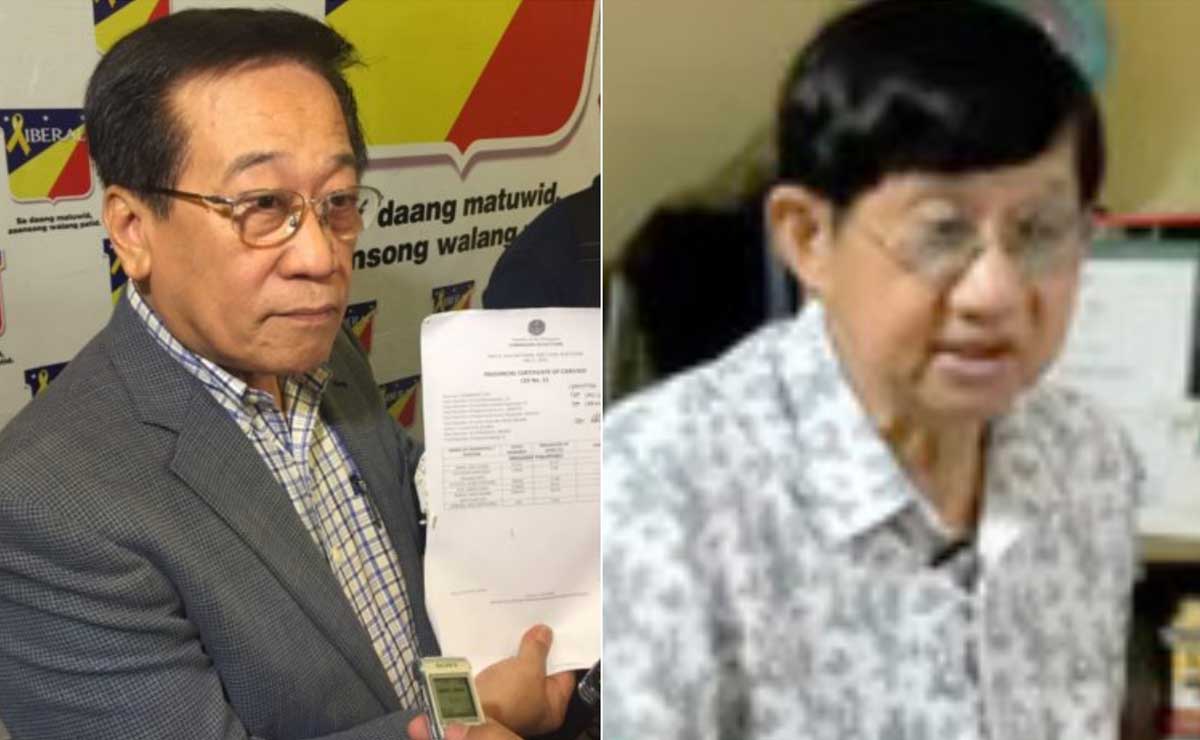
The law is set to be challenged before the Supreme Court, with election lawyer Romulo Macalintal planning to file a petition for certiorari on Monday. He argued that the postponement would result in an unreasonable extension of the terms of incumbent barangay and SK officials.
Roland Simbulan, chair of private think tank Center for People Empowerment in Governance (CenPEG), said the Marcos administration stands to “gain politically from this postponement.”
Article continues after this advertisement
READ: Marcos signs BSKE postponement into law
FEATURED STORIES
NEWSINFO
NEWSINFO
NEWSINFO
“Keeping the present barangay political configuration in place longer could give the administration additional time to consolidate relationships and political machinery at the grassroots as the country approaches the 2028 presidential and national elections,” he added.
President Ferdinand Marcos Jr. signed Republic Act No. 12326 on Sept. 24 but announced it only the day after—or three days before the filing of certificates of candidacy for the barangay and SK elections (BSKE) was scheduled to begin on Sept. 28.
The new law moves the BSKE from Nov. 2, 2026, to Nov. 13, 2028 — or six months after the crucial president and general elections scheduled on May 8, 2028.
RA 12326 also sets the term of office of BSK officials at five years, allowing incumbent officials to remain in their positions for three years beyond the previously scheduled 2026 elections. It sets a limit of two terms for barangay executives and one term for SK officials
Article continues after this advertisement
Marcos had said that extending the terms of office would give incumbents more time to serve the public.
Part of a pattern
Civil society group August Twenty-One Movement (Atom), however, called the postponement “undemocratic and against the spirit of democracy.”
Article continues after this advertisement
“You don’t just postpone elections to suit your political plans,” Atom said in a statement.
It noted that the postponement was part of a pattern since the Duterte administration that “more often […] has been abused to benefit incumbent administrations, especially when crucial elections are coming.”
“The third time [Marcos] has done something like this since 2022. This equals the three postponements that President Duterte also signed during his term to reschedule these elections,” it said.
“Marcos and Duterte normalized this with three postponements each during their respective terms. But let it be put on record that this is not normal in a democracy,” it added.
READ: Macalintal says to bring BSKE postponement to SC
Influential role
Election watchdog National Citizens’ Movement for Free Elections (Namfrel) shared the sentiment, saying the repeated postponement was a pattern that should be broken.
It pointed to the timing of the next BSKE in the same year as the 2028 polls.
It said barangay officials could play an influential role in national campaigns, making the continued tenure of incumbents until 2028 a political concern.
“The wisdom of extending the terms of office even to five years was very arbitrary and had only an anecdotal basis for assuming that a longer term will redound to an efficient, responsive and productive administration and governance at the barangay level. No studies were cited to reach this policy conclusion,” Namfrel Secretary General Eric Alvia told the Inquirer.
Alvia also questioned the basis for extending the terms to five years, saying there was no evidence that a longer tenure would improve governance at the barangay level.
“A fresh mandate from the voting public should be the requirement for those benefiting from an extended term and not through an executive-legislative action,” he said.
The Commission on Elections (Comelec) had already begun preparations for the 2026 BSKE and already spent at least P8 billion.
Legal challenge
Namfrel said it “will support and join the effort of individuals and groups moving to question the constitutionality of RA 12326,” pointing out that the law “strikes at the heart of our democracy and reflects a grave abuse of discretion.”
Macalintal argued that the three-year postponement effectively extends the terms of incumbent officials without a vote from the electorate.
“Combined, this translates to three long years where millions of Filipino voters are stripped of their fundamental right of suffrage, governed instead by local officials effectively thrust upon us through legislative appointment rather than the ballot,” he said.
Macalintal has previously questioned before the high court RA 11935, which Marcos signed on Oct. 10, 2022 and reset the BSKE from Dec. 5, 2022 to Oct. 30, 2023. The Court declared it as unconstitutional in June 2023.
On Aug. 13, 2025, Marcos signed RA 12232, which, again, reset the BSKE from Dec. 1, 2025, to Nov. 2, 2026. RA 12232 extended the terms of barangay and SK officials from three years to four years.
Macalintal also questioned RA 12232 before the high court, arguing that it sought to reschedule and postpone the polls “not for any important, substantial, or compelling reason, but merely on account of the perceived shortness of the incumbent BSK officials’ term of office.”
Three other petitioners—high school teacher John Barry Tayam, a group of young voters led by Mystro Yushi Fujii, and lawyer Alberto Hidalgo—filed separate pleadings questioning the law for allegedly failing to comply with the guidelines on election postponements set in the 2023 case of Macalintal v. Comelec.
On Nov. 11, 2025, the Supreme Court, in an 8-5-2 decision, upheld the constitutionality of RA 12232.
In a decision written by Associate Justice Jhosep Lopez, the high court denied four consolidated petitions and ruled that the Constitution grants Congress the authority to set the term duration of barangay officials.
The court also clarified that RA 12232 is fundamentally a term-setting law for BSK officials, establishing a four-year term and prohibiting consecutive terms for the Sangguniang Kabataan officials.
The Supreme Court also ruled that the law does not violate the public’s right to vote, as “it neither abolishes nor indefinitely suspends” the BSKE.
The majority, or eight of the 15 justices, concurred with the ruling, namely Chief Justice Alexander Gesmundo, Associate Justices Rodil Zalameda, Samuel Gaerlan, Ricardo Rosario, Jhosep Lopez, Japar Dimaampao, Jose Midas Marquez, Antonio Kho Jr., and Raul Villanueva.
Senior Associate Justice Marvic Leonen and Associate Justices Alfredo Benjamin Caguioa, Henri Jean Paul Inting, Maria Filomena Singh and Kho dissented.
Associate Justices Ramon Paul Hernando and Amy Lazaro-Javier did not participate.
Your subscription could not be saved. Please try again.
Your subscription has been successful.
They will be the same justices to rule on any new petitions against RA 12326. —WITH A REPORT FROM INQUIRER RESEARCH INQ /das
KioskNews shows a cleaned-up reading view extracted from the publisher’s page — the original always lives on their site, not ours.