Damascus struggles to assert control in southern Syria amid ISIS threat, Druze tensions - analysis
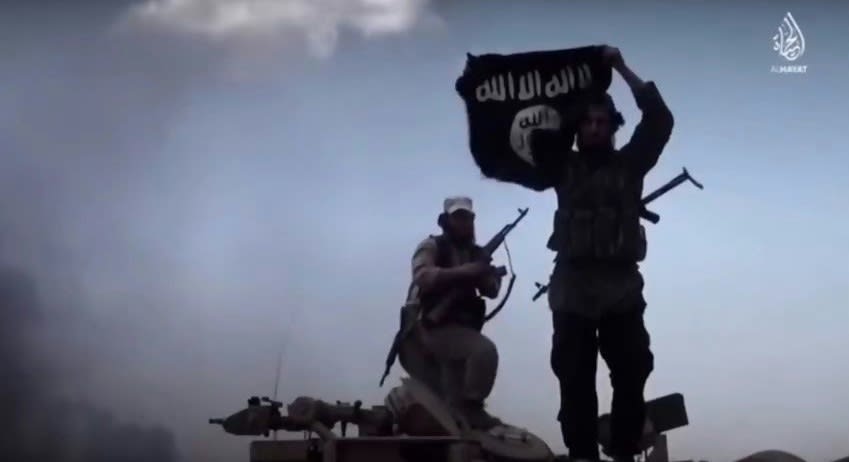
Southern Syria is facing renewed security challenges as armed groups attack government security forces, tensions continue in Suwayda, and the Syrian government confronts threats from ISIS cells in areas around Damascus. The developments illustrate the difficulties Syria's government faces as it seeks to maintain security across the country.
Southern Syria is particularly complex for several reasons. One reason is the continued Israeli raids along the border. Syrians are becoming increasingly angry and frustrated with Israeli patrols into Syrian villages. Last week, a Syrian was killed, and this led to protests.
There is also the issue of the Druze in Suwayda. The Druze area is not under government control and has sought varying degrees of independence. At the same time, ISIS cells and other threats appear to continue in the areas between Damascus and Dara’a and the Golan border.
Israel has demanded southern Syria be demilitarized, which means that Syria can only deploy lightly armed Interior Ministry forces.
The situation is particularly serious in southern Syria, where instability in Daraa and Suwayda has implications for the region near Israel's border. The Syrian government is attempting to expand its authority, but local armed groups and other security threats may complicate these efforts.

Clashes with authorities, terrorists
On October 25, Syria's state news agency SANA reported that a highway security officer had been killed and another wounded when armed men attacked a security checkpoint in the Busra al-Sham area of eastern Daraa province.
According to SANA, the Internal Security Forces said specialized units responded to the attack and arrested the perpetrators following an exchange of fire. The authorities said investigations were continuing to determine the circumstances and motives behind the incident.
The attack illustrates the challenges in Dara’a, a province that played an important role in the uprising against the Assad regime beginning in 2011.
The area has experienced years of division during the civil war, and the latest incident illustrates how armed attacks remain a threat to government efforts to establish security. In general, Dara’a is known for supporting Damascus, but during the era when the former Syrian regime ran Dara’a from 2018 to 2024, there were many mysterious killings. Some may have been local feuds.
SANA noted that the attack followed another incident on October 13, when three highway security officers were killed in an attack on their patrol along the Salamiyah-Athriya road in eastern Hama province. Although the incidents took place in different areas, they underscore the dangers facing Syrian security personnel.
Meanwhile, the situation in neighboring Suwayda province remains tense. SANA reported that armed groups in Suwayda closed the main highway connecting the province to Damascus on Saturday. SANA represents the government line. Druze authorities have rejected the claims.
Drug, weapon smuggling rampant
They are also angered by recent comments from US Envoy Tom Barrack that slammed Suwayda as an area of drug smuggling.
According to the recent Syrian state media report, the road was blocked in both directions at the Um al-Zaytoun checkpoint, which is controlled by what they call a “local armed group.” Qutaiba Azzam, director of media relations at the Suwayda Media Department, said the groups had prevented traffic from passing through the area.
The report also said that approximately 100 employees had been prevented from reaching their workplaces earlier in the week. Similar restrictions had previously prevented students from leaving the area to take national examinations.
On October 18, Suwayda Governor Mustafa al-Bakour warned that residents were suffering from difficult living conditions and deteriorating security. According to SANA, he accused armed groups of kidnappings, threats, and obstructing efforts to resolve the situation.
It is important to note, again, that SANA presents these developments from the perspective of the Syrian government, describing the armed factions as outlaw groups. The continuing dispute nevertheless illustrates the difficulties Damascus faces in extending its authority over Suwayda.
The road closures and restrictions on civilian movement matter because they affect daily life and economic activity. They also illustrate how local armed groups can exercise control even when the government seeks to restore normal administration.
In another development, Syrian security forces have continued operations against suspected ISIS cells around Damascus. According to Rudaw, two members of Syria's Internal Security Forces were killed and five wounded during an operation targeting an ISIS cell in Rankous, approximately 45 kilometers north of Damascus.
The Internal Security Forces said the suspects refused to surrender and opened fire. The operation reportedly ended with five suspected ISIS members killed, six arrested, and weapons and explosive belts seized.
ISIS plots to attack government forces
SANA also reported the operation, saying it was carried out in cooperation with the General Intelligence Service.
The operation followed an October 16 announcement that Syrian intelligence and security forces had disrupted an alleged ISIS plot to attack a police patrol in the Damascus countryside. Two suspects were arrested, and an explosive device was seized.
Rudaw noted that ISIS continues to operate in parts of Syria despite a decline in its attacks. It cited an August 27 report by the Lead Inspector General for Operation Inherent Resolve that described a reduction in ISIS attacks following the withdrawal of US forces in April, while noting continued attacks on Syrian government forces.
Taken together, the developments illustrate several overlapping security challenges. In Dara’a, armed attacks threaten government personnel. In Suwayda, the situation is unlikely to be resolved any time soon. Druze accuse the government of complicity in a massacre of more than 1,000 people in July of 2025. Around Damascus, ISIS cells remain a security concern.
These are not necessarily connected threats. However, they demonstrate the fragmented security environment confronting Syria's new government.
For Israel, developments in Dara’a and Suwayda matter because both provinces are part of the wider southern Syrian region bordering or approaching the Golan Heights. Instability in these areas could complicate efforts to establish predictable security arrangements along the frontier.
The larger question is whether Damascus can consolidate security without creating new confrontations with local communities and armed groups. The incidents reported over the past week suggest that restoring government authority remains a difficult process, particularly in southern Syria, where local tensions intersect with broader regional security concerns.
KioskNews shows a cleaned-up reading view extracted from the publisher’s page — the original always lives on their site, not ours.