The Apec moment Hong Kong needs to seize
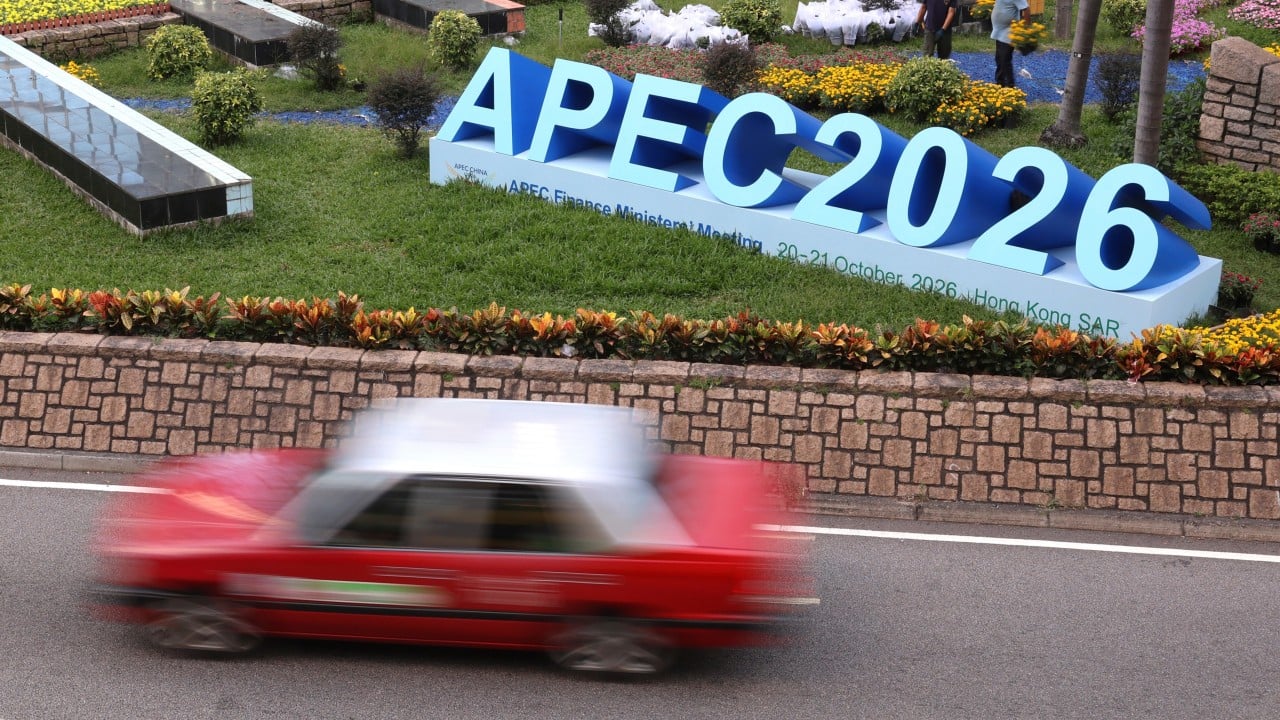
The first Asia-Pacific Economic Cooperation (Apec) forum finance ministers’ meeting to be held in Hong Kong focused on openness, cooperation and resilience. These themes go to the heart of a question confronting the city: as globalisation becomes more difficult and the rules and security boundaries governing international markets grow more complex, what can Hong Kong still offer cross-border commerce?
Globalisation is not over. Capital still seeks opportunities overseas, while technology, energy, raw materials and supply chains cannot simply retreat behind national borders. Yet geopolitics, industrial policy, technology controls, data governance and financial security increasingly shape investment decisions.
For decades, globalisation was largely about lowering costs and reducing barriers. Its next phase could be defined by a different challenge: how to keep cross-border transactions moving when borders matter again.
Hong Kong has long described itself as a “superconnector” between China and the rest of the world. When rules diverge, the harder task is no longer overcoming distance; it is bridging institutional differences.
A mainland Chinese company entering Southeast Asia, the Middle East or Europe must translate its creditworthiness, assets, technology and business model into forms that local banks, regulators, investors and partners can understand, accept and price. International capital entering China faces the same challenge in reverse.
Finance, insurance, law, arbitration, clearing, settlement and accounting might appear to be distinct industries, but they perform a common function: translating economic activity under one institutional system into transactions that another system can accommodate.
Hong Kong’s future value might therefore lie less in connectivity alone than in making different institutional systems work together. Its role is not to eliminate differences but to turn the risks arising from those differences into ones that can be identified, priced and managed.
This helps explain why openness and resilience featured so prominently at the Apec meeting. Together, they reflect a shift in globalisation from reducing friction to managing it.
Cross-border costs now extend beyond tariffs and logistics. They include whether data can cross borders, technology is restricted, capital can move freely, regulatory standards are compatible, policy changes are predictable and contracts can be reliably enforced.
Hong Kong’s first five-year plan proposes strengthening economic and social resilience, risk alert mechanisms, cybersecurity and emergency management, while consolidating the city’s role in the offshore renminbi business, international asset and wealth management, and international risk management.
The significance lies in the relationship between openness and resilience. Openness creates opportunities; resilience helps contain tail risks. Clear rules and credible safeguards can turn security into an institutional asset rather than another barrier to trade.
Hong Kong can also offer something increasingly valuable in a fragmented world: the option to keep different paths open. Companies choosing Hong Kong can access renminbi financing while remaining connected to global capital markets, enter the mainland market while maintaining international business networks, and benefit from China’s growth while using Hong Kong’s common-law framework, arbitration system and professional services.
In stable times, this flexibility might be a convenience. In an uncertain environment, it resembles a financial option. No one can predict how trade, finance and technology systems will be reorganised during the next decade. Preserving access to different financing sources, markets and institutional arrangements therefore has value in itself.
Geopolitical fragmentation could thus create opportunities for Hong Kong, but any dividend from this is far from automatic. The value Hong Kong creates by reducing institutional friction must outweigh the additional costs of routing transactions through the city.
That requires confidence that contracts will be enforced, rules will remain sufficiently consistent, capital will retain adequate freedom of movement, professional institutions will meet international standards and policy changes can be incorporated into commercial decisions. Without that confidence, standing between two systems may become a source of friction rather than an advantage.
Hong Kong’s challenge is not to choose between deeper integration with national development and maintaining its international character. The two can reinforce each other.
03:47
Hong Kong’s first five-year plan enhances competitiveness, foreign business opportunities
If Hong Kong loses its deep connections with the mainland economy, its distinctive value to global capital will diminish. The world already has major financial centres in New York, London, Singapore and Dubai. Hong Kong’s proposition is different: it offers a rare interface between access to the Chinese economy and the ability to structure transactions in ways familiar to international investors.
Seen in this light, the city’s five-year plan is about more than expanding Hong Kong’s financial sector. Its deeper significance lies in creating sustained demand for the city’s cross-border financial and professional services as mainland companies and capital expand globally.
The competition among financial centres has traditionally been about who can move capital faster, more freely and more cheaply. In a new era of globalisation, another question might matter just as much: who can help a world of divergent institutions, complex rules and competing priorities remain open, sustain cooperation and preserve trusted connections amid uncertainty?
KioskNews shows a cleaned-up reading view extracted from the publisher’s page — the original always lives on their site, not ours.