Mexican exports increased by nearly 30% through August, led by computer equipment
Mexican exports grew at an annual rate of 40.4% in August, accumulating an increase of 29.3% through the first eight months of the year, according to the national statistics agency INEGI.
INEGI’s monthly report showed that exports reached a record US $549.4 billion during the January-August period and topped $78 billion in August.
At the same time, imports increased 34.2% in August and 26.8% through the first eight months of 2026, rising to US $77.405 billion and $539.5 billion (a new record), respectively.
As a result, Mexico recorded a surplus of $605.4 million in August, and $9.86 billion on the year through August.
The export sector was led by non-automotive manufacturing exports, up more than 63% in August, primarily due to a continuing surge in sales of computer equipment that began in 2024.
From January through August, manufacturing exports rose 30.8% annually, while non-automotive manufacturing rebounded 45%, the highest since records began in 1994.
Despite the record performance, analysts point out two concerns: the predominance of the U.S. as Mexico’s main buyer and the country’s reliance on Asia as an indispensable supplier for the fast-growing computer industry.

According to INEGI, 84.7% of Mexico’s total non-oil exports went to the U.S., while Mexico’s dependence on the U.S. in the computer sector is even more dramatic.
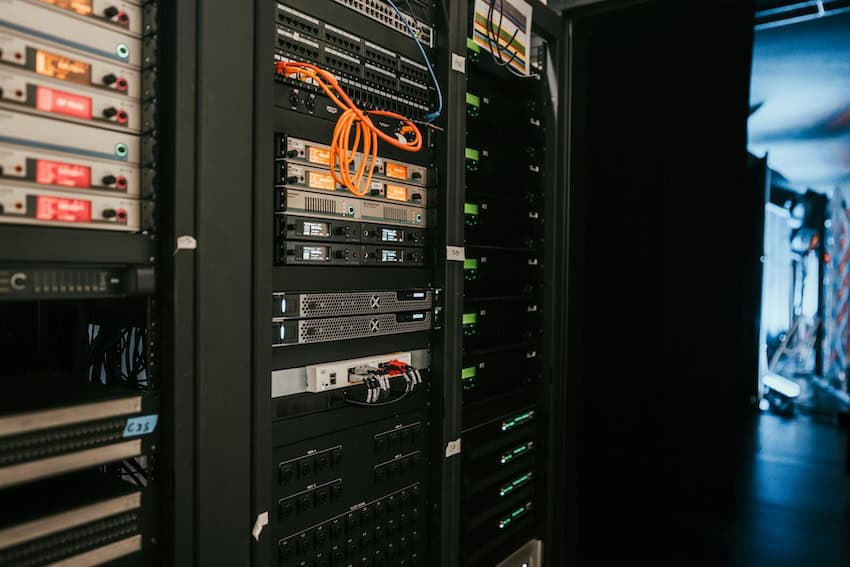
Mexico exported nearly $83 billion worth of servers, primarily used in data centers and artificial intelligence, and 93.9% of the servers were destined for the United States.
On the import side, processors, memory, cards and other high-value components come primarily from Taiwan, China, Malaysia, South Korea, Vietnam and Thailand with Taiwan alone supplying approximately 44% of the main inputs imported by the computer industry.
El Imparcial columnist Eduardo Ruiz Healy argued that as Mexico imports these components, assembles the equipment, and exports them (mainly to the United States), a significant portion of the value of each server is generated outside the country.
The concern here is that since the U.S. is demanding greater North American content in servers and other artificial intelligence equipment (in its bilateral trade negotiations with Mexico), the inability to produce them here could impact the export sector negatively.
Still, when paired with other data for August — oil exports down 2.8%, agricultural exports down 1.6% and automotive exports down 2.2% — it is apparent that the technological expansion cycle in the United States is supporting the Mexican economy.
KioskNews shows a cleaned-up reading view extracted from the publisher’s page — the original always lives on their site, not ours.