Haze disrupts daily routines, hits businesses in Singapore's west as PSI reaches very unhealthy level
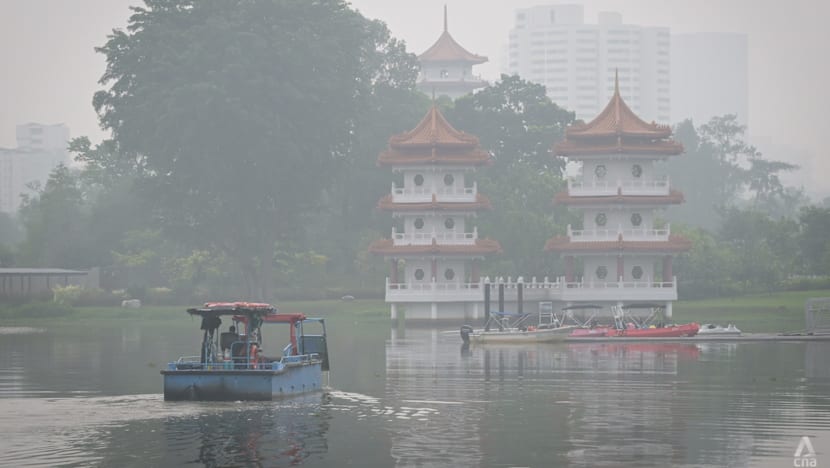
SINGAPORE: Jurong West resident Yong Yoon Chin and his wife have stopped their regular evening walks, put other outdoor activities on hold and started using eye drops to relieve irritation as the haze takes a toll on their daily lives.
The couple, who run a children’s clothing shop next to Jurong West Hawker Centre, have also seen business plunge by about 70 per cent over the past two weeks as fewer customers venture out.
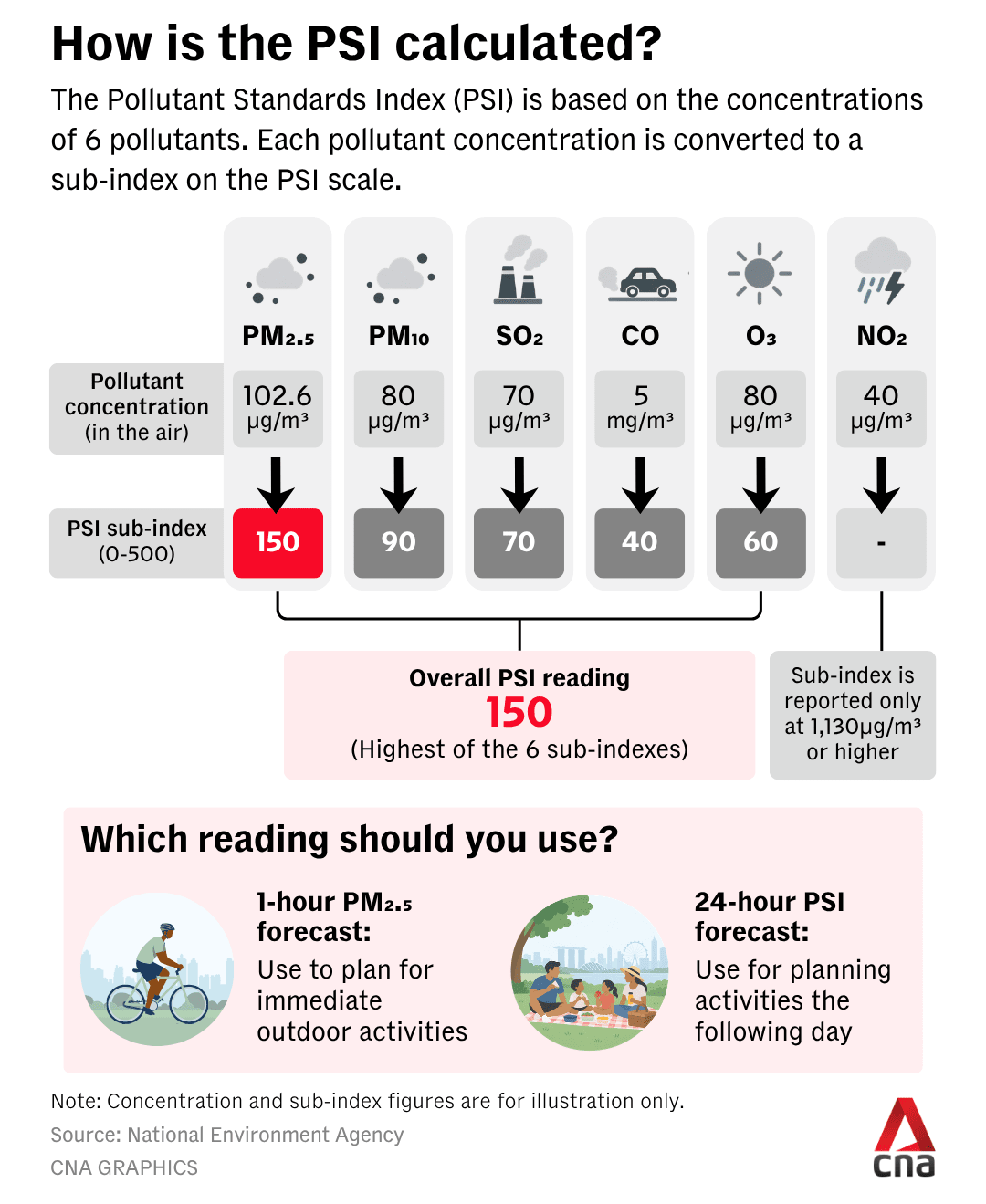
They are among the residents and business owners in western Singapore feeling the effects of worsening air quality, with the 24-hour Pollutant Standards Index (PSI) reaching 230 in the west at 10am on Sunday (Oct 18) – the highest reading recorded islandwide this year.
Mr Yong, 63, said he and his wife have largely stayed indoors over the past two to three weeks, venturing out mainly for the short commute to their shop. He has also put his golf sessions on hold.
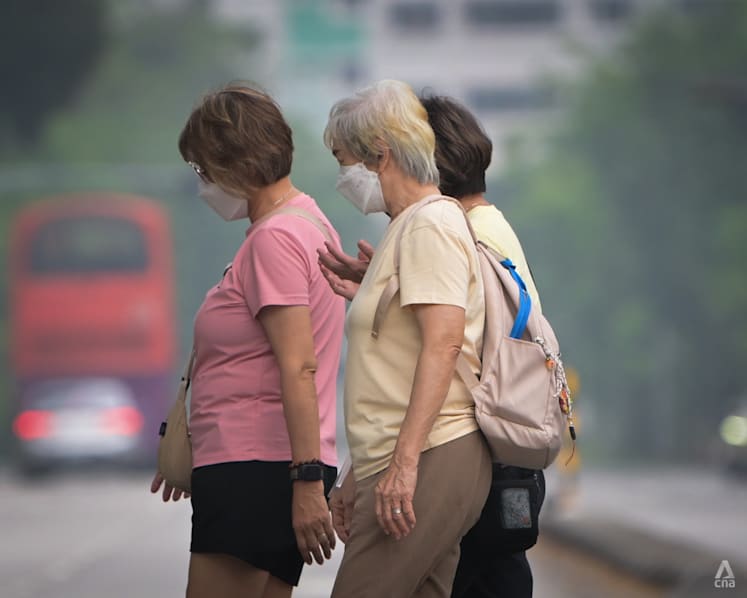
"Of course we're affected. We have to wear masks too. But it makes breathing difficult for us because we're older," he told CNA in Mandarin, adding that he finds himself panting after wearing a mask for several minutes.
With footfall slowing, Mr Yong has been closing his shop as early as 4.30pm on some days, instead of the usual 8pm.

While central Singapore recorded higher haze readings earlier in September and October, the west has recorded some of the highest figures since Oct 12, topping the five regions for the second consecutive day on Sunday, according to National Environment Agency (NEA) data.
Based on the highest 24-hour PSI reading recorded each day, the west had the poorest air quality throughout this period, except on Oct 16, when the central region took the top spot.
The west has also recorded the highest one-hour PM2.5 readings among the regions since Oct 12, except on Oct 15 and Oct 16. It recorded the highest one-hour PM2.5 reading so far this year, at 288, on Oct 14.
Experts said the situation remains dynamic, and that elevated pollution levels may not persist in the west.
Air quality can vary significantly across Singapore and even within the same day, depending on weather conditions, the movement of smoke plumes and local sources of pollution.
Professor Rajasekhar Balasubramanian from the National University of Singapore's (NUS) Department of Civil and Environmental Engineering said the distribution of fine particulate matter is influenced by factors including wind direction, atmospheric mixing and the location and number of fire hotspots in Indonesia.
"Given the sporadic nature of smoke plumes, which are influenced by the location and number of fire hotspots in Indonesia, as well as the complexity of atmospheric dynamics and prevailing meteorological conditions, it is difficult to draw a generalised conclusion that hourly PM2.5 concentrations will exhibit a consistent trend in any specific part of Singapore,” he said.
PM2.5 concentrations are influenced by factors like the amount of particles emitted by the fires, the prevailing wind direction, the formation of secondary particles through chemical reactions in the atmosphere, the extent of atmospheric mixing and emissions from local urban sources, he explained.
"Local topography, which can influence the transport, dispersion, and deposition of particles, also plays a role," he added.
Associate Professor Yu Liya, from the same department in NUS, said it is not uncommon for different parts of Singapore to record the highest PSI readings at different times.
This is because air quality is affected by complex processes including local emissions, cross-border emissions, long-range transport of particles such as in heavy smoke, varied flow patterns in densely built environments, wind speed and direction, rainfall and temperature.
"At any time, the monitored concentration and PSI is a net result of all the processes. Dominant processes would drive the air quality," said Assoc Prof Yu.
For example, if there is rain to wash away airborne pollutants and this dominates over incoming smoke, there may be fewer pollutants and a lower PSI.
"For now, we look forward to the transition of the monsoon season when the transported smoke is weakened in the coming month, and more rainfall cleansing our ambient environment during the northeast monsoon, likely starting in December," she said.
"IT'S KIND OF BORING"
For some families in the west, the haze has disrupted children's routines and limited opportunities to play and socialise outdoors.
Eight-year-old Eashan, who used to visit the playground every evening after school with his five-year-old brother, has not been allowed to do so since the haze worsened.
"I feel like it's kind of boring. Because usually at the playground I get to meet my friends and then play with them," he told CNA.
His weekend swimming lessons have also been cancelled by the school.
His mother, who gave her name as Ms Chew, 38, said the family has been spending more time at home or visiting air-conditioned shopping malls instead. She worries about the impact on her sons' social development if the haze persists.
"In school it's just study, study, study. So in the evening, their playground time, when it's reduced, they don't get to socialise properly," she said.
Logistics worker Chua Hang Cheng, 50, has also advised his son, a student at ITE College West, to stop going cycling in his free time.
Mr Chua, who works in a warehouse at Tuas Depot that is not fully enclosed, said the haze has irritated his throat. He has also been limiting the time he spends outdoors whenever possible.
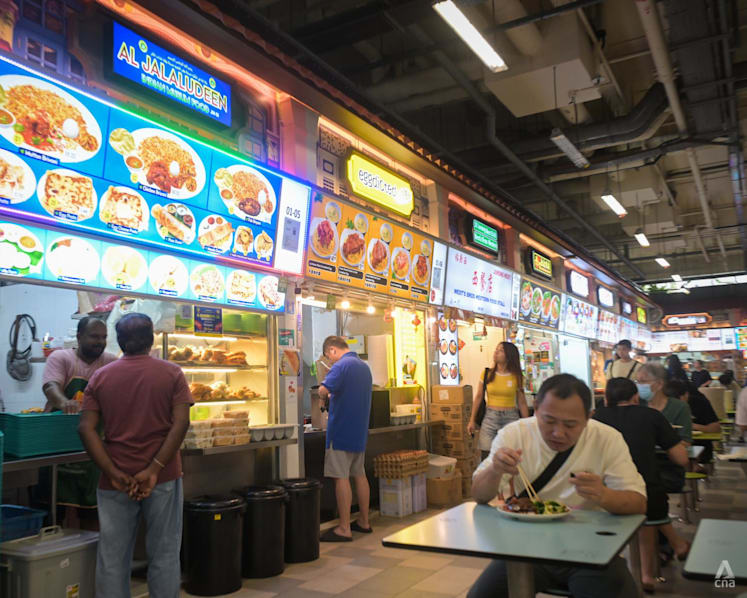
The impact is also being felt at Jurong West Hawker Centre, where some stallholders said business has fallen by about half, as fewer customers venture out.
One stall reported losing as much as 80 per cent of its business on the weekend.
Ms Nguyen Ngoc Thuy Tien, 38, said that since Oct 13, daily takings at her stall Eggdicted have dropped from at least S$1,000 (US$780) to only about S$700.
Her stall is not listed on any food delivery platforms and relies entirely on walk-in customers. She said the number of visitors to the hawker centre has fallen sharply since the haze worsened.
When CNA visited at about 11am on Sunday, several tables were occupied, but many seats remained empty. Stallholders said the hawker centre would usually be bustling.
Traditional Handmade Mee Hoon Kway stall worker Yong Tham Foo, 34, said takings have fallen by about 40 per cent on average on weekdays, with an even steeper drop of up to 80 per cent this past weekend.
But not everyone was deterred from heading outdoors.

At an open field next to Chinese Garden MRT station on Sunday morning, a group of migrant workers carried on with their regular cricket game despite the haze.
Mechanical worker Murugesan Paulraj, 31, had travelled from his dormitory with about 20 colleagues. They get one day a week to rest and regularly spend it playing cricket together, he said.
As the haze seemed tolerable on Sunday, they decided to go ahead with their plans. The alternative, Mr Paulraj said, was to stay in their rooms sleeping, watching videos and calling family back home.
KioskNews shows a cleaned-up reading view extracted from the publisher’s page — the original always lives on their site, not ours.