OJK unveils 5 priorities for Indonesia's banking sector through 2030
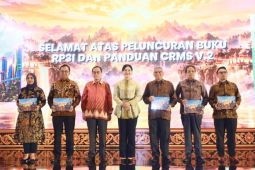
Jakarta (ANTARA) - The Financial Services Authority (OJK) has set five strategic priorities to strengthen the banking industry under the 2026–2030 Indonesian Banking Development and Strengthening Roadmap (RP3I).
These priorities include strengthening institutional capacity and integrity, modernizing technology and digital resilience, deepening financial markets and strengthening financial intermediation, promoting sustainable finance and resilience to sustainability risks, and implementing integrated licensing and adaptive supervision.
Chair of the OJK Board of Commissioners Friderica Widyasari Dewi stated in an official statement received on Friday that the Indonesian banking industry is entering an increasingly dynamic period.
Shifts in the global economic landscape, rapid technological advances, evolving public behavior, and growing demands for sustainability and good governance present both challenges and opportunities for the sector.
“Therefore, we must build a resilient banking sector backed by strong capital, liquidity, and risk management,” she stressed.
Friderica added that the sector must also be innovative by leveraging technology to deliver added value, productive in extending financing to economic sectors, and inclusive by making consumer protection a priority.
She noted that the performance of Indonesia’s financial services sector remains well maintained and continues to make a significant contribution to the national economy, despite global economic and geopolitical dynamics.
As of August 2026, bank lending grew 13.65 percent year-on-year (YoY), while third-party funds rose 10.92 percent YoY.
Meanwhile, the capital adequacy ratio (CAR) remained solid at 24.1 percent, while gross non-performing loans (NPL) stood at 2.11 percent.
Executive Head of Banking Supervision at OJK Dian Ediana Rae noted that the banking industry currently faces challenges stemming from global and geopolitical developments, environmental changes, evolving technologies and business models, as well as rising demands for sustainability, resilience, and consumer protection.
"As a result, the banking sector needs a clear strategy that can respond to change while supporting national development priorities for both the medium and long term. It is within this context that the RP3I was created," he said.
According to OJK, 2026–2030 RP3I implementation is backed by four supporting enablers: a supportive economic ecosystem; data, technology, and digital infrastructure readiness; human resource capacity building; and cross-sectoral and inter-agency supervisory coordination.
As part of the roadmap's rollout, OJK also issued the 2026 Climate Risk Management and Scenario Analysis (CRMS) Guidelines, serving as a comprehensive framework to measure banking sector resilience by integrating climate risks into governance, business strategies, risk management, metrics and targets, and disclosures.
Related news: SOE performance serves as foundation for national economy: Danantara
Related news: Indonesia injects Rp400 trillion into state banks to boost growth
Translator: Rizka Khaerunnisa, Raka Adji
Editor: M Razi Rahman
Copyright © ANTARA 2026
KioskNews shows a cleaned-up reading view extracted from the publisher’s page — the original always lives on their site, not ours.