Planning an autumn hike in Korea? Check when fall foliage will be at its peak
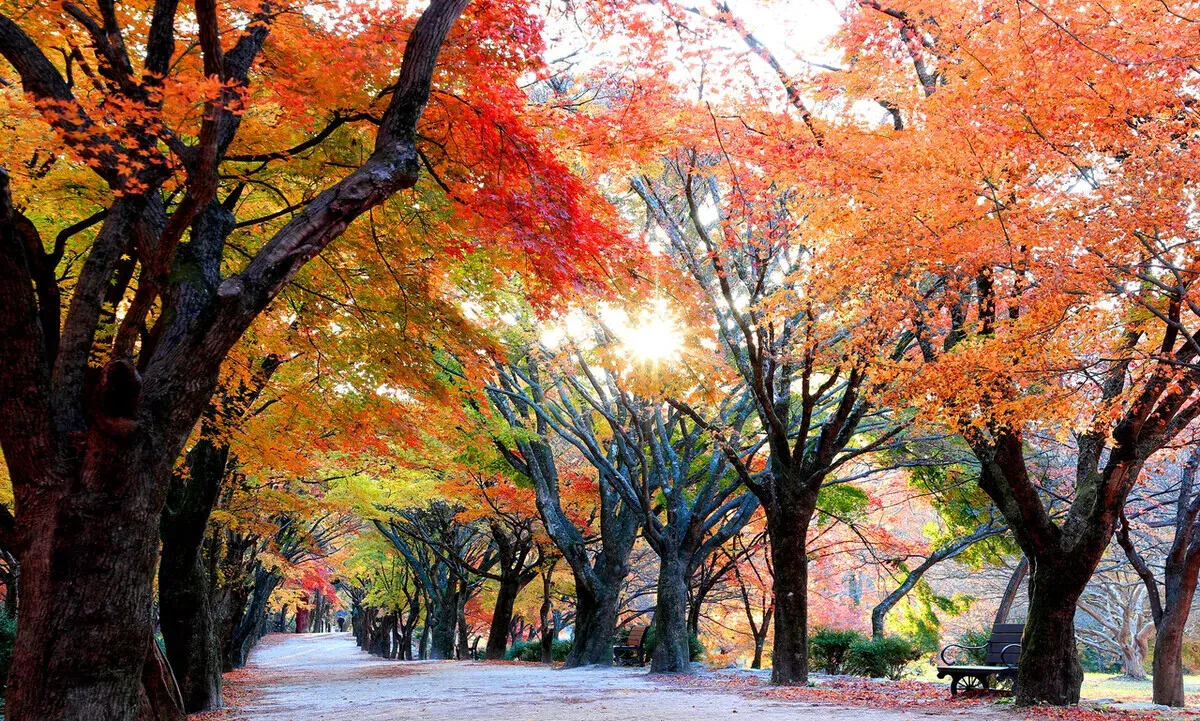
Autumn foliage at Mount Naejang. (courtesy National Park Service)
Korea’s autumn foliage is expected to peak at Mount Seorak on Oct. 25, followed by Mount Bukhan and Mount Gyeryong on Nov. 4, Mount Jiri on Nov. 5 and Mount Halla on Nov. 13, the Korea National Park Service said Friday.
The agency released its forecast for peak foliage at major mountains across the country, along with safety tips for autumn hikers. Foliage began appearing around mountain summits in mid-October and is expected to reach its peak through early November.
Among the major mountains, Mount Odae is expected to reach peak foliage on Oct. 16, followed by Mount Seorak on Oct. 25 and Mount Chiak on Oct. 31.
In November, foliage is forecast to peak at Mount Bukhan, Mount Gyeryong and Mount Songni on Nov. 4; Mount Worak, Mount Jiri and Mount Gaya on Nov. 5; Mount Mudeung on Nov. 6; Mount Naejang on Nov. 11; Mount Palgong on Nov. 12; and Mount Halla on Nov. 13.
The park service warned that autumn brings larger crowds to hiking trails, while fallen leaves can make paths slippery, requiring extra caution.
National park trails are classified into five difficulty levels. Hikers should choose routes based on their fitness, experience, trail difficulty, distance, estimated hiking time and ground conditions, the agency advised.
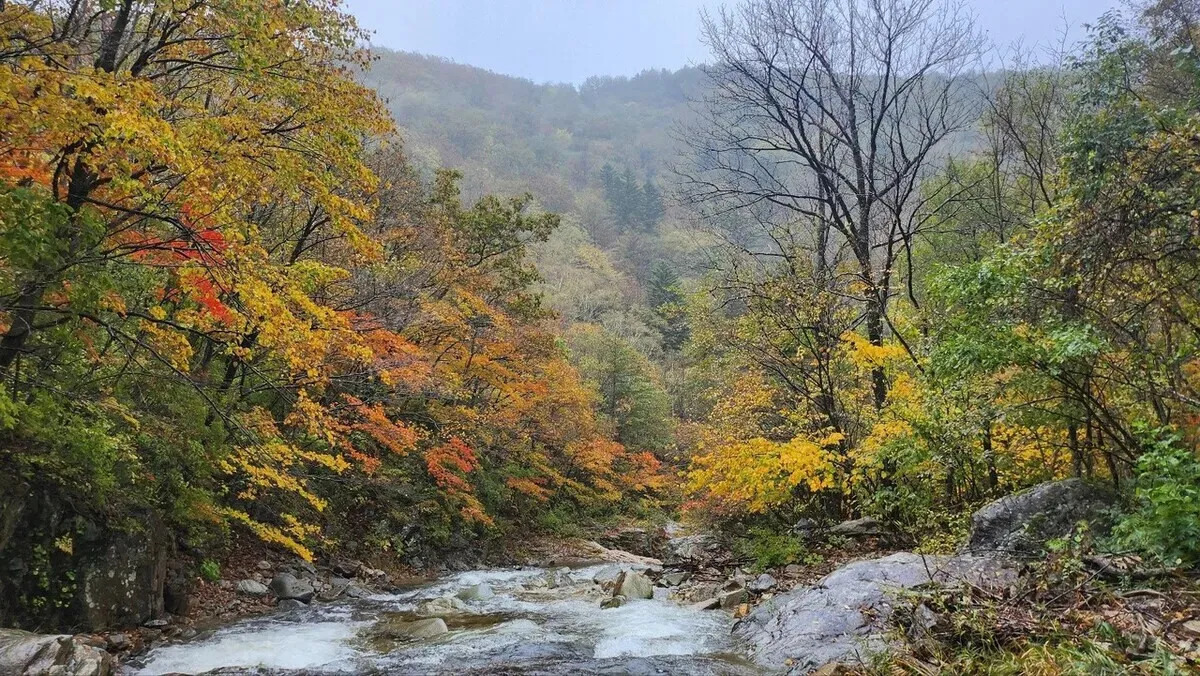
Autumn foliage at Mount Odae. (courtesy National Park Service)
Because temperatures can fluctuate significantly in autumn, hikers are advised to dress in layers. Those with cardiovascular conditions should take frequent breaks, while all hikers should allow ample time to finish their routes as daylight hours grow shorter.
The agency also offered several walking techniques to help hikers stay safe and reduce physical strain.
On flat terrain, it recommends a natural heel-to-toe walking technique, placing the heel down first, followed by the sole and then the forefoot.
When climbing slopes or stairs, hikers should briefly straighten the trailing leg to distribute their weight through the skeleton rather than relying solely on their muscles, reducing strain on the lower body.
On descents, hikers should keep their knees slightly bent when placing each foot to absorb impact and reduce the force exerted by gravity. On steep slopes, walking diagonally in a zigzag pattern rather than straight downhill can help maintain a safe, controlled pace, the agency said.
South Korea’s national parks recorded 304 accidents over the past three years, including 118 in 2024, 123 in 2025 and 63 through August 2026. Of the total, 276 involved injuries and 28 resulted in deaths.
KioskNews shows a cleaned-up reading view extracted from the publisher’s page — the original always lives on their site, not ours.