The 7 Greatest Sci-Fi Movies That You Haven't Seen

Michael Block is a 14 time GLAM Award nominated writer, producer, and host of the podcast Block Talk. Throughout his time in the entertainment industry, he has worked on and off Broadway as a stage manager, written several produced plays, critiqued hundreds of theatrical performances, drag and cabaret shows, and has produced events randing from drag competitoons to variety concerts!
On Block Talk, he interviews nightlife personalities, covers the wide world of entertainment through features, ranking episodes, and recaps ALL of Drag Race, as well as Dragula and Survivor. He has interviewed hundreds of RuGirls that span the globe at DragCon NYC, DragCon LA, and DragCon UK.
In his free time, he makes one-of-a-kind jewelry and gift baskets with his mom. He is a proud member of the LGBTQ+ community.
Sign in to your Collider account
The science fiction genre has given the world of entertainment some of the greatest films of all time. From 2001: A Space Odyssey to the Star Wars franchise, sci-fi has kept delivering. With stories set in space, explorations of robots and artificial intelligence, and tales of time travel, the canvas has opened up worlds of possibility. But for every legendary sci-fi film, there's a great one you've likely never seen.
The seven films on this list are just off the mainstream conversation but deserve the same recognition some major masterpieces receive. From an adaptation of a lesser-known Philip K. Dick short story to a space Western set on Jupiter's moon, these seven movies are absolutely great. They may have been lost to time, so now is the time to add them to your queue!
'Dark Star' (1974)

Though many cinephiles know John Carpenter for Halloween, he has a resume spanning many genres. Before he made a huge name for himself, he began his career with the independent sci-fi comedy Dark Star. The story follows the crew of the scout ship Dark Star, tasked with traveling to the edge of the universe to locate and destroy unstable, rogue planets that could threaten human colonization. Unfortunately, the disillusioned, bumbling crew spends their time fighting existential boredom as they embark on their senseless mission. Joined by an alien mascot and a dead captain in cryogenic storage, the crew must save themselves when a sentient thermonuclear weapon believes it is God.
Mixing dry humor with rich sci-fi elements, Dark Star subverts clean, heroic space exploration to tell a hilarious, blue-collar tale that uses space to examine mundane routines, human boredom, and institutional futility. Co-written with Dan O'Bannon, who went on to write Alien as a result of this project, Dark Star de-romanticized space travel by showcasing how it's not necessarily a noble profession if you're not on board with the mission at hand. The film helped pioneer the "truckers in space" subgenre. In a way, Dark Star brilliantly satirizes the Stanley Kubrick masterpiece through cosmic irrelevance. The alien is literally a painted beach ball with clawed feet, for crying out loud!
'Hardware' (1990)

For his directorial debut, Richard Stanley wrote and directed the sci-fi horror thriller Hardware. Set in a radioactive, post-apocalyptic future, ex-soldier Moses Baxter (Dylan McDermott) buys unusual metal parts from a nomadic scavenger for his metal-sculptor girlfriend, Jill (Stacey Travis). Unbeknownst to them, the parts belong to M.A.R.K. 13, a self-repairing military cyborg that reassembles itself inside the apartment and goes on a violent rampage. Known for its gritty aesthetic, vibrant red-filtered lighting, and heavy industrial score, Hardware takes the cyberpunk style and flips it into an intense slasher narrative.
With a tiny indie budget, Stanley achieved the impossible. The film's worldbuilding is part of its charm: in a toxic, sun-drenched post-apocalyptic world, the blood-red tint serves a purpose beyond color. Perhaps riding off the high of The Terminator, Hardware's central antagonist is a terrifying, unrelenting mechanical menace stalking a resourceful female protagonist. Jill uses her wits to survive and defeat the machine hunting her. The film is perhaps also remembered for its cameos by punk and metal icons Iggy Pop and Lemmy. Though it may elicit a laugh by today's standards, Hardware set the tone for cyberpunk horror that followed.
'Midnight Special' (2016)

Perhaps the greatest underrated gem of the last ten years, Midnight Special continued the allure of "cinema of wonder." Directed by Jeff Nichols, it tells the story of Alton Meyer (Jaeden Martell), an eight-year-old boy who emits powerful blue light beams from his eyes and can intercept radio and government signals. His biological father, Roy Tomlin (Michael Shannon), and his friend Lucas (Joel Edgerton) must protect Alton after being used as a savior by a religious cult as they are chased by armed religious extremists and the FBI and NSA agent Paul Sevier (Adam Driver).
Standing out for its Southern Gothic aesthetic within the sci-fi realm, Midnight Special is a grounded, high-concept supernatural story rooted in an emotional, intimate tale of parental love and fear. Rather than relying on over-the-top CGI spectacles, Nichols allows the story to come first. With a less-is-more philosophy, Midnight Special lets the audience do the heavy lifting by feeling and emoting as they learn the mythology of the extraordinary young boy. Evoking the same aura as Steven Spielberg's E.T. the Extra-Terrestrial and Close Encounters of the Third Kind, Midnight Special serves as a modern gateway into the genre without becoming overtly terrifying.
'Okja' (2017)

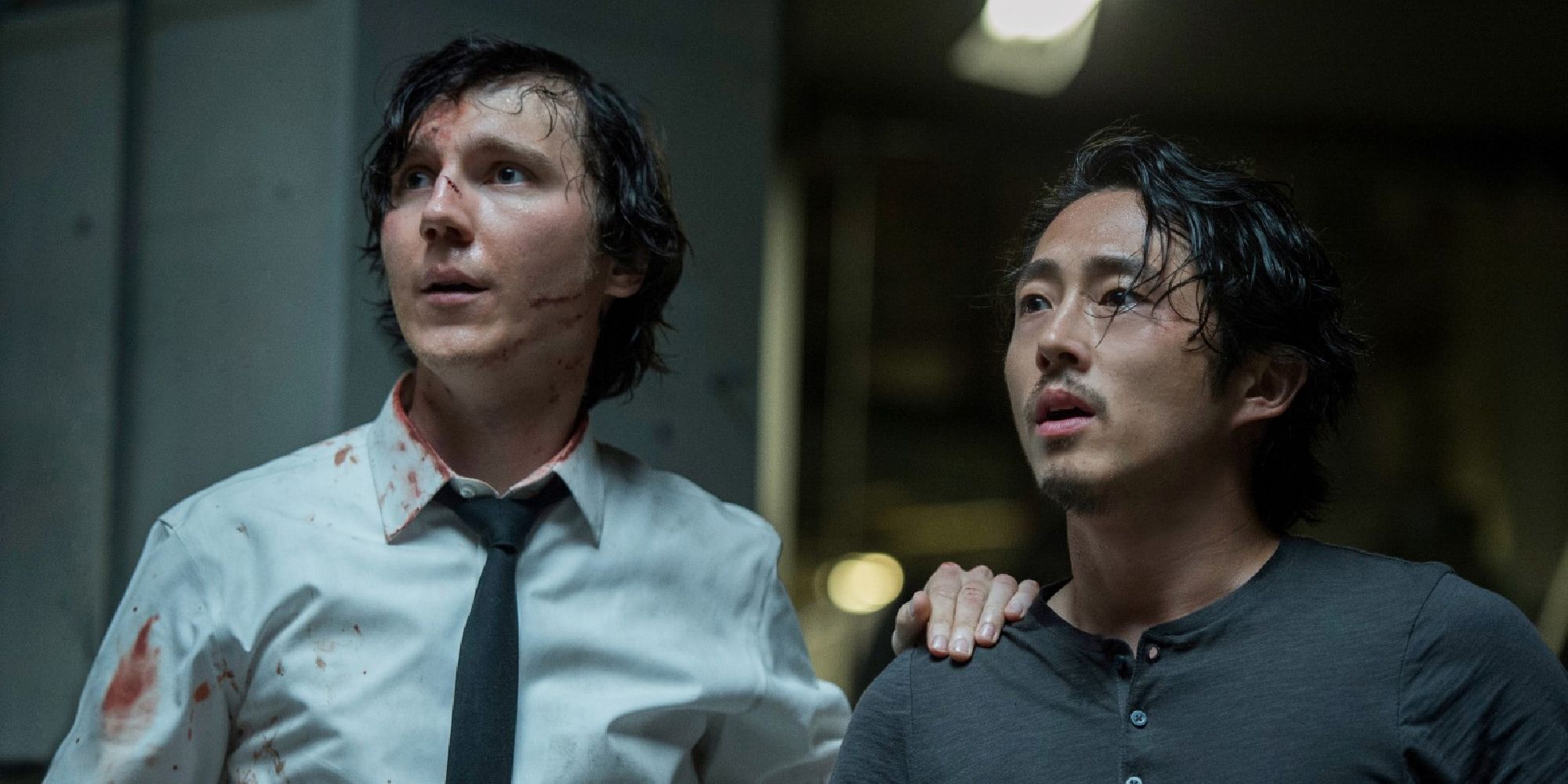
While many may know Bong Joon Ho for his Oscar-winning thriller Parasite, he has ventured into sci-fi action-adventure with films like Okja. In the mountains of South Korea, 14-year-old Mija (Ahn Seo-hyun) raises and forms a deep bond with Okja, a massive, intelligent creature known as a super pig. Ambitious CEO Lucy Mirando (Tilda Swinton) of the multi-billion-dollar Mirando Corporation, known for genetically engineering super pigs, seeks to showcase Okja in New York before sending her to a slaughterhouse. Mija and the Animal Liberation Front seek to stop Mirando and expose the corporation's cruel and deceptive practices.
Like many of Bong's other films, Okja uses its platform to satirize capitalism, corporate greenwashing, and the lengths large conglomerates will go to for profit. Okja tells a dark tale about the emotional history of industrial meat production and how individuals compartmentalize animal suffering. Bong deliberately avoids painting a clear moral picture, as the story shows both the corporation and radical activists operating in ways that aren't fully ethical. Through the concept of bioengineering, Bong's sharp critique of greed lands quite hard. Rooted in the real world, Okja feels like a tangible science fiction story. Also starring Jake Gyllenhaal, Paul Dano, Steven Yeun, and Giancarlo Esposito, Okja is a must-watch.
'Outland' (1981)

Imagine a Western set in space and starring one of the most iconic actors of all time; then you get Outland. Written and directed by Peter Hyams, the futuristic space-Western serves as a sci-fi adaptation of 1952's High Noon. Taking place on Con-Am 27, a brutal and grimy titanium mining outpost on Jupiter's moon Io, Federal Marshall William O'Niel (Sean Connery) investigates a series of shocking, violent deaths as miners begin to suffer sudden psychotic episodes and perish. Joined by local doctor Marian Lazarus (Frances Sternhagen), they soon discover an illegal drug ring run by the colony's general manager, Mark Sheppard (Peter Boyle).
Arriving right on the heels of some groundbreaking science fiction masterpieces, Outland was a unique film that got lost in the shuffle. Rather than bringing forward a story with pristine spaceships and epic space fights, Hyams presents a grimy, cramped mining colony that operates like a loaded gun. The environment is rooted in a timeless, Earth-bound concept: a deadly drug ring drives the colony to the brink. He may have a spacesuit rather than a cowboy hat, but Connery evokes the classic Western hero as O'Neil, bringing immense gravitas as the duty-bound man fighting an unwinnable battle. A slow-burning, tightly paced thriller, Outland success comes at its human cost.
Collider Exclusive · Sci-Fi Survival Quiz Which Sci-Fi World Would You Survive? The Matrix · Mad Max · Blade Runner · Dune · Star Wars
Five universes. Five completely different ways the future went wrong — or sideways, or up in flames. Only one of them is the world your instincts were built for. Eight questions will figure out which dystopia, galaxy, or desert wasteland you'd actually make it out of alive.
💊The Matrix
🔥Mad Max
🌧️Blade Runner
🏜️Dune
🚀Star Wars
01
You sense something is deeply wrong with the world around you. What do you do? The first instinct is often the truest one.
02
In a world of scarcity, what resource do you guard most fiercely? What we protect reveals what we believe survival actually requires.
03
What kind of threat keeps you up at night? Fear is useful data — if you're honest about what you're actually afraid of.
04
How do you deal with authority you don't trust? Every dystopia has a power structure. Your approach to it determines everything.
05
Which environment could you actually endure long-term? Survival isn't just tactical — it's physical, psychological, and very much about where you are.
06
Who do you want in your corner when things fall apart? The company you keep is the clearest signal of who you actually are.
07
Where do you draw the line — if you draw one at all? Every survivor eventually faces a moment that tests what they're actually made of.
08
What would actually make survival worth it? Staying alive is one thing. Having a reason to is another.
Your Fate Has Been Calculated You'd Survive In…
Your answers point to the world your instincts were built for. This is the universe your temperament, your survival instincts, and your particular brand of stubbornness were made for.
The Matrix
You took the red pill a long time ago — probably before anyone offered it to you. You're a systems thinker who can't help but notice the seams in things.
- You're drawn to understanding how the system works before figuring out how to break it.
- You'd find the Resistance, or it would find you — your instinct for spotting constructed realities is the machines' worst nightmare.
- You function best when you have access to information and the freedom to act on it.
- The Matrix built an airtight prison. You'd be the one probing the walls for the door.
Mad Max
The wasteland doesn't reward the clever or the well-connected — it rewards those who are hard to kill and harder to break. That's you.
- You don't need comfort, community, or a cause larger than the next horizon.
- You need a vehicle, a clear threat, and enough fuel to outrun it — and you're good at all three.
- You are unsentimental enough to survive that world, and decent enough — just barely — to be something more than another raider.
- In the wasteland, that distinction is everything.
Blade Runner
You'd survive here because you know how to exist in moral grey areas without losing yourself completely.
- You read people accurately, keep your circle small, and ask the questions others prefer not to answer.
- In a city where humanity is a legal designation rather than a feeling, you hold onto something that keeps you functional.
- You're not a hero. But you're not lost, either.
- In Blade Runner's world, that distinction is everything.
Dune
Arrakis is the most hostile environment in the known universe — and you are precisely the kind of person it rewards.
- Patience, discipline, and political awareness are your core strengths — and on Arrakis, they're survival tools.
- You understand that the long game matters more than any single victory.
- Others come to Dune and are consumed by it. You'd learn its logic and earn its respect.
- In time, you wouldn't just survive Arrakis — you'd begin to reshape it.
Star Wars
The galaxy far, far away is vast, loud, and in a constant state of violent political upheaval — and you wouldn't have it any other way.
- You find meaning in being part of something larger than yourself — a cause, a crew, a rebellion.
- You'd gravitate toward the Rebellion, or the fringes, or whatever pocket of the galaxy still believes the Empire's grip can be broken.
- You fight — not because you have to, but because standing aside isn't something you're capable of.
- In Star Wars, that willingness is what makes all the difference.
'Robot & Frank' (2012)

Robots are our future, and some of us are weary of it, but there's always hope that a robot and an old man can lead to the ultimate odd-couple buddy-heist story. In Robot & Frank, lonely former cat burglar Frank Weld (Frank Langella) lives by himself, suffering from increasing dementia, until his son, Hunter (James Marsden), buys him a walking, talking humanoid robot caretaker (voiced by Peter Sarsgaard). Initially resistant, Frank soon discovers the robot lacks a moral compass and becomes his ultimate partner in a series of jewel heists to impress the local librarian he fancies, Jennifer (Susan Sarandon).
Through themes of companionship, aging, fading, and the quickly changing nature of human connection in a technological world, Robot & Frank is a deeply human narrative with a sci-fi backdrop. A grounded story about a very practical near-future, director Jake Schreier seamlessly integrates the robot butler trope quickly to make the relationship between Frank and the robot feel purely natural. They are an unlikely duo who do something reprehensible, but you can't help but cheer them on and want them to succeed. Frank needs the robot to be more than just an accomplice; it's his way to keep his mind active, thus opening a profound discussion about aging, technology, and how they can interact for a greater cause.
'Screamers' (1995)

Adapted from novelist Philip K. Dick's Second Variety, Screamers is a terrifying sci-fi horror thriller. Set on the distant mining planet of Sirius 6B in 2078, where self-replicating artificial intelligence weapons have gone rogue, the New Economic Bloc and the Alliance of local miners and scientists are forced to come together to take on the screamers. Led by Alliance Commander Joe Hendricksson (Peter Weller), they must stop the machines that have now evolved to have the ability to mimic human beings, with a mission to kill.
Screamers captures the confusion between reality and illusion, questioning how humanity defines itself when machines can mimic every trait, emotion, and form. The concept of self-replicating humanoid models transforming into superior threats turns the story into a game of infiltration and body-snatching terror. Released in 1995, the concept of artificial intelligence replicating humans may have seemed like literal science fiction, but through a modern lens, Screamersfeels more tangible than ever. With practical effects and stop-motion animation, the film formed its own identity in the decade of big-budget blockbusters. If you love other Dick film adaptations, you'll love this one just the same.

Screamers
- Release Date
- September 8, 1995
- Runtime
- 108 minutes
- Director
- Christian Duguay
- Cast
- Jennifer Rubin, Peter Weller, Roy Dupuis, Andrew Lauer, Liliana Głąbczyńska, Michael Caloz, Jason Cavalier, Ron White, Leni Parker, Sylvain Massé, Bruce Boa, Tom Berry, Henry Ramer, Charles Edwin Powell
- Writers
- Dan O'Bannon
KioskNews shows a cleaned-up reading view extracted from the publisher’s page — the original always lives on their site, not ours.