Paraguay’s tech minister defies Beijing sanctions, says Taiwan ties ‘not up for negotiation’
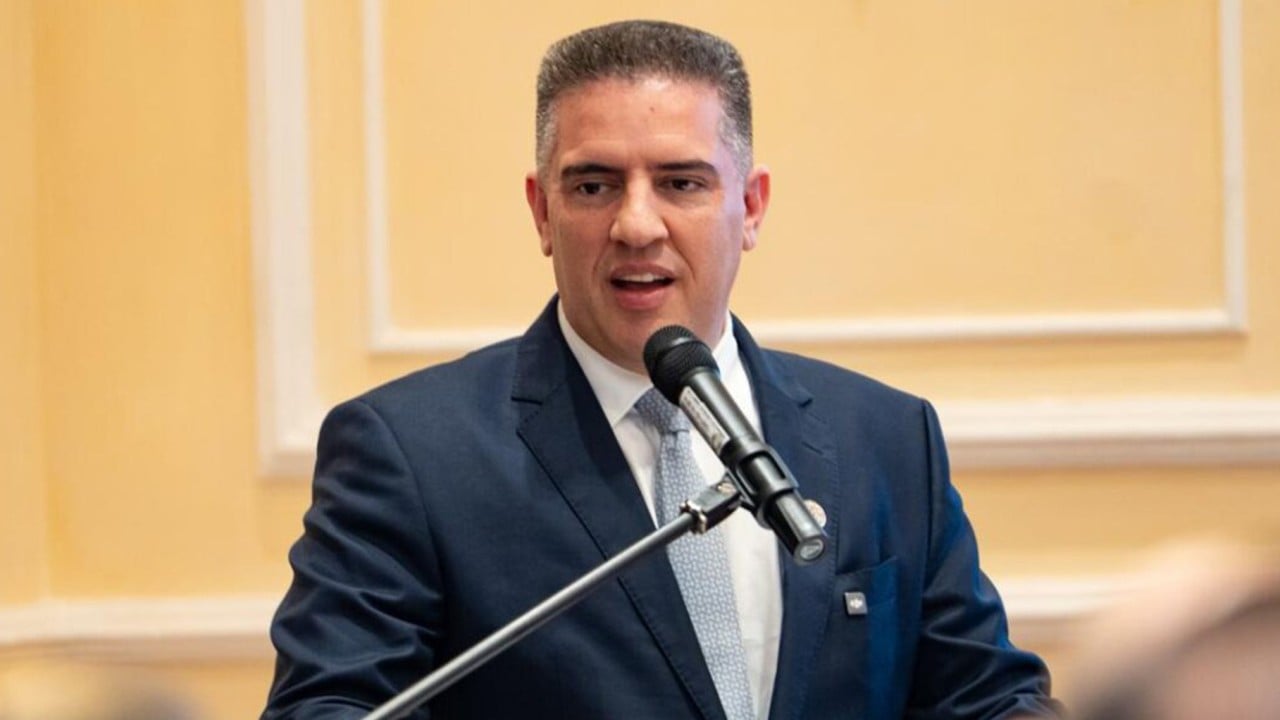
Paraguay’s technology minister said on Thursday that sanctions imposed on him by Beijing over his country’s ties with Taiwan would only accelerate joint projects with the island.
Gustavo Villate, who heads the Ministry of Information and Communication Technologies, wrote in a lengthy social media post that the relationship with Taipei would “never be on the negotiating table”.
He also suggested that Beijing had acted to protect Chinese telecoms suppliers kept out of Paraguay’s networks.
“This sanction is, at its core, a certification that what we have been doing since 2023 is the right path,” he wrote.
02:55
China’s Xi Jinping warns ‘Taiwan separatists’, stresses support for Hong Kong and Macau
Beijing views Taiwan as part of China to be reunited with the mainland, by force if necessary. Most countries, including the US, do not recognise it as an independent state, but Washington opposes any attempt to change the status quo by force and is committed to supplying the island with defensive weapons.
China’s foreign ministry announced on Monday that it would freeze any property Villate holds in China, bar people and organisations there from dealing with him and deny him entry to the mainland, Hong Kong and Macau.
It imposed the same measures on Francis Fonseca, the foreign minister of Belize, another of the 12 countries that still recognise Taipei. Taiwanese media described it as the first time Beijing had sanctioned officials of Taiwan’s allies.
The measures are largely symbolic, since officials from those countries rarely travel to China, and Villate said he held no assets there. They were issued under the Anti-Foreign Sanctions Law, a 2021 statute Beijing has mostly used against Western politicians and defence firms.
The orders called the two men “anti-China politicians” acting out of personal interest, but made no reference to 5G or artificial intelligence.
The announcement came two days after Taiwan’s national day, and a day after Villate posted a greeting on X to the “Government of the Republic of China (Taiwan)”, the island’s official name.
Foreign ministry spokeswoman Mao Ning said the two ministers had acted as “pawns” of Taiwan’s attempt to seek independence by relying on outside forces. She accused them of visiting the island, hosting Taiwanese officials, whom Beijing regards as separatists, and spreading “false information” about Chinese cyberattacks.
That charge goes back to July, when Villate’s ministry and the US embassy in the Paraguayan capital, Asuncion, said a joint review had found several threat actors linked to the Chinese government inside state networks.
A similar review in November 2024 had pointed to the China-based group Flax Typhoon. Beijing called the July accusations groundless in a statement issued by its consulate general in Sao Paulo, Brazil.
US State Department spokesman Tommy Pigott said Washington opposed “coercion and aggression by China against countries in our hemisphere”.
China had not responded publicly to Villate’s post as of Friday morning.
Huawei and ZTE kept out of 5G
In his post, Villate said the pressure on Paraguay was rooted in “technical decisions, not political ones”.
He cited a 5G auction in which the state demanded guarantees that no foreign government held undue influence over network builders.
He said the same test now applied to a data centre financed by the Inter-American Development Bank and to AI, because “supply chain security is national security”.
Run by telecoms regulator Conatel last year, the auction required bidders to present a report from a Paraguayan diplomatic mission in the country where their radio equipment was made.
02:59
Huawei goes on trial in the US for racketeering after nearly a decade of litigation
In practice, the rule excluded Huawei Technologies and ZTE, since Paraguay has no diplomatic relations with Beijing. Tigo and Personal, the country’s two largest mobile operators and both heavy users of Chinese equipment, stayed out of the bidding, and licences went to Claro and Nubicom.
Villate returned to that process when he asked why Beijing would react at all.
“If the suppliers left out by our technical, transparent and impartial standards were truly independent private actors, why would a foreign government respond by sanctioning a Paraguayan official?” he wrote.
AI venture with Taiwan
Much of the rest of the post was devoted to Yguazu Digital, an AI data centre to be run jointly by the two governments, agreed in Taipei in May in the presence of President Santiago Pena and Taiwanese leader William Lai Ching-te.
Villate said it could become “bigger than Itaipu was in its time”, a reference to the hydroelectric dam Paraguay shares with Brazil.
The first phase is far more modest, a 10-megawatt facility that his ministry has estimated will cost more than US$300 million.
Villate told Bloomberg Linea in June that Taiwan would supply Nvidia chips while Paraguay would provide state land and cheap hydropower, with the centre due to open by late 2027.
He said he would also accelerate other joint projects, including a national health information system that he said already runs in 1,000 public facilities. Paraguay and Taiwan will mark 70 years of diplomatic ties next year.
“Freedom is not negotiated, frozen or sanctioned,” he wrote. “Paraguay is a democracy that decides for itself.”
KioskNews shows a cleaned-up reading view extracted from the publisher’s page — the original always lives on their site, not ours.