Rocky’s Best Line Is Still the Greatest Quote in Franchise History
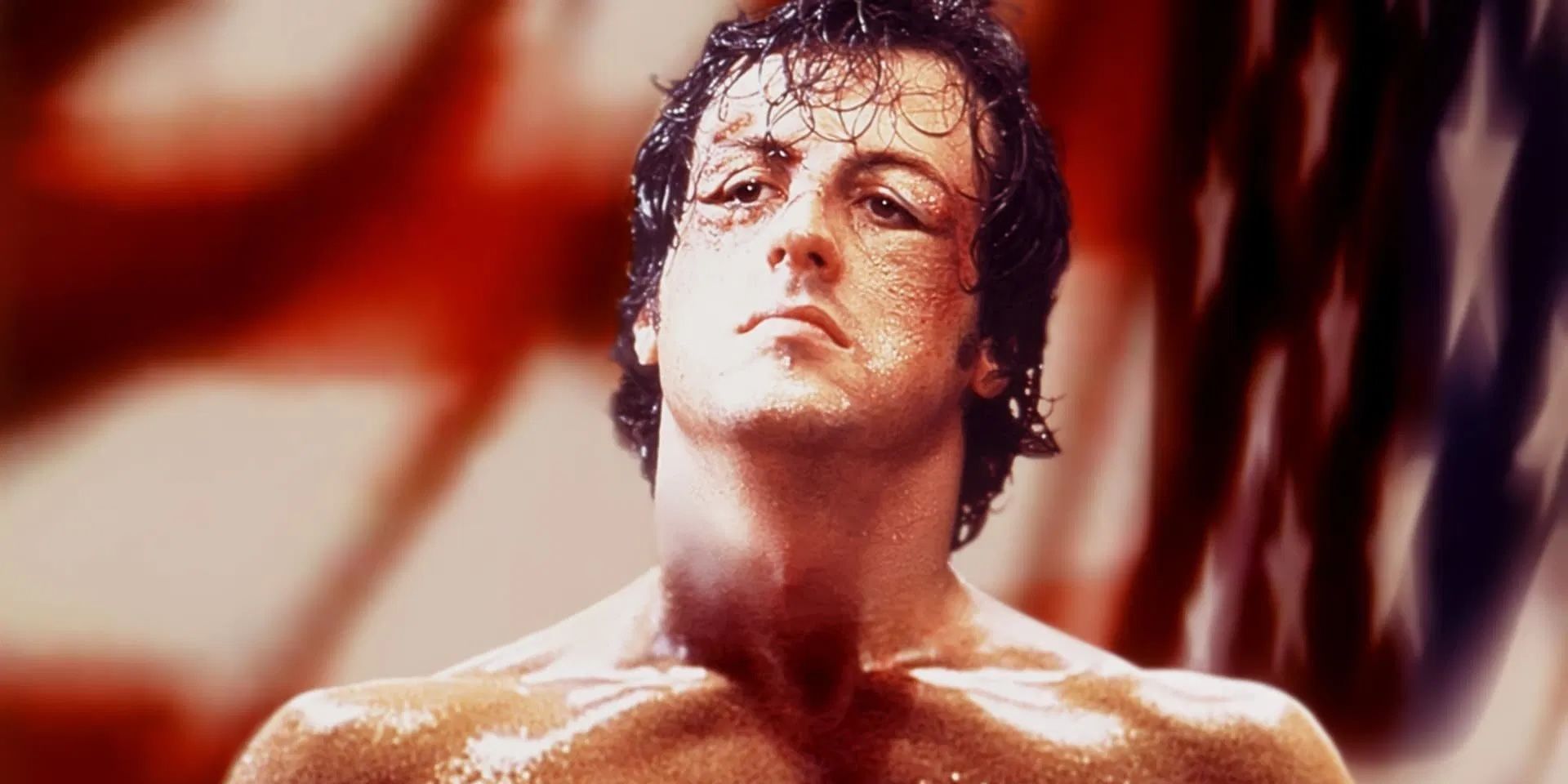

Sylvester Stallone’s 1976 Oscar-winner Rocky carved itself into Hollywood history thanks to its timeless tale of underdog spirit, and a catalog of memorable moments. Stallone’s script was filled with lines that are quoted to this day – the triumphant cry of “Adrian!," Mickey (Burgess Meredith) declaring, “You’re gonna eat lightnin’ and you’re gonna crap thunder!” or Apollo Creed (Carl Weathers) joking “Apollo Creed versus the Italian Stallion. Sounds like a damn monster movie.” There’s one quote, however, that stands out among the rest, one that sums up everything about Rocky Balboa, and the franchise that tells his story, is all about. It’s not said in the ring, or on top of the famous steps, but in one of the boxer’s most private moments.
‘Rocky’ Reveals His True Goal
The scene in question comes the night before the climactic fight against Creed. Rocky (Stallone) walks around the arena, then back home to his girlfriend Adrian (Talia Shire). Sitting on the edge of the bed, he quietly confesses that he can’t beat Apollo, before adding: “It really don't matter if I lose this fight. It really don't matter if this guy opens my head, either. 'Cause all I wanna do is go the distance. Nobody's ever gone the distance with Creed, and if I can go that distance, you see, and that bell rings, and I'm still standin', I'm gonna know for the first time in my life, see, that I weren't just another bum from the neighborhood.”
At that one moment, The Italian Stallion’s journey comes into perspective. He is a fighter from the street, going up against the heavyweight champion of the world. The odds are against him, and even he can’t see himself knocking out a man who is at the peak of a sport when he had only ever been a manager. However, there’s a way to win even if he loses. That speech becomes the key question of the movie, and every sequel that came after it: can you go the distance?
‘Rocky’s’ Best Quote Defines the Franchise

Rocky isn’t the story of the preparation for a boxing match. It is the story of personal triumph, of one man who seemed like he didn’t have a future, whose own trainer called his choices “a waste of life,” betting on himself to go toe-to-toe with the best in the world. It’s about becoming more than you thought you could be, pushing the limits of what people expect of you, and shocking the world not by winning or losing, but by going the distance.
It’s a mindset that has prevailed in the six Rocky movies. Rocky II, arriving in 1979, saw the boxer strive to prove the first fight wasn’t a fluke. The third film saw him made complacent by money and fame, having to recapture his underdog spirit when he comes up against a fighter as hungry as he used to be. The fourth film deals with personal grief and revenge, while the fifth sees Rocky turning away from his life’s work in order to be a father and husband. Even his final fight, in 2006’s Rocky Balboa, is less about stepping into the ring than it is proving he still has something to give. Whether on the top of the mountain or haunted by the past, going the distance was always the goal.
“Going the Distance” is Rocky’s True Legacy
It’s easy to assume every Rocky movie ends in glorious victory, but some of the key moments in the franchise are moral victories where someone else’s hand is raised. The first film sees Apollo win on a points victory, with the press and fans surrounding the champion, while Rocky and Adrian embrace each other as if they had won, because the underdog went the distance. Rocky III ends with a victory, but it is defined by a loss, as Rocky underestimates Clubber Lang (Mr T.) and the resulting defeat reignites the spark. Rocky IV sees Apollo die in the ring, a devastating end to a defining relationship, while Rocky Balboa comes full circle as, now in his 60s, he still finds victory in defeat, going all 12 rounds with a much younger champion.
While he stood across formidable men in the ring, Rocky’s most formidable opponent was always himself. Going the distance meant overcoming flaws and demons and becoming who he knew he could be. In the first two Creed movies, where Rocky becomes the trainer of Adonis Creed (Michael B Jordan), the son of his old rival-turned-friend, he imparts that same wisdom onto his protégé. Making Adonis stand in front of a mirror, Rocky points to the reflection and says: “That's the toughest opponent you're ever going to have to face.”
It all comes back to that one moment in Rocky’s small apartment, and a speech that would encapsulate everything that matters about the world’s most famous boxer. Winning and losing are secondary to the personal mountains we have to climb, and the knowledge that we have gone the distance against the odds can be better than any championship.

- Release Date
- November 20, 1976
- Runtime
- 120 minutes
- Director
- John G. Avildsen
- Writers
- Sylvester Stallone
- Producers
- Irwin Winkler
KioskNews shows a cleaned-up reading view extracted from the publisher’s page — the original always lives on their site, not ours.