A request for Israel amid elections: Help us help you - opinion

As a proud and active American Zionist Jew who spends a great deal of time in Washington, and particularly on Capitol Hill, I have learned that words spoken in Israel do not remain in Israel.
They travel instantly across the Atlantic, stripped of their context, translated into headlines and placed before members of Congress who are already under growing pressure to distance themselves from the Jewish state.
Israel’s political culture has always been robust, direct, and intensely democratic. Its representative democracy remains an extraordinary example – not only in the Middle East but far beyond it.
Israelis argue loudly because the questions confronting their country are real, consequential, and frequently existential.
However, there is a difference between a vigorous democratic debate and the use of extreme language or radical proposals designed primarily to win a few more votes.
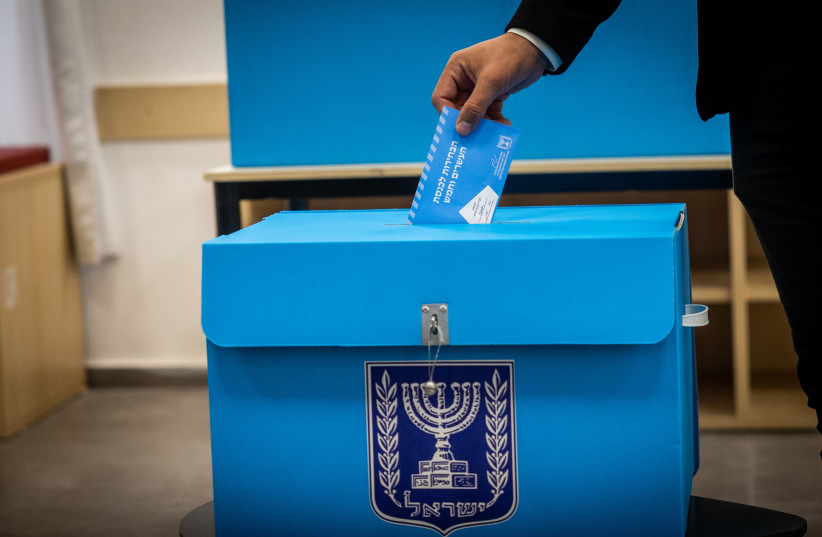
During an election campaign, politicians naturally seek attention and differentiation. Yet sensational statements may provide a brief domestic advantage while inflicting lasting international damage.
This is particularly dangerous now. Israel’s election on October 27 will be followed a week later by the American midterm elections on November 3. Every seat in the House of Representatives and a third of the Senate will be contested.
At a moment when support for Israel is increasingly debated within American politics, inflammatory Israeli campaign rhetoric can quickly become material for candidates seeking to turn the Jewish state into a partisan issue.
The warning signs are already unmistakable.
In July, 103 Democratic members of the House voted for an amendment that would have removed $3.3 billion in American assistance to Israel. The amendment failed, but the vote demonstrated how dramatically the conversation has changed.
Now, as a proposed $2.8 billion munitions sale to Israel is being considered by congressional committees, Israel’s friends are again being asked to defend the vital strategic and moral foundations of the alliance.
Those of us who work day and night to defend and protect the Jewish state are hearing difficult and honest messages, including from some of Israel’s closest friends. We explain that many of the most incendiary declarations are election rhetoric rather than government policy.
However, this explanation has its limits.
The most provocative statement will always travel further than the subsequent clarification. It becomes a headline, a social-media clip, a fundraising appeal and, eventually, an argument for changing American policy.
Words intended to excite one constituency in Israel can undermine support among millions of people abroad.
A request for Israel
Israel faces no shortage of serious issues worthy of serious debate.
Its citizens must determine how best to confront continuing security threats on multiple fronts, rebuild a country damaged by three years of war, restore economic confidence, address the responsibilities of military and national service, heal deep social divisions, and define the country’s legal and constitutional future.
None of these challenges require political extremism, theatrical threats, or promises of radical solutions that could never be implemented.
I write this with humility. I am not an Israeli citizen, and it is neither my place to tell Israelis how to vote nor to dictate how their democratic debate should be conducted.
Israelis bear the risks, send their children to defend the country, and live with the consequences of the decisions made by their elected leaders.
My appeal is therefore not an instruction, but a request: help us help you.
Please understand that Israel has stakeholders beyond its borders, people who invest their time, resources, reputations, and relationships in strengthening the Jewish state.
When Israeli politicians speak responsibly, they give us the tools to make Israel’s case. When they compete to make the most sensational declaration, they make that task immeasurably harder.
Beyond the elections, there is also reason to hope that the present political uncertainty may produce something better: a broad, representative national Zionist coalition capable of leaving the extremes outside government and addressing Israel’s challenges with seriousness, competence, and shared purpose.
Such a coalition would not require Israelis to abandon their ideological differences. It would demonstrate that, at a moment of historic consequence, the Zionist majority can unite around the security, democratic character, and future of the state.
Crucially, this is also the kind of government that could represent the true Israel to the world and to Israel’s friends on Capitol Hill: not the Israel of the loudest slogan or most outrageous quotation, but the Israel of a proud, resilient, responsible, and fundamentally pragmatic majority.
Israel’s enemies eagerly amplify every reckless remark. Its friends are left to explain it. Israel’s leaders can make our task easier without compromising a single principle or surrendering a single legitimate political argument.
We will continue to stand with Israel and stand behind and with the elected leadership.
We are simply asking those seeking the privilege of leading it to remember that their words matter far beyond the ballot box.
Help us help you.
The writer is a Los Angeles-based philanthropist and real-estate developer who serves as chairman of the Abraham Accords Roundtable and Golda Meir Commemorative Coin Committee in Washington, DC.
KioskNews shows a cleaned-up reading view extracted from the publisher’s page — the original always lives on their site, not ours.