Opposition demands Knesset speaker’s ouster; he pledges debate on motion if majority wants it

Four opposition parties on Thursday demanded that the Knesset vote to elect a new speaker in its inaugural session on November 10, paving the way for the ouster of incumbent Amir Ohana of the Likud party and the election of a new parliamentary chief opposed to Prime Minister Benjamin Netanyahu.
Ohana, a Netanyahu ally, said he would not hold such a vote during the new parliament’s first session, but would schedule a debate on electing his successor within the following week if a majority of lawmakers formally request one.
The requests for an immediate vote next Tuesday came from three Jewish-led parties — Yashar, Yisrael Beytenu and the Democrats — as well as the Arab-led Joint List.
0:00 / 0:00
Promoted: American Technion Society

Ohana cannot block a vote to elect his successor, which requires only a simple majority, provided the opposition parties agree on a candidate. He said he would not fight relinquishing his position as speaker, adding that reports to the contrary were “conspiracy theories.”
“The customary time to elect a Knesset speaker is when a government is formed,” Ohana, a Likud MK, wrote in a statement addressed to opposition leaders. The exception, he said, would be if a letter were signed by at least 61 lawmakers asking to elect a speaker earlier.
Get The Times of Israel's Daily Edition by email and never miss our top stories
By signing up, you agree to the terms
“We will respect the members of Knesset, and if a majority of them request such a debate, I will schedule it for an earlier date, no later than a week [from that time],” he said.
The demands were issued as President Isaac Herzog continued his meetings with the incoming Knesset’s factions, which gave him their recommendations as to who should be the next prime minister.
In a landmark shift, the Haredi United Torah Judaism party broke from its longtime alliance with Netanyahu and declined to recommend a candidate. That means the premier’s leading opponent, Gadi Eisenkot, will receive the most recommendations, making it likely that Herzog will give him first shot at forming a government.
Eisenkot’s path to assembling a coalition is still unclear, but the next Knesset, in which anti-Netanyahu parties hold a majority, could nevertheless elect a new speaker. The speaker wields considerable influence over parliamentary proceedings and, together with his deputies, controls the legislative agenda.
In last week’s election, Netanyahu and his allies lost their parliamentary majority, with the six parties opposed to him securing 67 of the Knesset’s 120 seats. They are split between a 48-member Jewish-led bloc, and a 19-member bloc of Arab-led parties. Netanyahu leads a 46-member bloc, while UTJ, with seven seats, now appears to be unaligned.
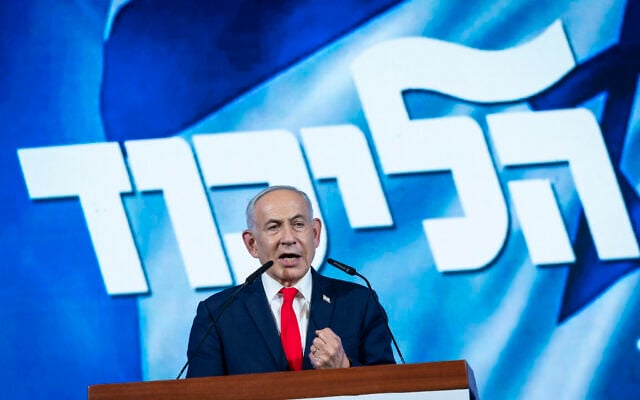
Who the new speaker would be remains unclear. Naftali Bennett’s B’Yachad has proposed outgoing Opposition Leader Yair Lapid, the party’s No. 2, whose candidacy is also backed by Yisrael Beytenu chair Avigdor Liberman. But Eisenkot’s Yashar reportedly wants the position for one of its own lawmakers.
Replacing Ohana would allow the opposition parties to advance legislation that Netanyahu has blocked, including potentially the establishment of an inquiry into the October 7, 2023, Hamas-led massacre in southern Israel, and possibly a bill mandating prime ministerial term limits.
UTJ declines to endorse candidate
The move to replace Ohana came as consultations continued with Herzog at his official residence in Jerusalem. The talks, which are being broadcast live, began on Wednesday and will finish on Thursday evening.
Herzog has said he will do all he can to prevent a repeat election, which would occur if no candidate can form a coalition.
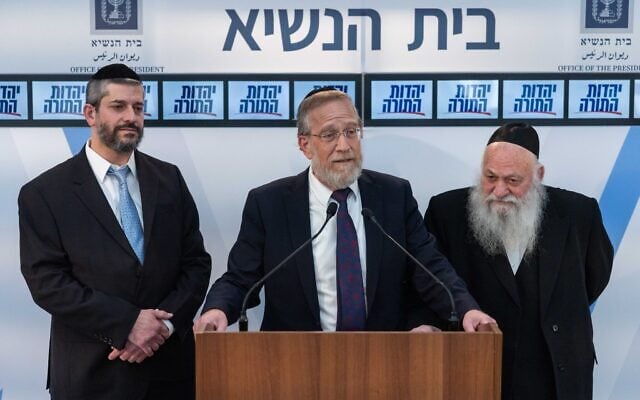
The parties mostly committed to either Netanyahu or Eisenkot ahead of their consultations with Herzog, but in its Thursday morning meeting, UTJ declined to recommend any candidate for prime minister.
The decision came after both factions that make up the seven-seat party, which represents Ashkenazi ultra-Orthodox Jews, were instructed by their respective spiritual leaders not to endorse a candidate.
Kan reported that party member MK Meir Porush, a former minister under Netanyahu, did not attend the meeting, as he opposed the decision not to recommend the Likud leader.
The party was allied with Netanyahu for years but has broken with him over delays to legislation it seeks that would enshrine blanket military service exemptions for Haredi men. During the consultations with Herzog, UTJ representatives made clear that their support for any future government will depend on legislation preserving those exemptions.
The UTJ decision followed reports last week that the party was considering offering support to a minority government led by Eisenkot without formally joining his coalition. Eisenkot campaigned on ending the exemptions, but he and others in his bloc have recently stopped short of ruling out cooperation with Haredi parties.
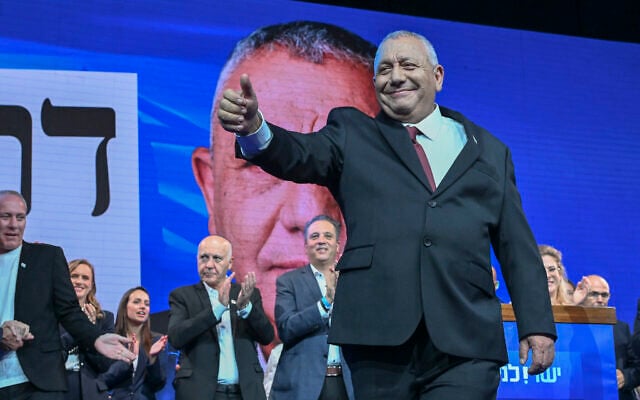
“We expect that any government established will place this matter top of mind, because the reality of hounding Torah students is unimaginable,” MK Yitzhak Pindrus told Herzog, referring to arrests of Haredi draft evaders.
Herzog reportedly pressed the lawmakers on the army’s manpower shortages and a possible compromise on who would be drafted, but they remained firm in their position.
Otzma Yehudit clashes with ‘pet Jew’ Herzog
Next to visit Herzog at the President’s Residence was the far-right Otzma Yehudit, which clashed with him as he rebuked its representatives over the party’s unsubstantiated allegations of election fraud, its attacks on the attorney general and its disparaging remarks about Arab voters.
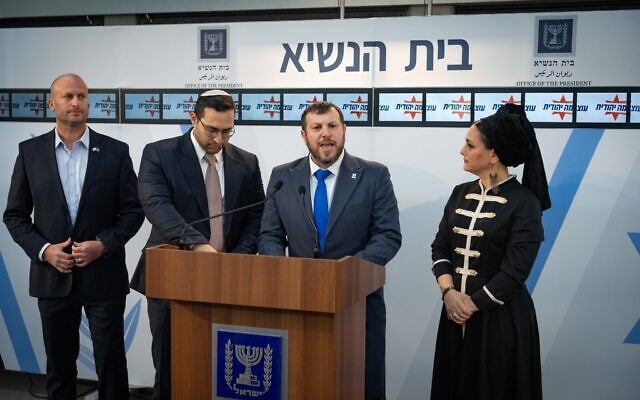
The exchanges unfolded as the party, which won seven seats in the election, recommended that Netanyahu form the next government. MK Yitzhak Wasserlauf claimed that the election was “stolen,” echoing a claim Netanyahu has made, linked to an investigation into foreign interference in the vote. Election officials have repeatedly said the vote was conducted properly and rejected claims that its results were illegitimate.
“You are citing hearsay; it is all speculation,” Herzog said in response to the party’s statements on the vote. “In the legal world, things must be proven, and generalizations must be avoided. It is important to me that people exercise caution. Sometimes, definitive claims end up amounting to very little.”
He added that he had spoken with both Shin Bet chief David Zini and Attorney General Gali Baharav-Miara, and noted that a special investigative team was examining the misconduct allegations.
When Wasserlauf declared that his party had “no confidence” in Baharav-Miara, echoing a position held by Netanyahu’s outgoing coalition, Herzog rebuked him, saying that “the culture of discrediting public servants in state institutions is unacceptable” simply because “they recommend something different from what one person or another wants.”
The discussion also turned to Arab voters, with Herzog suggesting that high turnout among Arab voters was driven by opposition to National Security Minister Itamar Ben Gvir’s policies. Ben Gvir, who chairs Otzma Yehudit, was not at the meeting.
Wasserlauf pushed back on Herzog’s statement.
“This isn’t about racism. I have nothing against Arabs. I have friends who are Arab,” Wasserlauf said.
MK Yitzhak Kroizer said opposition from Arab citizens was “a badge of honor” for Ben Gvir, claiming that the minister has brought law enforcement to Arab communities after decades of neglect.
Arab leaders have disputed that view, noting that violent crime has soared in their communities during Ben Gvir’s tenure.
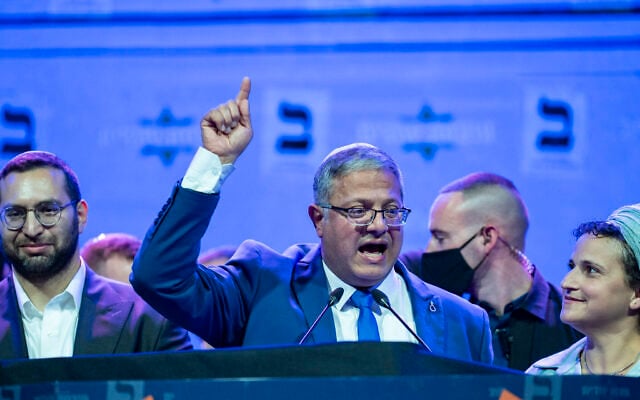
Following the meeting, Ben Gvir said on X he was proud to be “the only one that supporters of terror are afraid of,” while the party’s No. 2 MK Tally Gotliv accused Herzog of acting like a “pet Jew, the kind our enemies like.”
Ben Gvir wrote that he “will continue to act to turn the lives of terrorists in prisons into hell, to demolish illegal homes and to fight terrorism without compromise.”
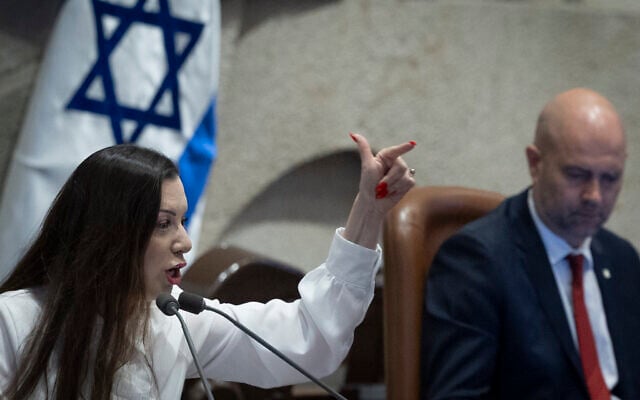
Democrats challenged over ‘anyone but Netanyahu’ stance
The left-wing Democrats, who won eight seats, were next in line, and Herzog challenged the party for its apparent position that ousting Netanyahu from the prime minister’s seat was above all other considerations, according to Hebrew media reports.
“Must it be ‘Yes or no Netanyahu?'” he asked lawmakers and suggested instead building something “large, central, joint.”
MK Gilad Kariv told Herzog there was an “oxymoron between continuing the Netanyahu regime and ideas of healing and repairing.”
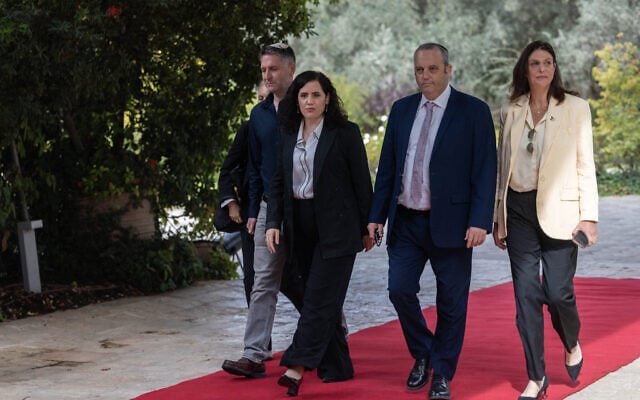
The party recommended Eisenkot for prime minister.
Herzog had already met on Wednesday with representatives of the pro-Netanyahu Religious Zionism and Shas, which each won six seats, and pro-Eisenkot Yisrael Beytenu, which won seven.
KioskNews shows a cleaned-up reading view extracted from the publisher’s page — the original always lives on their site, not ours.