GREEN STEEL: Coega Steels launches R500m low-emission rolling mill, creating 600 jobs
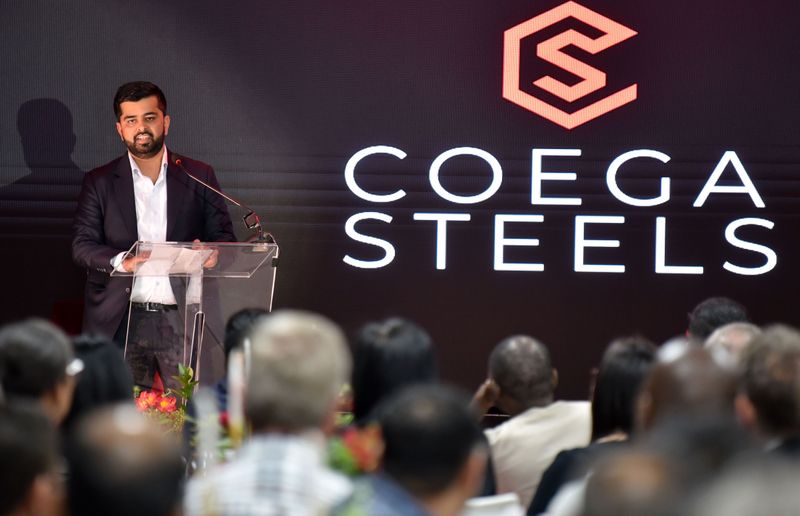
Nelson Mandela Bay steelmaker Coega Steels has opened a R500-million rolling mill to expand production while using renewable energy to reduce emissions and make its steelmaking operations cleaner.
The new mill – officially opened on 20 October – has an annual production capacity of 150,000 tonnes and will allow the company to turn steel billets into finished products for construction, manufacturing and infrastructure projects, including reinforcing bars, angles, squares, rounds and flats.
The investment includes the R360-million rolling mill and additional refining processes at the steelmaker’s existing melting facility.
Amit Saini, director at Coega Steels, said Coega Steels emits about 800kg of carbon dioxide per tonne of steel produced, compared with an estimated 2.5-3.5 tonnes for conventional iron ore-based steelmaking.
Mounting market pressures
About 80% of Coega Steels’ reported emissions stem from electricity purchased from Eskom and the municipality, said Saini.
“Our goal is very clear,” he said, “to make Coega Steels among the cleanest steel producers in South Africa. [This way] our customers here and in export markets that increasingly demand low-carbon products can build with confidence and with a clear conscience.”
Saini said the investment came amid volatile global steel markets and mounting pressure on domestic producers.
Denise van Huyssteen, the CEO of the Nelson Mandela Bay Business Chamber, said the investment came at a critical time for the metro, where manufacturing accounts for 22% of its gross domestic product.
“Deindustrialisation remains a high risk to our local economy,” she said, describing manufacturing as the anchor of the metro’s economy and a sector that supports jobs and activity across industries including logistics, financial services and retail.
Manufacturers faced mounting pressure from cheap imports, high electricity costs, inefficient logistics, policy uncertainty and unreliable municipal services, she said.
Consequently, “Government needs to move fast and take action in addressing barriers such as excessive red tape and complex policies associated with doing business in the country.”
She said Coega Steels’ investment signalled confidence in the metro’s medium- to long-term manufacturing potential, but sustained growth would depend on municipal stability, greater policy certainty and improvements to port, rail and other logistics infrastructure.
The chamber’s Local Economy Reinvention Think Tank is exploring ways to diversify manufacturing and the wider economy, with a focus on hydrogen, low-carbon solutions, tourism and the digital economy. Nine potential projects are under review, with four pre-feasibility studies completed, said Van Huyssteen.
Mill signals jobs and industrial growth
The new rolling mill is expected to create 300 direct jobs, with a further 300 indirect jobs anticipated.
The company expects about 240 of the new mill’s direct employees to be South African workers, while recruiting between 60 and 80 skilled specialists from overseas.
Saini said the company aimed to source about 90% of its local workforce from Nelson Mandela Bay, while recruiting elsewhere where the requisite technical skills were available.
“For Nelson Mandela Bay, the mill means jobs, skills and opportunity at a time when the metro needs them the most. It means ... local suppliers and small businesses finding new customers on their doorstep and young people learning skills that will serve them for a lifetime.
“For the Eastern Cape, it is proof that heavy industry can grow here. That the Coega SEZ [special economic zone] is delivering on its promise and that this province can be a manufacturing destination, not merely a place where goods pass through.
“With the Port of Ngqura right on our doorstep, we are perfectly placed to supply both the domestic and the international market. For South Africa, it means more steel made locally instead of imported, keeping value, jobs and skills within our borders,” said Saini.
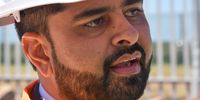
Van Huyssteen said the investment would create jobs while helping to retain existing employment and supporting businesses throughout the supply chain.
“It is very encouraging that 300 direct jobs will be created through the Coega Steels investment, and equally important that the existing 750 jobs will be retained at their operations,” she said.
She added that more than 2,000 jobs were supported among direct and indirect suppliers across the value chain. To safeguard these positions and boost local competitiveness, Van Huyssteen urged swift action to fix infrastructure shortcomings and simplify business operations.
“For Nelson Mandela Bay, the future of manufacturing is of strategic importance, and to this end we need an enabling environment in place which is anchored by the stable and reliable provision of municipal services to businesses,” she said.
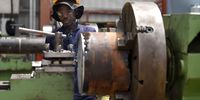
Thsonono Buyeye, the member of the mayoral committee (MMC) for public health, and Khanya Ngqisha, the MMC for budget and treasury, also attended the event.
Acknowledging the metro’s challenges, including unplanned electricity and water outages, Buyeye encouraged investors to invest in the metro.
“We know our city’s challenges when it comes to unemployment and a whole range of socioeconomic issues that we are confronting. We want to call upon anyone who wants to come and invest in Nelson Mandela Bay to do so. This is the Friendly City, and people should come and invest in our city. We are trying to make it easy for any potential investor to come and invest in our city,” he said.
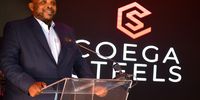
Chapter ‘closed’ on transformer saga
Meanwhile Buyeye, responding to a question about whether relations between the municipality and Coega Steels had been strained by the public fallout over the lease of a municipal transformer to the company, said the chapter had been “closed”.
He told guests that “it was just an unfortunate situation that we found ourselves in, having your name dragged into all of [what] was happening”.
Coega Steels has since returned the transformer to the municipality and acquired two of its own.
Speaking to journalists, Buyeye defended the municipality's assistance to Coega Steels despite the political pushback, saying: “The mayor went out of her way to assist Coega Steels, and it has brought, at times, unfair criticism. Coega Steels is our biggest customer in the city; I think we range between R20-million and R25-million on a monthly basis that we receive from this facility.
“Imagine if it had closed for 10 months. We would have lost over R200-million in 10 months. That money obviously goes somewhere – it services the very same residents – and that transformer could have been sitting somewhere gathering dust.” DM
KioskNews shows a cleaned-up reading view extracted from the publisher’s page — the original always lives on their site, not ours.