Ontario farmer turned down C$16m for 164 acres; 29 acres protected for 999 years
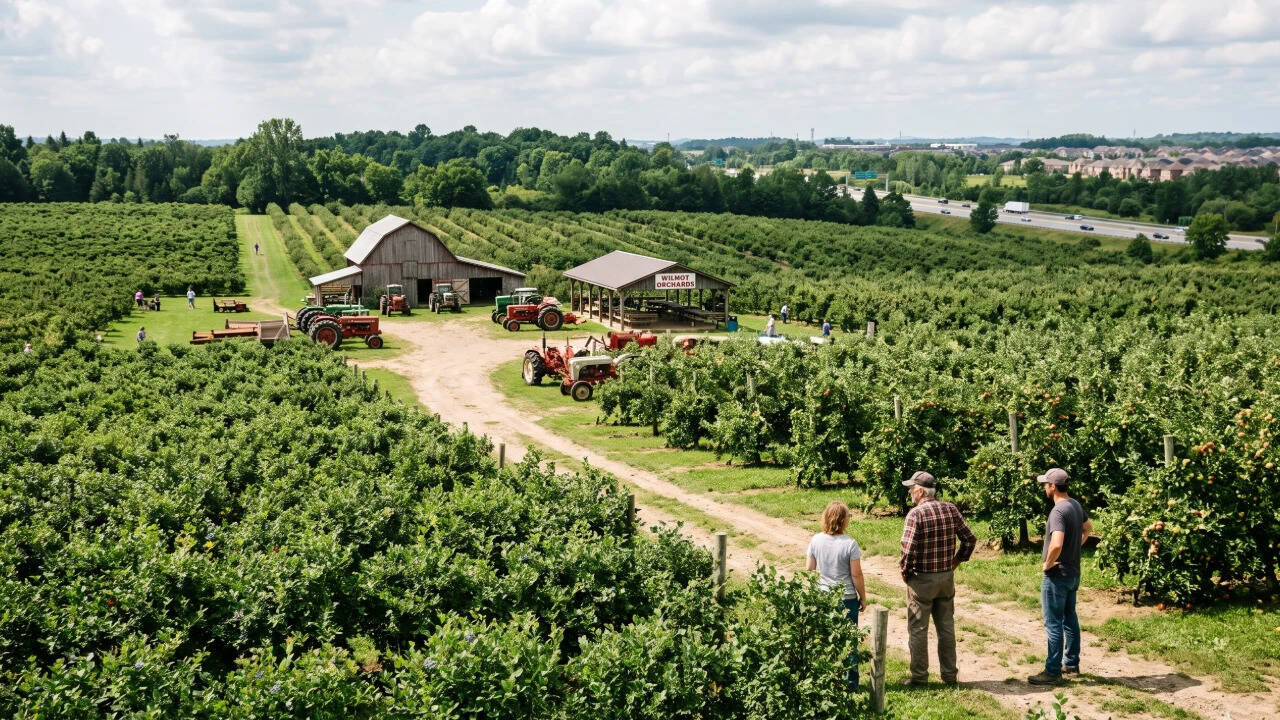
Representative Image (AI generated)
When a developer offered Charles Stevens C$16 million for Wilmot Orchards, the 164-acre fruit farm he helped build near Newcastle, Ontario, he had every reason to consider it. The property sits close to Highway 401 and Lake Ontario, in a rapidly growing part of the Greater Toronto Area where farmland is increasingly attractive for housing and other development.
Instead, Stevens and his family chose a very different path. They worked with the Ontario Farmland Trust to place a conservation easement on 29 acres of the farm, legally restricting development for 999 years, and they plan to protect the remaining land in the years ahead. The story has been reported by CBC News, while the Ontario Farmland Trust describes Wilmot Orchards as the first farm in Durham Region protected through its farmland protection programme.The decision was not simply about refusing money. It was about deciding what kind of future the land should have. Wilmot Orchards grows apples and blueberries on some of Canada’s most productive soil, and the Stevens family wanted to ensure that the farm could continue producing food long after the current generation. Their choice turns a private family property into a long-term public commitment to local food, agricultural land and the possibility that future farmers may still afford to work the soil.
A farm built over generations
Charles Stevens bought the land that became Wilmot Orchards in 1975, before graduating from the University of Guelph in 1976. Over the decades, the farm became known for its pick-your-own blueberries as well as its apple orchards, drawing thousands of visitors each summer to pick fruit and spend time in the countryside. Today, it remains both a working farm and a community destination, with the next generation of the Stevens family involved in its operation.The farm occupies Class 1 soil, which the Ontario Farmland Trust identifies as Canada’s most fertile and rarest farmland. Only 0.5 percent of Canada’s landmass is considered Class 1, and more than half of that land is in Ontario. That makes the preservation of places such as Wilmot Orchards especially significant, because the same qualities that make the land excellent for growing food also make it desirable for development.Stevens has watched that pressure grow steadily. The farm’s location, about an hour from Toronto, has brought repeated interest from developers hoping to convert agricultural land into non-farm uses. In interviews and public remarks, he has acknowledged that development is not inherently wrong, but argued that Ontario needs to be smarter about where it builds, particularly when construction threatens scarce high-quality farmland.
What a 999-year easement means
A conservation easement is a legal agreement attached to the title of a property. It does not necessarily transfer ownership of the land, but it permanently limits certain future uses, in this case preventing the land from being developed for non-agricultural purposes. By placing an easement on Wilmot Orchards, the Stevens family has removed much of the property’s speculative development value while keeping it available for farming.The Ontario Farmland Trust says the family has protected nearly 29 acres of the 164-acre property so far, with plans to protect the rest in the near future. The agreement is designed to last for 999 years, an unusually long horizon that reflects the family’s intention to make the protection effectively permanent. For a farm located in a fast-urbanising region, that legal restriction may matter more than any single owner’s promise to keep it agricultural.Stevens has been candid about the financial trade-off. He told CBC News that a developer once offered him C$16 million for the land, an offer he declined. He has also said that thinking too much about the money involved in placing land in trust could stop a farmer from doing it, explaining that he has never seen anyone take even one dollar to the grave and use it.
Why the land matters beyond the family
The protection of Wilmot Orchards has consequences that extend well beyond the Stevens family.
Ontario Farmland Trust executive director Martin Straathof described the farm as a promise and a beacon of food security and sovereignty, located on the doorstep of a growing city that needs local food. The easement helps ensure that a productive farm close to a major population centre remains capable of growing fruit rather than becoming another subdivision.The decision also speaks to a wider problem in Canadian agriculture: young and beginning farmers often cannot afford land whose price has been driven up by development potential.
Stevens argued that placing farmland in trust is one of the few ways a young farmer in his area might be able to buy land at a farm price, because the easement removes the development premium from the property. In that sense, the family’s action is not only about preserving their own legacy but also about keeping farming economically possible for others.The timing is important. CBC News has reported that Canada has lost millions of hectares of farmland, raising concerns about food security and the future of agriculture near expanding cities.
Wilmot Orchards offers one response to that trend: rather than waiting for policy alone to protect farmland, a landowning family used a voluntary legal tool to secure its agricultural future.
A growing model for farmland protection
Wilmot Orchards is the 25th property protected by the Ontario Farmland Trust and its first in Durham Region. With the Stevens farm included, the trust says it has protected more than 2,700 acres across Ontario. The organisation has set a larger goal of reaching 10,000 protected acres by 2029, a target that depends on more landowners choosing similar conservation agreements.The Stevens family’s decision may encourage other farmers facing similar offers to consider easements as an option. It does not erase the financial pressures of farming, nor does it solve every challenge facing agriculture in Ontario. But it demonstrates that a farm can be treated as more than real estate waiting for a higher and better use.For now, Wilmot Orchards continues to grow apples and blueberries, welcome visitors and employ the knowledge of several generations. Its future is no longer dependent only on market pressures or the intentions of one family. Through a 999-year easement, the Stevens family has written their choice into the land itself, ensuring that this fertile corner of Ontario remains a farm rather than another development site.
KioskNews shows a cleaned-up reading view extracted from the publisher’s page — the original always lives on their site, not ours.