US-China strategic competition to keep escalating as world watches on, Rudd says
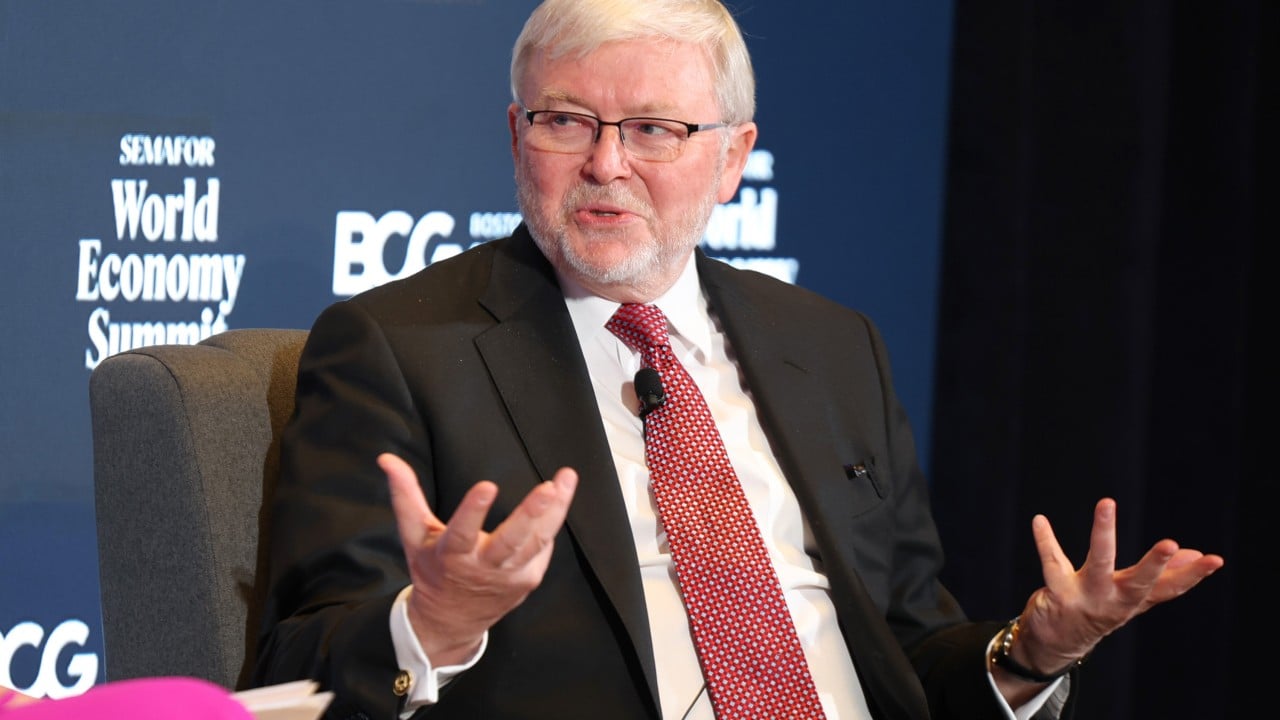
Kevin Rudd, president of the Asia Society and a former Australian prime minister, described US-China strategic competition as full-on and multidimensional at a Harvard Kennedy School Institute of Politics event on Friday.
“There is a full-blown strategic competition under way in every dimension of national political power and influence, militarily, economically, trade and investment and technology, in foreign policy, in ideology,” said Rudd, a noted China scholar.
“It’s across the world, everything, everywhere, all at once.”
His comments come a month after Chinese President Xi Jinping visited US President Donald Trump in Washington for a three-day state visit packed with pomp and pageantry, but with modest deliverables.
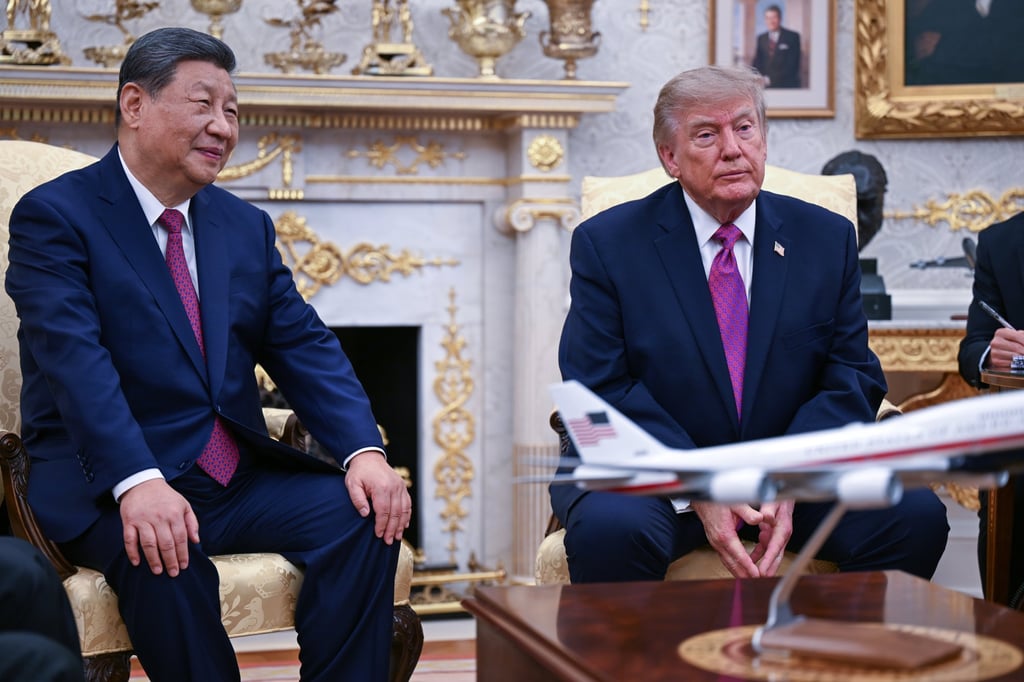
Trump emphasised his personal friendship with Xi during the mid-September visit, hailing the pair’s “great friendship” and downplaying the two countries’ current rivalry, while Xi called for unity, saying “together, let us write a new chapter in our friendly relations”.
Titled “Meeting the China Challenge”, Friday’s discussion on the future of US-China relations featured Rudd and Graham Allison, the founding dean of Harvard University’s John F. Kennedy School of Government.
“The conventional wisdom, that I believe is correct, is that the rise of China and its impact on the international order will be the defining international issue for the lifetime of students here,” Allison said.
Rudd has published two books on China: On Xi Jinping: How Xi’s Marxist Nationalism is Shaping China and the World and The Avoidable War: The Dangers of a Catastrophic Conflict between the US and Xi Jinping’s China.
Allison is known for popularising the Thucydides Trap – the theory that when a rising power threatens to displace an established one, it often results in war. He also served as an assistant secretary of defence in the Clinton administration.
Xi referenced the Thucydides Trap in September during his visit with his American counterpart.
“Our two militaries should maintain regular dialogue and improve mechanisms for crisis communication and prevention. The Thucydides trap can be overcome,” Xi said.
Xi cites Thucydides trap to Trump during summit
The summit outcome last month saw the pair address some areas of competition. They included plans for targeted tariff reductions and an extension of the one-year Busan trade truce aimed at reducing tension between the two giants.
SCMP Plus is a new premium news platform that gives you an
all-inclusive edge to stay ahead on China news.
To access our exclusive content you’ll need to subscribe.
Already a subscriber?
LOG IN
The truce was extended from November 10, 2026, to January 10, 2027, after an unscheduled meeting between Chinese Vice-Premier He Lifeng and US Treasury Secretary Scott Bessent shortly before Xi landed in Washington.
Additionally, the presidents pledged government-to-government dialogue on artificial intelligence (AI), with China stating that the two countries should “maintain dialogue and strengthen cooperation” on the rapidly advancing technology.
“China and the United States currently engage in a massive competition about who wins the AI race,” Rudd said at Friday’s event. “Let it unfold.”
Speaking at an Asia Society event in September, Rudd said Beijing seeks presidential diplomacy to ensure a “minimal number of surprises coming out of the United States between now and the end of next year” as the ruling Communist Party’s 21st Party Congress approaches.
KioskNews shows a cleaned-up reading view extracted from the publisher’s page — the original always lives on their site, not ours.