Call of the wild: First Filipino inducted into Explorers Club


MANILA, Philippines — For Gregg Yan, a 43-year-old communications consultant and founder of environmental nonprofit Best Alternatives, one does not need to have formal training as a scientist to be able to write academic articles about animal conservation.
His experience traveling the world and being exposed to the wonders of wildlife is what informs his writing.
“I had written hundreds or maybe thousands of stories about wildlife and people,” he told the Inquirer. “I’m really a journalist, but because I grew up seeing wildlife and my personal interest was about animals … I never let a lack of academic qualifications [stop me].”
Article continues after this advertisement
READ: Mount Kilimanjaro fire under control–Tanzania authorities
FEATURED STORIES
NEWSINFO
NEWSINFO
NEWSINFO
After 20 years of working in the field where he photographed and wrote about some of the world’s most endangered animals, Yan became the first Filipino to be inducted as a fellow into the 120-year-old international society The Explorers Club.
The group, whose members include the likes of astronaut Neil Armstrong and primatologist Jane Goodall, is a “multidisciplinary society dedicated to the advancement of field research, scientific exploration and resource conservation.”
Yan is also a longtime contributor to the Inquirer.
READ: What do you tip pizza delivery guy atop Mt. Kilimanjaro?
Article continues after this advertisement
“Being a fellow is essentially securing a seat at the table to allow more Filipinos to be part of The Explorers Club in the future, and we do not have a lack of great explorers,” he said.
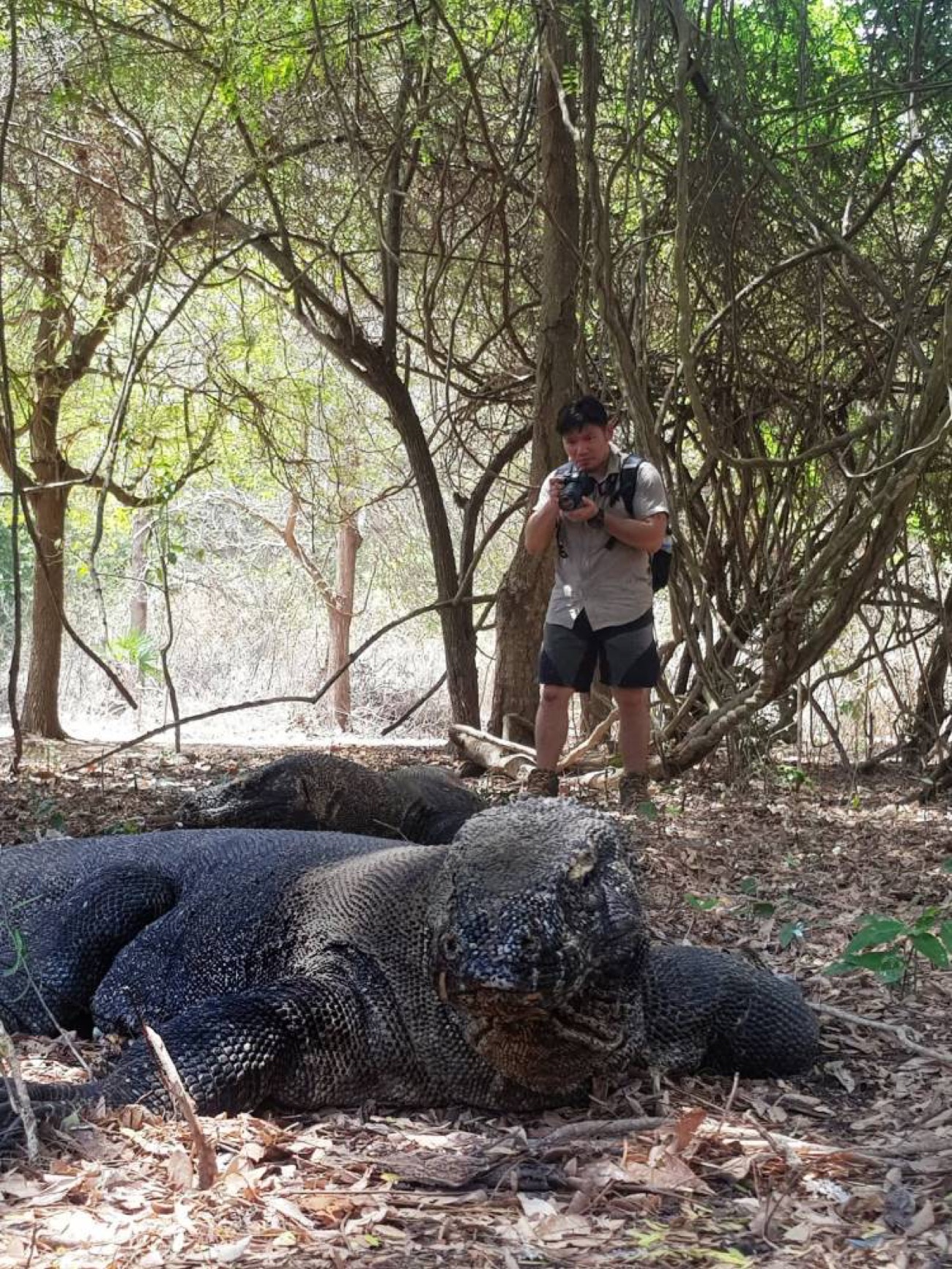
An observant farm boy
His interest in wildlife began when he was a young boy growing up on a farm in Bulacan.
Article continues after this advertisement
“In the 1980s, me and my brother, because we did not have any neighbors, would go exploring the farm every day after school. We had all sorts of animals, not just farm animals. We had different types of insects, snakes, frogs and birds,” he said.
Yan and his brother later left for Manila to study, but returned to the farm after graduating from college. This time, however, Gregg noticed that the beasts and critters that fascinated him as a child had largely disappeared.
“It was because surrounding areas started developing and farms started using pesticides. And the river beside our house was the most polluted river on planet Earth, which is the Meycauayan River,” he said.
‘Localized extinctions’
The sad observation made him realize that “localized extinction can happen not just in one’s lifetime, but in the blink of an eye.”
“I thought that, if this is what’s going on in our backyard in Bulacan, what more is happening across the planet?” he said.
While in college, Yan worked on his communication and writing skills as a journalism student at Ateneo de Manila University and as an intern at the Inquirer. His thesis, not surprisingly, was about the wildlife that had managed to take refuge within the Ateneo campus.

Finding green options
“I spent so many nights and mornings alone, looking for snakes and birds and stuff,” he recalled.
After graduating, Yan worked with the World Wide Fund For Nature as a communication officer for 12 years, immersing himself in conservation issues.
“One of my favorite adventures was finding the pangolin in Palawan, or studying the seabirds of the Tubbataha reefs, also in Palawan. My core expertise was about fish … I write academic journal articles about fish conservation,” he said.
In 2015, Yan founded the nongovernmental organization Best Alternatives, which promotes environment-friendly products.
“Let’s say, in [making] traditional Chinese medicine, they like to use endangered wildlife like tiger bones, rhinoceros horns, or dried seahorse,’’ he said. “At Best Alternatives, we do research to find out what can be the alternatives to these illegal or unethical [materials] that are being used.”
Mindoro to East Africa

Parallel to this advocacy, Yan also stays in touch with indigenous communities who play an important role in wildlife conservation. These include the Tawbuid people of Mindoro.
“I’ve written stories about them. In many ways, they are simpler and better than so many people we see right now … and they live right beside the tamaraw up to this day. So, every time I go there, I essentially see how conservation works,” he said.
Outside the Philippines, Yan had encounters with the Maasai tribe in Tanzania and Kenya, taking part in a tradition where his skin was ritually marked with a heated stick covered in cattle dung. Being herders, the tribe believes the animal’s waste can work as a disinfectant, he explained.
“To remember those adventures, I only have to look at my arms … because they are seared into my flesh, literally, and into my memory.”
Yan hopes that his fellow travelers and adventurers will be mindful enough and help the places they visit stay clean or unspoiled. It can be as simple as picking up trash while mountain climbing or scuba diving.
Your subscription could not be saved. Please try again.
Your subscription has been successful.
“We need to make sure that future generations of Pinoy and Pinay explorers will still have something to explore and protect,” he said.
KioskNews shows a cleaned-up reading view extracted from the publisher’s page — the original always lives on their site, not ours.