Why China’s heritage-listed Dog-Carrying Festival honours canines as sacred lifesavers
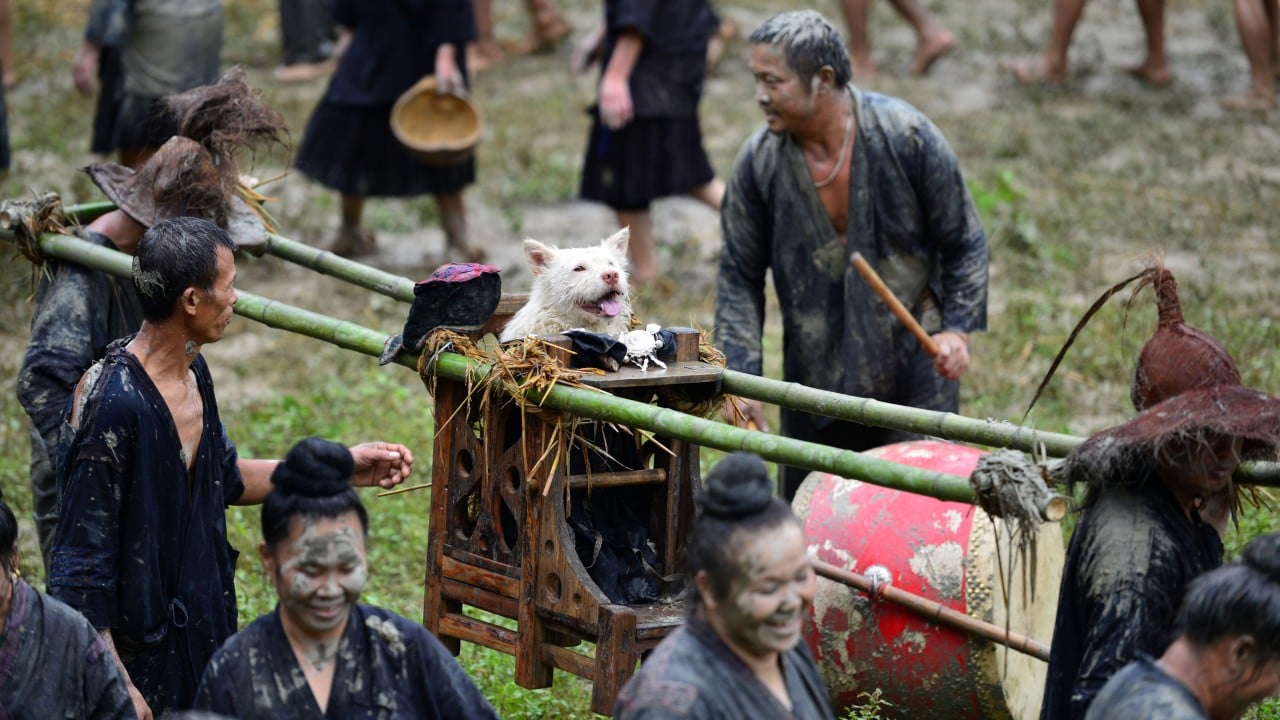
In a remote Miao village in southwestern China, dogs are honoured as life-saving heroes.
Every seventh month of the lunar calendar, residents of Jiaobang village in Jianhe county, Guizhou province, celebrate Tai Gou Jie, or the “Dog-Carrying Festival” – a unique folk tradition recognised as local intangible cultural heritage in 2015.
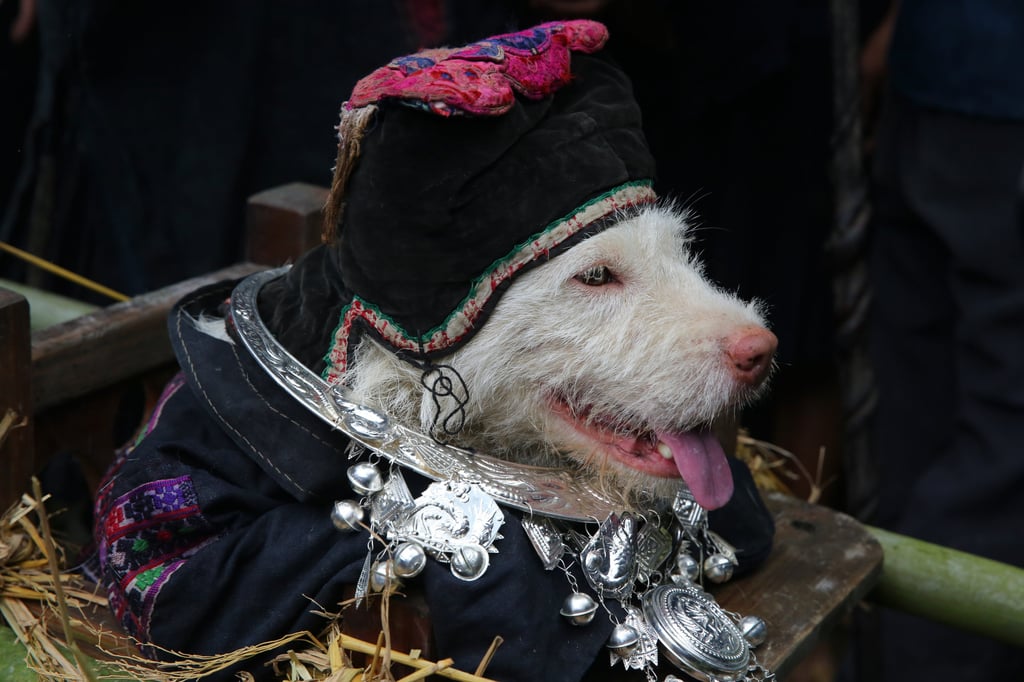
During the festival, villagers select a dog. Traditionally, it was a white female, but today adult males and native Xiasi dogs may also be chosen.
The honoured canine is dressed in traditional Miao attire, including a handcrafted tiger-head hat and a silver neck ring.
Carried through the village on a bamboo sedan chair, the dog is accompanied by a ritual priest chanting ancient scriptures.
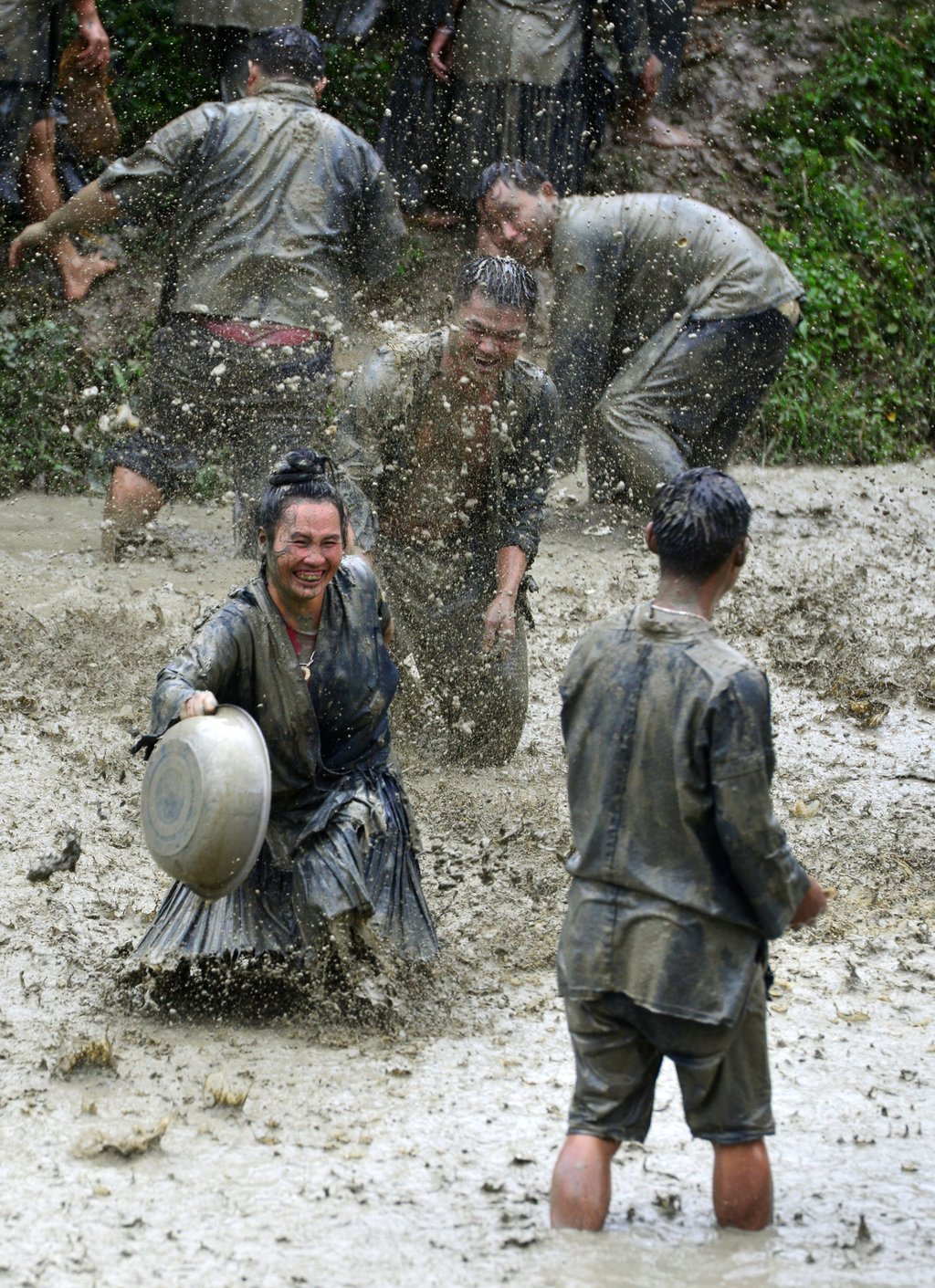
The procession culminates in the surrounding fields, where villagers gather to perform drum dances and splash mud on one another. The rituals are intended to share blessings and pray for favourable weather and abundant harvests in the year ahead.
The festival’s origins are rooted in two enduring legends.
One ancient song recounts a time when a severe drought threatened the village with total crop failure. In a dream, a deity appeared to a village elder and revealed that praying with a dog would bring rain. The villagers followed the vision, rain fell, and the crops thrived.
Another tale says that the early ancestors survived because a dog led them to a hidden water source in Guizhou’s karst landscape. Surface water in the region can quickly disappear into underground caves, making scarcity a serious challenge to survival.
To the Miao people, dogs are miraculous heroes and lifelong companions. The festival helps pass core cultural values on to younger generations, teaching respect for all life and harmony with nature.
Thanks to this tradition, Jiaobang village has earned the reputation of “China’s Village of Gratitude.”
The celebration reportedly includes another heartwarming custom: unmarried young women carry puppies on their backs as they collect “hundred-family rice” from local households. A respected elder then distributes the food to young children in a ritual believed to promote their healthy growth.
This reverence for animals reflects broader nature-worship beliefs in Miao culture, including the veneration of the “Butterfly Mother” – the mythical ancestor said to have emerged from a maple tree and laid 12 eggs from which humanity and animals were born.
Another prominent example is the golden pheasant, which is credited with bringing millet seeds and saving the ancestors from a severe famine. In gratitude, the Golden Pheasant Miao created a traditional dance that imitates the bird’s graceful movements.
The tradition also invites modern reflection.
“The festival’s respect for animals is moving, yet dog-meat markets persist in a few areas of China. This reverence for life must take precedence over commercial interests,” one online user noted.
KioskNews shows a cleaned-up reading view extracted from the publisher’s page — the original always lives on their site, not ours.