The 10 Greatest Horror Movies Based on Books, Ranked

Writing from the Chicagoland area in Illinois, Robert is an avid movie watcher and will take just about any excuse to find time to go to his local movie theaters. Robert graduated from Bradley University with degrees in Journalism and Game Design with a minor in Film Studies. Robert tries his best to keep up with all the latest movie releases, from those released in theaters to those released on streaming. While he doesn't always keep up with the latest TV shows, he makes it a goal to watch nearly every major new release possible. He has been honing his craft and following any and all movie news all his life, leading up to now, where he has a vast knowledge of film and film history. He also logs every movie that he watches on his Letterboxd page, and has hosted a weekly online movie night with his closest friends for over 6 years.
Sign in to your Collider account
Horror continues to be one of the most prolific and widely explored genres in the medium of film, with a bountiful number of exceptional horror experiences throughout all of film history. While there are countless great original horror stories birthed by film, many of the best horror films of all time find their origins as an adaptation of legendary horror novels. It certainly makes sense in concept, as a widely successful and beloved horror novel, on top of having built-in audiences, is always going to have an inherent value and strength in seeing this story evolve and be created in a visual medium.
Being a completely different medium built upon tension and storytelling as opposed to visual acuity and shocking visuals, many of the great horror novels that have been adapted to film have major changes to adapt to the visual medium. While these changes can end up being divisive for readers of the original book, other changes can prove to act as major improvements over the original story and the absolute right choice when it comes to telling a horror story in a visual medium.
10 'The Night of the Hunter' (1955)
Based on 'The Night of the Hunter' by Davis Grubb

A striking and deeply disturbing look into the fractured psyche of a serial killer in one of the most ahead-of-its-time horror films of classic Hollywood, The Night of the Hunter has only grown to be more effective in the years since its release. The film follows serial killer Harry Powell (Robert Mitchum), who poses as a preacher, enacting a plot where he pursues a duo of children in an attempt to get his hands on $10,000 of stolen cash hidden by their late father.
More than just a deeply influential horror adaptation, The Night of the Hunter has a widely sustained legacy in the realm of neo-noir thrillers, with its distinct expressionistic style helping it be one of the most distinct releases of the '50s. The film seamlessly blends elements of noir and horror to create a cinematic opus of dread and darkness, fully amplifying the themes and legacy that the original novel was built upon.
9 'Frankenstein' (1931)
Based on 'Frankenstein; or, The Modern Prometheus' by Mary Shelley

One of the most legendary icons in all horror cinema, Frankenstein was already a largely iconic story before the popular 30s film adaptation, as Mary Shelley's 1818 novel has been a deeply powerful horror story since its release. This cinematic adaptation simply further cemented the character as an icon of horror, giving a visual flair and energy to the classic story that, while detracting from elements and themes of the novel, serves to make for the best possible horror film from the material.
The film follows the notorious mad doctor Henry Frankenstein embarking on a vicious scheme to bring a human monster to life, stitching him together from various pieces and salvaged body parts put together. However, the doctor's dreams and exploration of the notions of life itself are soon shattered when his creation has a violent outburst, awakening to a world that does not welcome him. While there have been various film adaptations of Frankenstein both before this classic, well after its release, and even in the near future by Guillermo del Toro, this 1931 classic still stands as the most iconic version of the story.
8 'Carrie' (1976)
Based on 'Carrie' by Stephen King

Stephen King is widely renowned for his work on various iconic horror novels throughout the late 20th century, many of which were adapted into legendary horror films in their own right. Easily one of the best and most iconic adaptations comes in the form of Brian De Palma's Carrie, further amplifying the coming-of-age horror of the King classic to create one of the '70s best horror films. The distinct vision and filmmaking voice of De Palma fit extremely well with King's shocking and painful story, creating a perfect melding of creative horror minds whose attributes complement each other perfectly.
The film follows the story of the withdrawn and sensitive teenage girl Carrie White (Sissy Spacek), who faces constant taunting from her classmates as well as an abusive home life from her mother. All the chaos and hardships that she faces prove to have an unexpected side effect on Carrie, as an increasing number of strange occurrences happening around her have Carrie suspecting that she has supernatural powers. While she does all that she can to keep these powers in check, it slowly becomes a matter of time before she loses control and unleashes wrath upon those who wronged her.
7 'American Psycho' (2000)
Based on 'American Psycho' by Bret Easton Ellis

Bret Easton Ellis's scathing and disturbing satirical takedown of high-class wealth was already a deeply controversial story when it was only a novel, only being amplified in tension and discourse when Mary Harron's legendary film adaptation was released. While American Psycho makes several distinct changes and adjustments to the original novel, it stays true to the core essence and themes of the original novel while still standing out as its own horror experience.
The film allows a glimpse into the depraved and shattered psyche of New York investment banker Patrick Bateman (Christian Bale), who lives a double life outside of his luxurious job as a deranged serial killer. His bloodlust and urges for manslaughter prove to be growing more and more insatiable with each passing day as Bateman abuses his sense of power over the city's homeless people, hookers, and anyone else he deems below him. The film's striking combination of horror, satirical black comedy, and deeply memorable performances has made it a quintessential horror cult classic.
6 'Jaws' (1975)
Based on 'Jaws' by Peter Benchley

While Jaws is more commonly recognized as the massive breakout blockbuster by Steven Spielberg that helped cement the very notion of blockbuster filmmaking as it is known, many don't even realize that the film is adapted from a novel released the prior year. The original novel featured many more subplots and character dynamics beyond the classic story told, yet the film's decision to cut down on the story and focus primarily on the shark and the three protagonists made for a better cinematic experience.
The film follows a small beach town falling into chaos and disarray after a vicious great white shark begins laying waste to the citizens attempting to enjoy the summer on the beach. After various failed attempts to get rid of the shark, a police chief, marine biologist, and professional shark hunter set out on a boat together on a quest to take down the deadly shark once and for all. The film has become a landmark title in horror cinema, forever associating the toothy aquatic animal with fear and terror for the foreseeable future.
Collider Exclusive · Horror Survival Quiz Which Horror Villain Do You Have the Best Chance of Surviving? Jason Voorhees · Michael Myers · Freddy Krueger · Pennywise · Chucky
Five killers. Five completely different ways to die — if you're not smart enough, fast enough, or self-aware enough to avoid it. Only one of them is the villain your particular set of instincts gives you a fighting chance against. Eight questions will figure out which one.
🏕️Jason
🔪Michael
💤Freddy
🎈Pennywise
🪆Chucky
01
Something feels wrong. You can't explain it — you just know. What do you do? First instincts are the difference between the survivor and the first act casualty.
02
Where are you most likely to find yourself when things go wrong? Setting is everything in horror. Where you are determines which rules apply.
03
What is your most reliable survival asset? Every survivor has a quality the villain didn't account for. What's yours?
04
What kind of fear is hardest for you to fight through? Knowing your weakness is the first step to not dying because of it.
05
You're with a group when things start going wrong. What's your role? Horror movies are brutally clear about who survives group situations and who doesn't.
06
What's the horror movie mistake you're most likely to make? Honest self-assessment is a survival skill. Denial is not.
07
What's your best weapon against something that can't be stopped by conventional means? Every horror villain has a weakness. The survivors are always the ones who find it.
08
It's the final scene. You're the last one standing. How did you make it? The final survivor always has a reason. What's yours?
Your Survival Odds Have Been Calculated Your Best Chance Is Against…
Your instincts, your strengths, and your particular way of thinking under pressure point to one villain you actually have a fighting chance against. Everyone else — good luck.
Jason Voorhees
Jason is relentless, but he is also predictable — and that is the gap you would exploit.
- He moves in straight lines toward his target. He doesn't strategise, doesn't adapt, doesn't outsmart. He simply pursues.
- Your ability to keep moving, use the environment, and resist the panic that freezes most victims gives you a genuine edge.
- The Crystal Lake survivors were always the ones who stopped running in circles and started thinking about terrain, water, and distance.
- You think like that. Which means Jason, for all his indestructibility, would face someone who simply refused to be where he expected.
Michael Myers
Michael watches before he moves. He is patient, methodical, and almost impossible to detect — until it's too late for anyone who isn't paying close enough attention.
- But you are paying attention. You notice the shape in the window, the car parked slightly wrong, the silence where there should be sound.
- Michael's power lies in the invisibility of ordinary suburbia — the fact that nothing ever looks wrong until it already is.
- Your spatial awareness and instinct to map every room, every exit, and every shadow before you need them is precisely the quality Laurie Strode had.
- You are not a victim waiting to happen. You are someone who already suspects something is wrong — and acts on it.
Freddy Krueger
Freddy wins by getting inside your head — using your own fears, your own memories, your own subconscious as weapons against you. That strategy requires a target who can be destabilised.
- You are harder to destabilise than most. You've faced uncomfortable truths about yourself and you haven't looked away.
- The survivors on Elm Street were always the ones who understood what was happening and chose to face it rather than flee from it.
- Freddy's greatest weakness is that his power evaporates in the presence of someone who refuses to give him the fear he feeds on.
- Your psychological resilience — the ability to stay grounded when reality itself becomes unreliable — is exactly the quality that keeps you alive here.
Pennywise
Pennywise is ancient, shapeshifting, and feeds on terror — but it has one critical vulnerability: it cannot function against someone who genuinely stops being afraid of it.
- The Losers Club didn't survive because they were braver than everyone else. They survived because they faced their fears together, and faced them honestly.
- You ask the questions others avoid. You look directly at what frightens you rather than turning away.
- That directness — the refusal to let fear fester in the dark — is Pennywise's worst nightmare.
- It chose the wrong target when it chose you. You are exactly the kind of person whose fear tastes like nothing at all.
Chucky
Chucky's greatest advantage is that nobody takes him seriously until it's already too late. He exploits the gap between how something looks and what it actually is.
- You don't have that gap. You take threats seriously regardless of how they present — and you never make the mistake of underestimating something because of its size or appearance.
- Chucky relies on surprise, on the delay between recognition and response. You close that delay faster than almost anyone.
- Your instinct to treat every unfamiliar thing with appropriate scepticism — rather than dismissing it because it seems absurd — is the exact quality that keeps you breathing.
- Against Chucky, not laughing is already winning. You are very good at not laughing.
5 'Dracula' (1931)
Based on 'Dracula' by Bram Stoker
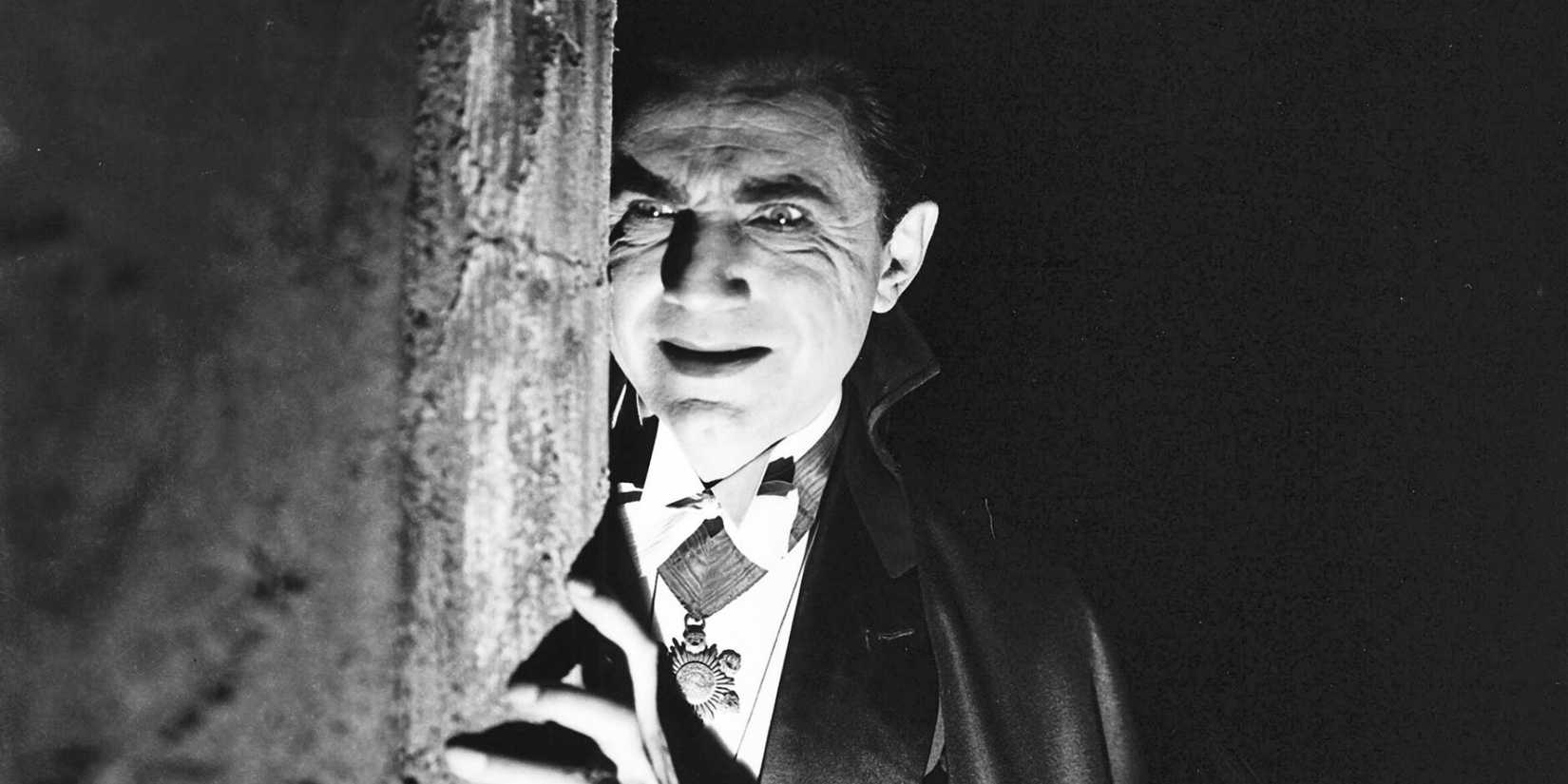
One of the most iconic monsters in horror history, Dracula has seen many different variations and adaptations over the years, ranging from modern takes like Last Voyage of the Demeter to unauthorized adaptations like the original Nosferatu. However, the distinct iconography that has defined the legendary vampire for nearly 100 years was popularized by Bela Lugosi's performance in 1931, adapting a 1924 stage play that adapted Bram Stoker's original novel. The film follows the enigmatic Count Dracula traveling from Transylvania to England in order to prey on the blood of various living victims.
It's hard to imagine an era where Dracula wasn't the quintessential figure and face of vampires as a whole, yet Stoker's novel wasn't truly considered the masterpiece of defining vampire art until this film adaptation cemented vampires in the public eye. Lugosi's distinct voice and performance have elevated the character of Dracula into the annals of horror history, cementing the film as one of the most important landmark titles in horror in the process.
4 'The Silence of the Lambs' (1991)
Based on 'The Silence of the Lambs' by Thomas Harris

An adaptation of the second novel in Thomas Harris's series of Hannibal Lecter stories, The Silence of the Lambs expands upon the concepts and terror of Manhunter to make it the undeniable peak of the psychological horror thriller franchise. The film adaptation became an instantaneous cultural phenomenon, sweeping the Academy Awards and becoming one of the most acclaimed horror movies of all time in the process. Anthony Hopkins's portrayal of Hannibal Lecter is also in consideration for one of the best horror performances of all time.
The film follows young FBI trainee Clarice Starling (Jodi Foster), who is tasked with hunting a notorious and mysterious serial killer known as Buffalo Bill. Unable to get a leg-up in finding the killer before he reaches his next victim, Clarice ends up seeking the advice of Hannibal Lecter, the once brilliant psychiatrist turned cannibalistic serial killer who may just be the key to uncovering Buffalo Bill's location. The film became such a hit that it enticed Thomas Harris to create more novels about Lecter, even writing the screenplay himself for a prequel film for the character.
3 'The Shining' (1980)
Based on 'The Shining' by Stephen King

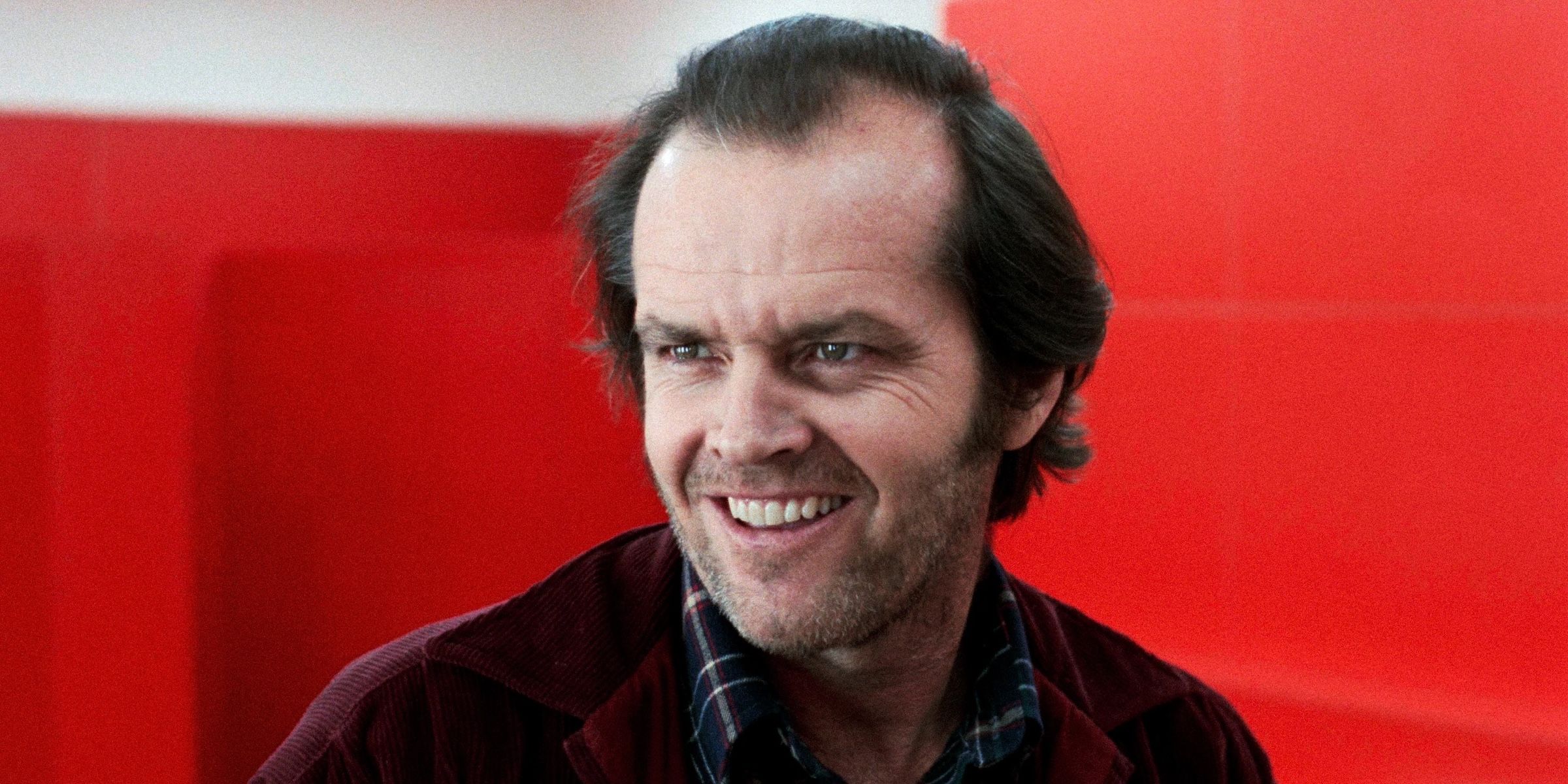
Among all of the different exceptional Stephen King adaptations out there, the clear magnum opus when it comes to the quality of the film itself has to be Stanley Kubrick's horror masterpiece, The Shining. Originally divisive and hated upon its release, The Shining has slowly grown to be widely appreciated for its exceptional craft, stunning and subtle storytelling, and haunting atmosphere. King himself is a notable detractor of the film, as the film actively detracts from the novel significantly when it comes to characterization and motivation, yet these changes work better for Kubrick's own vision of the story.
The film follows Jack Torrance (Jack Nicholson) taking his family out as he takes a new job at the remote Overlook Hotel in the Rocky Mountains during the winter, as the previous caretaker went mad and murdered his family. It doesn't take long before Jack comes down with a similar case of madness as his mental health slowly deteriorates, made worse by his son Danny experiencing frequent frightening visions. Jack soon becomes overwhelmed with a violent rage and uncontrollable desire to murder his wife and son.
2 'The Exorcist' (1973)
Based on 'The Exorcist' by William Peter Blatty
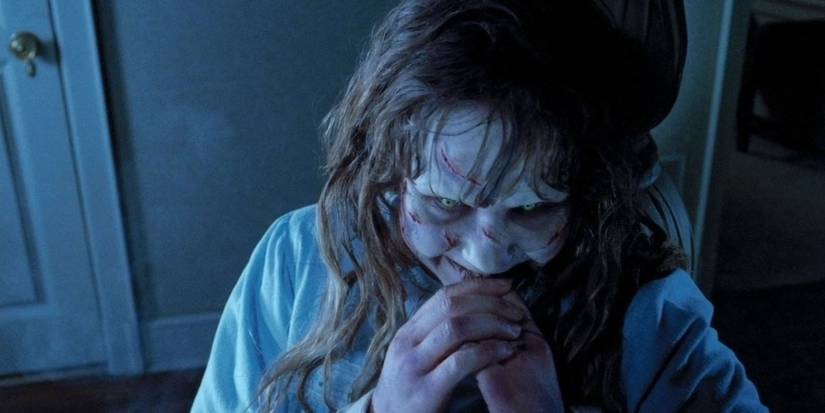
One of the most acclaimed and influential horror films of all time, The Exorcist's striking story of demonic possession and a harrowing exorcism finds its origins in William Peter Blatty's novel released 2 years prior. The film is very close in tone and style to the original novel, thanks in large part to the fact that Blatty had a hands-on approach to this film adaptation of his novel, acting as a producer and screenwriter for the film. Blatty would end up winning the Academy Award for Adapted Screenplay for his work adapting his own novel to the big screen.
The film follows innocent 12-year-old Regan MacNeil (Linda Blair) ending up being possessed by a nefarious demon whose origins trace back to a mysterious stone talisman found in ancient Iraqi ruins. With no other options left to them, the MacNeil family attempts to rescue their young girl by enlisting a duo of Catholic priests to perform an exorcism on the young girl. The film shocked and disturbed audiences of the era in a way few horror movies had been able to do, amplifying all the terror of possession from the novel to the big screen in absolute fashion.
1 'Psycho' (1960)
Based on 'Psycho' by Robert Bloch

Arguably the most influential and iconic horror movie of all time, Alfred Hitchcock's masterpiece of horror filmmaking, Psycho, can owe a great deal of its success and storytelling mastery to the Robert Bloch novel released the year prior. The film centers itself around a striking encounter between on-the-run embezzler Marion Crane (Janet Leigh) and the reclusive motel proprietor Norman Bates (Anthony Perkins). In the aftermath of their deadly encounter, a private investigator and Marion's family are tasked with investigating the truth behind her disappearance.
Modern horror as a whole can credit the vast majority of its style and filmmaking techniques to the legendary execution and thrills present in Psycho, which upended many horror traditions and redefined what horror on the big screen could be. Much like the novel that it adapts, the film doesn't shy away from various deeply disturbing and depraved concepts and themes, instead playing into them in order to create a disturbing and effective portrait of malice and despair.

Psycho
- Release Date
- June 22, 1960
- Runtime
- 109 minutes
- Director
- Alfred Hitchcock
- Writers
- Joseph Stefano
KioskNews shows a cleaned-up reading view extracted from the publisher’s page — the original always lives on their site, not ours.