Likud appeals election results from 120 ballot boxes, seeks revote at those locations

Prime Minister Benjamin Netanyahu’s Likud party filed an appeal with the Jerusalem District Court on Wednesday challenging the results from up to 120 ballot boxes in last month’s Knesset election, arguing that violations of voter tracking and ballot secrecy laws warrant their annulment and that a new vote for those specific ballot boxes be held.
The appeal, filed with the Jerusalem District Court — sitting as an administrative court — argued that the Arab-led Ra’am and Joint List political parties unlawfully tracked voter turnout at 95 ballot boxes, which gave them an unfair advantage over other parties.
It also alleged ballot secrecy violations at 53 ballot boxes, some also affected by voter tracking violations, arguing that the breaches compromised all votes cast at those boxes and warranted a revote.
0:00 / 0:00
Promoted: Wondering Jews, Angela Buchdahl

In its appeal, Likud did not, however, make any claims against the election based on the two investigations being conducted by law enforcement agencies into alleged vote buying in the Arab community, because the investigations have yet to conclude. The appeal nevertheless claimed that the outcome of the investigations would “likely” buttress the claims against the 120 ballot boxes.
Despite the claims, Central Elections Committee Chairman and Deputy Supreme Court President Noam Sohlberg and Shin Bet chief David Zini have said that the investigations have yielded no evidence of bribes being paid to voters on a scale that could affect the results of the vote.
Get The Times of Israel's Daily Edition by email and never miss our top stories
By signing up, you agree to the terms
In total, there were 12,929 ballot boxes around the country on election day, and 5,717,386 citizens voted in the election, comprising 77.9 percent of eligible voters, the highest turnout since 1999.
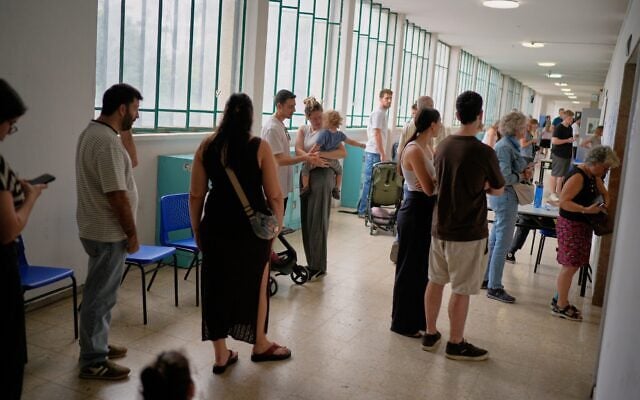
The court will not need to give the respondents time to respond before holding a hearing in court on the claims.
The appeal, filed by Likud legal adviser Ilan Bombach, alleged that unlawful voter tracking influenced the results at 95 ballot boxes in Arab population centers, which helped the Arab-led parties track target voters who had yet to cast their ballots and boost their voter turnout.
Given that the High Court of Justice explicitly outlawed the practice less than a week before the election, Likud claimed that the use of voter tracking at these ballot boxes gave the Arab parties an unfair advantage in the election.
The appeal argued that the High Court of Justice, in that ruling and in earlier rulings, requires that elections be contested by the different political parties on an even playing field, and that election laws apply to, and must be implemented on, all parties equally.
The appeal further argued that at 53 ballot boxes, various other electoral laws were violated, including through the distribution of voting slips outside the polling station, the unlawful entrance of unnamed persons into the voting booth, and the photographing or disclosure of voting slips.
The allegations of voter tracking and ballot secrecy violations were based on affidavits submitted to the Central Elections Committee by voters, the appeal said.
The appeal argues that if the majority-Arab Ra’am party were to lose as few as 6,700 votes, it would mean that it would go from eight Knesset seats to seven, and boost Likud-aligned Shas by an extra seat, an outcome the Likud appeal claimed could have a decisive impact on the balance of power in the Knesset.
Redoing the vote for the allegedly tainted ballot boxes is therefore necessary to ensure that the election and its outcome as a whole are fair, Likud argued in the appeal.
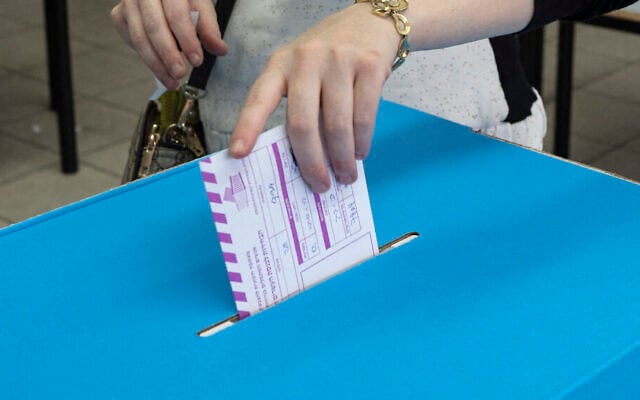
The alleged misdeeds constitute “a serious violation of the fundamental principle of equality in elections, which is enshrined in the Basic Law: The Knesset, and constitute a serious and deliberate infringement of the principle of equal opportunity in elections, as established in Section 4 of the Basic Law: The Knesset,” the appeal said.
“This is a grave violation of the foundations of democracy and of the fundamental principles underpinning the democratic electoral process, and undermines the integrity of elections in the State of Israel,” it added.
The Likud party began to cast aspersions on the validity of the vote in the Arab community several weeks before the election itself, alleging that there would be voter fraud, although it did not include allegations at the time that there would be unlawful voter tracking.
An organization called the Civilian Election Guard, which sent volunteer observers to polling stations on election day, has claimed that Likud was responsible for more voter tracking violations than any other party.
The organization reported on 374 instances of apparently illegal use of apps to track voter turnout on election day.
It said that the largest number of such violations was by Likud activists and polling station workers, who comprised 32% of all such incidents, followed by United Torah Judaism with 10%, Shas with 6%, Ra’am with 2%, and the Joint List with 1%.
Animal lovers, this one's for you

In 1935, Rabbi Max Shorenstein left Denmark to pursue his lifelong dream: building a zoo in Tel Aviv and teaching children to love animals. The Tel Aviv Zoo became one of the city’s greatest attractions, but envy, greed, and corruption drove Shorenstein from the paradise he created.
The film 'There Are No Lions in Tel Aviv' is available to screen November 19-26 for members of our reader support group, The Times of Israel Community. Join the Community today to support our work and watch our DocuNation series of outstanding Israeli documentary films.
I want to watch I want to watch Already a member? Sign in to stop seeing this
KioskNews shows a cleaned-up reading view extracted from the publisher’s page — the original always lives on their site, not ours.