Could a midterm defeat tame Trump? Not on foreign policy, Chinese experts say
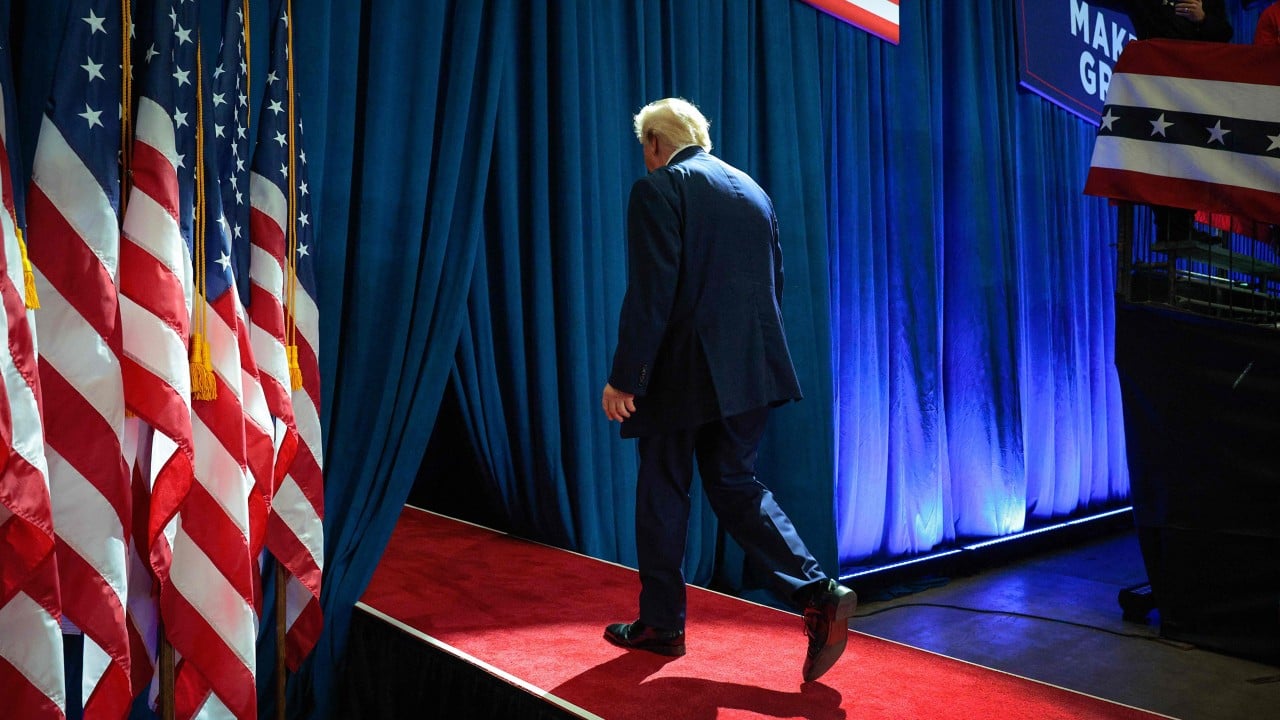
‘Election nightmare’: Trump accuses Chinese government of election interference
There have also been signs in recent months that the party’s once narrow path to sweeping both chambers has widened, even though most of the Senate seats regarded as toss-ups are in traditionally red states, meaning the Democrats must win in Republican territory.
Observers in China agree that the US midterms on November 3 are likely to usher in a divided government.
They expect that such a shift could expose Trump to increased investigative oversight, raise the odds of impeachment led by House Democrats, and induce congressional gridlock for his administration’s legislative, personnel and budget priorities for the rest of his second term.
“The next two years could be a lame-duck [period for Trump],” said Diao Daming, an international relations professor specialising in US politics at Renmin University in Beijing.
Still, Diao said Trump had been consistently expanding presidential power and was likely to continue his approach of bypassing Congress through a barrage of executive orders to advance policies, leading to the prospect of more legal disputes.
As of October 22, Trump had already signed 292 executive orders during the first half of his second term – outpacing the 220 signed during his entire first term – according to the American Presidency Project.
Of those, more than 140 were signed in his first 100 days back in the White House, dwarfing the total issued by any predecessor over the same time frame.
US policy towards Russia, Iran, Europe and China could swing rapidly between heavy pressuring and partial bargaining.
Although Trump might emerge from the midterm elections with less room to advance legislation, he could remain active on executive and foreign policy actions, Meng Weizhan, a social sciences researcher at Fudan University in Shanghai, wrote in a social media post late last month.
SCMP Plus is a new premium news platform that gives you an
all-inclusive edge to stay ahead on China news.
To access our exclusive content you’ll need to subscribe.
Already a subscriber?
LOG IN
“He can still decide a lot of things,” Meng wrote.
Even if lasting only a few months, a single decision on tariffs, corporate licences, sanctions enforcement, military deployments or senior official appointments could have real-world consequences, he noted.
“He still has the capacity to change policy direction, although some policies will be hard to sustain,” Meng added.
Zhao Zhijiang, a research assistant at Beijing-based independent think tank Anbound, also expected Trump to retain considerable latitude in areas such as trade, tariffs, sanctions, immigration enforcement, administrative regulation, diplomacy and national security.
While Trump himself would enter the later stage of his presidency after the midterms, “Trumpism will not necessarily decline in tandem”, Zhao said, adding that younger Republicans were taking up the movement’s political line.
“The so-called lame duck problem is more about Trump’s personal term in office. Whether Trumpism can endure over the long run is the more important variable for gauging the future shape of American politics,” he said.
Republicans are heading into the midterm race with slim majorities in both the House and Senate, at a time when several polls show Trump’s domestic approval ratings at record lows.
The vote on Tuesday has been widely framed as a referendum on the US president, even though the man – who has been perceived as a mercurial leader upending the post-World War II order that the US helped build – is not on the ballot.
His first presidency saw Republicans yield about 40 seats, losing their House majority in the 2018 midterms, although they expanded their Senate majority with a two-seat net gain.
What followed were two years of investigations, subpoenas and impeachment.
The global spotlight is fixed on whether the elections can galvanise Democrats to repeat such a scenario to keep Trump in check.
All 435 House seats, 35 of the 100 Senate seats and 36 of the 50 state governorships will be decided in the midterm elections.
A Democratic takeover of the House is “almost a high-probability event”, said Diao, adding that the outcome in the Senate remained harder to call but the likelihood of Republicans losing their grip there was “continuing to rise”.
However, he expected that winning one chamber, or even both, would not necessarily secure Democrats the power to dominate the agenda.
“Even if the Democrats come back, it may feel like a fragile, even narrow, even ineffective majority,” Diao said.
If Democrats get a thin House majority, they might have to adjust some policies to accommodate the party’s rising democratic socialist wing, whose views often diverge from those of the party establishment, Diao said.
Even if Democrats flipped the Senate, they would probably hold only a razor-thin majority, which would be either insufficient to end a filibuster or difficult to hold together, given that Pennsylvania’s Democratic Senator John Fetterman could align with Republicans on many issues.
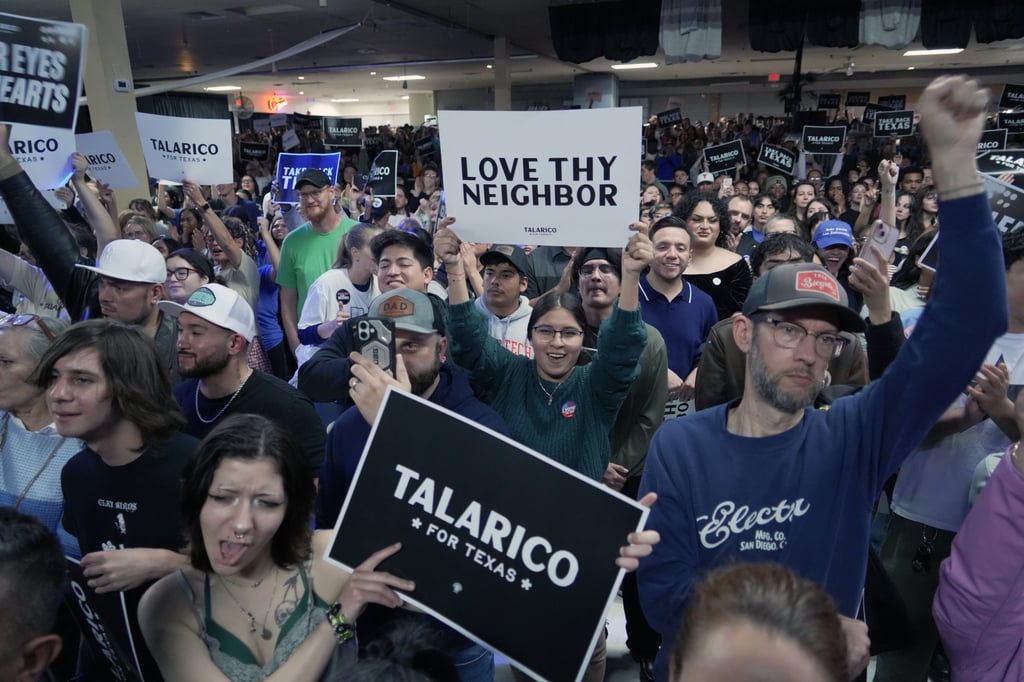
The assessment was echoed by other Chinese analysts.
“Even if Democrats controlled both chambers, they would still find it difficult to get around the presidential veto to enact a full slate of new policies on their own,” Meng wrote in his note.
He noted that Republicans might narrowly hold the Senate while Democrats could take the House.
He also noted that several states’ redrawing of congressional maps since last year could leave the scale of any Democratic House win in question, while some Republican candidates could outperform the polls in some tight districts due to campaign spending, voter turnout and local footprint.
Zhao from Anbound said that recent Republican efforts to shore up campaign mobilisation and defences, together with some candidates distancing themselves from Trump on specific issues, had made a Democratic landslide in earlier projections more uncertain.
He cited surveys showing that Americans lacked confidence in either party’s ability to solve the country’s problems. “The current situation looks more like a punishment of the [Republican] party in power than strong support for the Democrats,” he said.
Diao also said Democrats had offered no clear solutions beyond criticising Republicans, when inflation, higher oil prices driven by the conflict in the Middle East and the fallout from the trade war with Canada had fuelled public frustration with the Trump administration.
“Even if the Democrats win both chambers, is that a so-called blue wave? You don’t have a political platform … so what would the wave be made of?” Diao said. “That’s why some people say it’s not a blue wave but a red undertow.”
As a new balance of power looms over Washington, there has been discussion on Chinese social media over whether Trump will enter “garbage time” for the remainder of his presidency.
Experts said the characterisation missed the mark. The widely used sports term refers to the closing stretch of a game when one side has such an insurmountable lead that the outcome is not in doubt and players tend to become passive. The term has recently taken on a more political hue on Chinese social media.
Zhao said Trump’s final two years in office “would not be a period of policy stagnation”.
He expected the US president to maintain a hard line on immigration while pressing ahead with issues such as energy production, deregulation, manufacturing investment and trade talks.
“Diplomacy may become even more transactional. US policy towards Russia, Iran, Europe and China could swing rapidly between heavy pressuring and partial bargaining,” he said.
02:35
Lula just made history in Brazil, but the biggest winner might be China
Meng also expected Trump to keep up his frenetic governing style over the next two years, although the gap between announced measures and eventual delivery could widen, adding that affordability, border policy and AI would also be among his priorities.
“Foreign policy is what is really worth watching more closely,” he wrote.
He noted that Trump appeared to have fallen out with Ukrainian President Volodymyr Zelensky recently, although Meng considered that the US leader had spent the last two years trying to maintain an “equal” distance from both Moscow and Kyiv.
“The split in US-Europe ties is likely to deepen,” he wrote. “This is something that may not be influenced by Congress.”
Meng added there was a “high degree of unpredictability” over Iran and Cuba.
Diao expected Trump to become more “legacy-driven” in foreign affairs and seek to do more in this field.
“On the other hand, [in areas] he believes he can control or achieve results quickly, he may also take some risky actions,” he said.
KioskNews shows a cleaned-up reading view extracted from the publisher’s page — the original always lives on their site, not ours.