Vijay wasn’t asked to convert to Hinduism, only affirm faith in deity: Madras HC
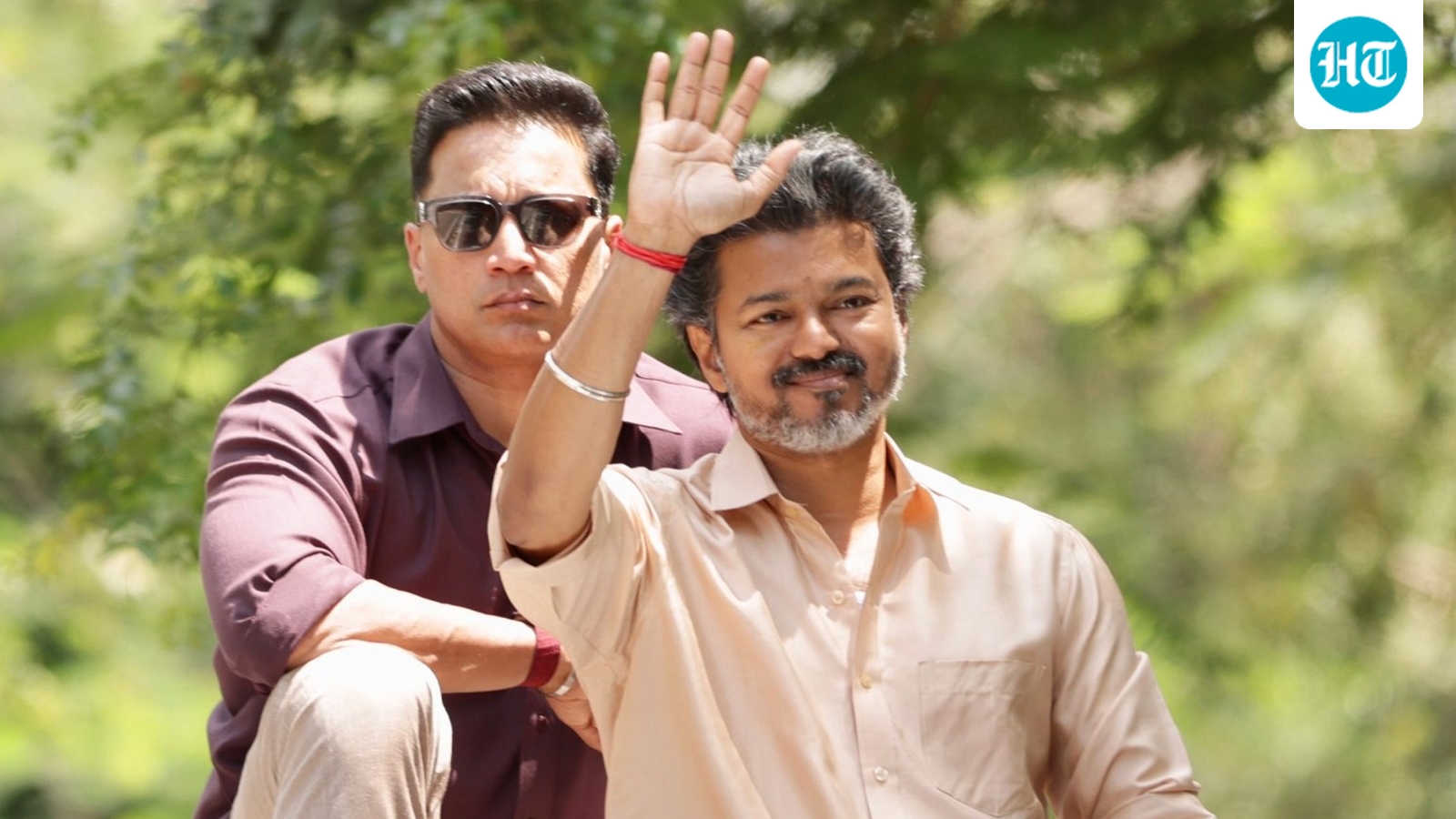
Tamil Nadu Chief Minister C Joseph Vijay was only asked to affirm his faith in the presiding deity, not convert to Hinduism, before entering the Meenakshi Amman temple in Madurai, the Madras High Court has said.
“The Hon'ble chief minister who is a Christian by faith was not asked to convert to Hinduism. He was only requested to affirm his reverence for the deity. This is what we call an inclusive approach,” a bench of Justices GR Swaminathan and P Murugan said in an order dated October 30.
The High Court ruled that non-Hindus seeking to enter Agamic temples in Tamil Nadu must submit an undertaking affirming their faith in the presiding deity and agreeing to abide by the customs and practices of the temple.
“If any Non-Hindu claims to visit particular deity in the temple, then the respondents shall obtain undertaking from the said Non-Hindu that he is having faith in the deity and he would follow the customs and practices of Hindu religion and also abide by the Temple customs and on such undertaking the said Non-Hindu may be allowed to visit the temple,” the court said.
In September, Vijay signed a faith undertaking at the Meenakshi Sundareswarar temple before proceeding beyond the kodimaram, or flagstaff, to offer prayers. A 2024 Madras High Court order by Justice S Srimathy requires non-Hindu devotees seeking to enter beyond this point to declare their faith in the deity and agree to follow Hindu and temple customs. The undertaking is recorded in a register.
Following the submission, Vijay was allowed into the Meenakshi and Sundareswarar shrine precincts, where he offered prayers. He had followed a similar procedure at the Tiruchendur Murugan temple in April, signing a written declaration before offering prayers.
The bench cited the chief minister’s visits while underscoring that non-Hindus who do not furnish the required undertaking cannot enter the premises of an Agamic temple. The format of the undertaking will be prescribed by the temple concerned, it said.
PIL sought enforcement of temple-entry rules
The court made the observations while hearing a public interest litigation filed by Thangam Venkatesh, a Madurai resident, who sought directions to prevent non-Hindus from entering temple mandapams and proceeding beyond the kodimaram. The petition also sought enforcement of existing temple-entry rules.
The petitioner alleged that non-Hindus had entered temples displaying religious markers associated with other faiths without complying with the prescribed requirements. The plea referred to an allegation by the Tamil Nadu BJP that a non-Hindu wearing a skullcap had entered the Arunachaleswarar temple in Tiruvannamalai, prompting objections from devotees.
The court also referred to Madurai Central MLA Badrudeen Mustafa entering the Meenakshi Amman temple premises and climbing its towers during the Kumbabishekam ceremony.
Taking exception to what it described as “Chamchagiri” and “optics” surrounding temple entry, the High Court said established temple customs could not be set aside for such considerations.
“That is why, we deem it necessary to render an authoritative pronouncement,” the bench said.
The court, however, clarified that its ruling was confined to Agamic temples and might not apply to places of worship such as the Shirdi Sai Baba temple, where devotees belong to different religions.
KioskNews shows a cleaned-up reading view extracted from the publisher’s page — the original always lives on their site, not ours.