Porsche Mission S looks to the past to shape its next super sports car
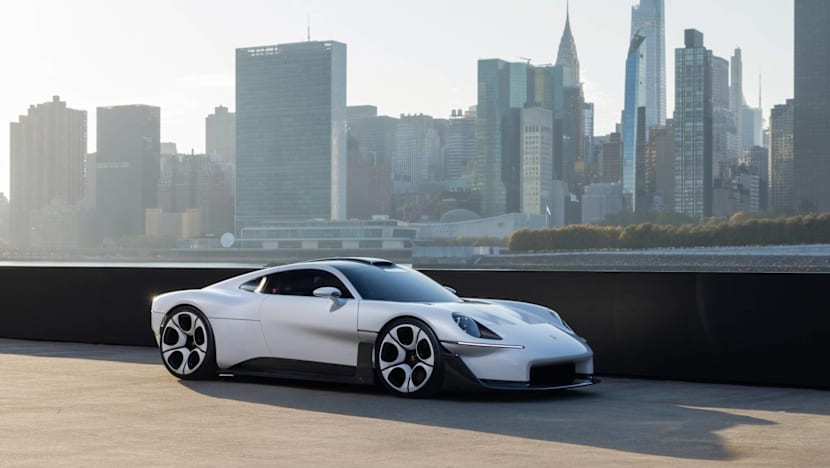
From the 550 Spyder to the 911 GT1 and 959, Porsche’s latest vision model draws deeply on its heritage while pointing to a future mid-engined super sports car above the 911.
New: You can now listen to articles.

This audio is generated by an AI tool.
16 Oct 2026 06:51AM
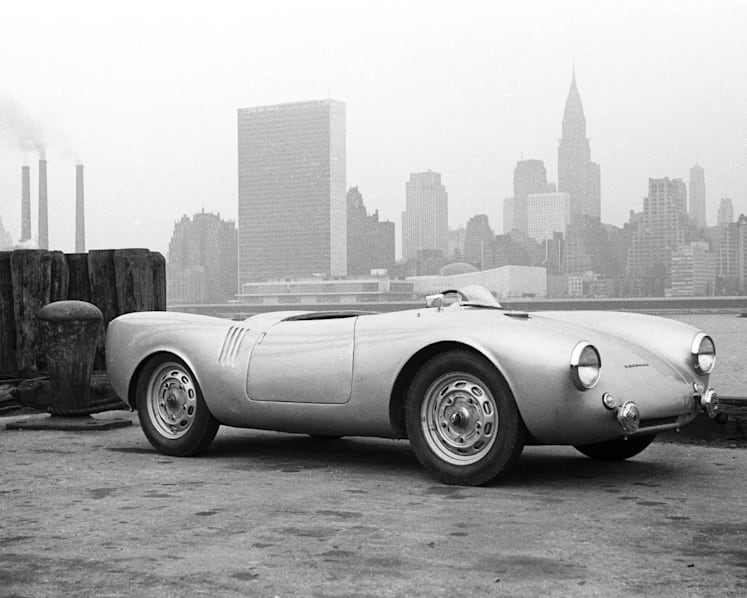
Porsche knows the value of a well-placed reference. The company gathered the international press on a pier in Queens, New York, with the Manhattan skyline across the water. The venue was deliberate. In 1953, photographs of the mid-engined 550 Spyder on this same pier helped define the company’s identity. Not quite Back to the Future, but a healthy respect for its illustrious past.
Unveiled as part of the Sportwagenschmiede 35 strategic realignment, the Mission S vision model sets out Porsche’s future design direction. Porsche says the programme is meant to sharpen the brand’s sports car identity, lift exclusivity, and move the business further towards higher-value, lower-volume products. Dr Michael Leiters, chairman of the executive board of Porsche AG, has also positioned the Mission S as a preview of a future mid-engined super sports car platform above the 911.
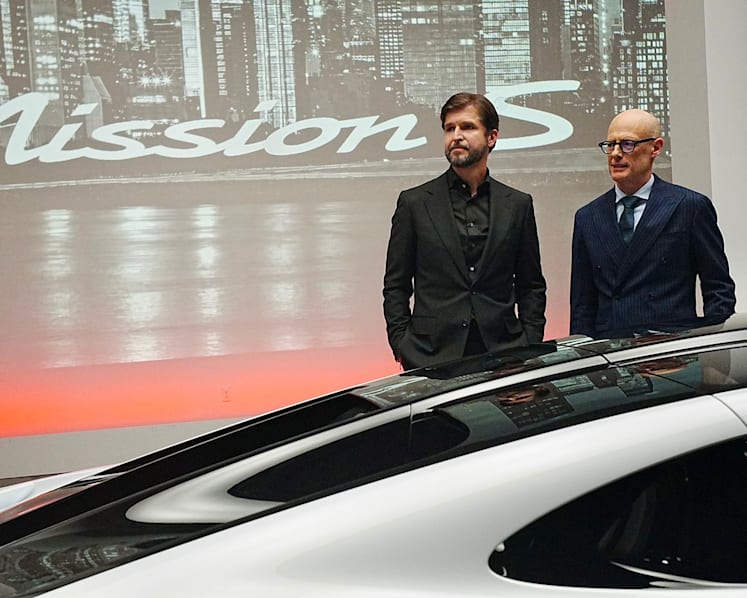
The Mission S is a disciplined study in proportion and form. Tobias Suhlmann, head of Style Porsche, oversaw a shape built around a wide, low stance, torpedo fenders and sculpted surfaces Porsche calls “floating volumes”.
The bodywork is also a careful catalogue of historical cues. Round headlights and pronounced fenders point to the 911, while shut lines flowing into the light graphics recall the G model. The flat nose nods to the 911 GT1, the swept roofline echoes the 959 and the rear “car-in-car” architecture revives a solution derived from the GT1. The central cooling aperture references the radiator fan of the Porsche 917, while the lightweight wheels reinterpret the 928’s classic dial pattern.
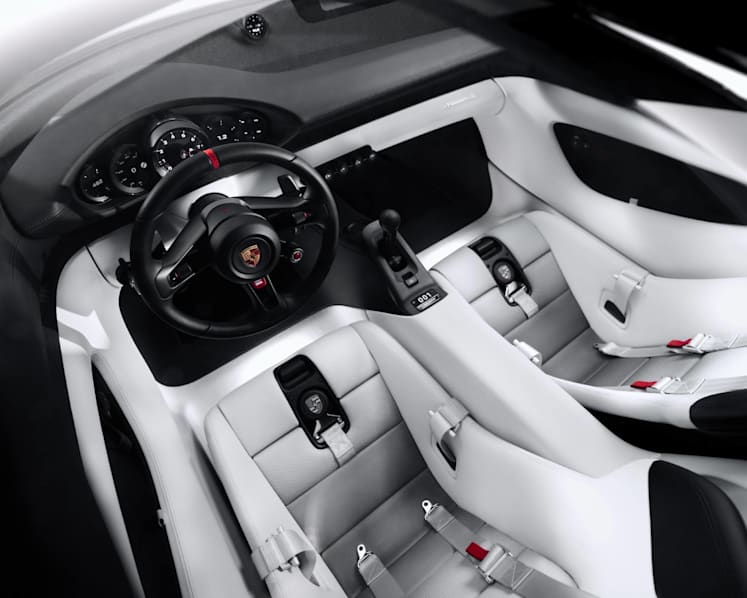
Inside, the cabin ties driver ergonomics to Porsche’s mechanical past. The architecture draws on the 356 and 550 Spyder, with two horizontal lines running across the dashboard and doors to give the driver the sensation of sitting low within the car. Suhlmann said these design principles would help shape Porsche’s future product portfolio.
Directly behind the steering wheel is a classic five-dial instrument layout. At the centre is a proper rev counter, with a physical needle backed by a digital screen. Depending on the driving mode, the rev counter moves closer to the driver, while the flanking instrument tubes adjust their position to preserve legibility. The ignition key holder stays to the left of the steering wheel, joined by tactile push-pull controls on the dashboard, a reimagined Sport Chrono element, and bespoke bucket seats with centre-panel belt buckles.
Digital connectivity comes through a retractable MagSafe-compatible smartphone mount. A phone can be used for navigation and other functions through the My Porsche App, which also offers customisable, historically inspired instrument graphics. The result is a tidy integration of modern software and physical hardware.
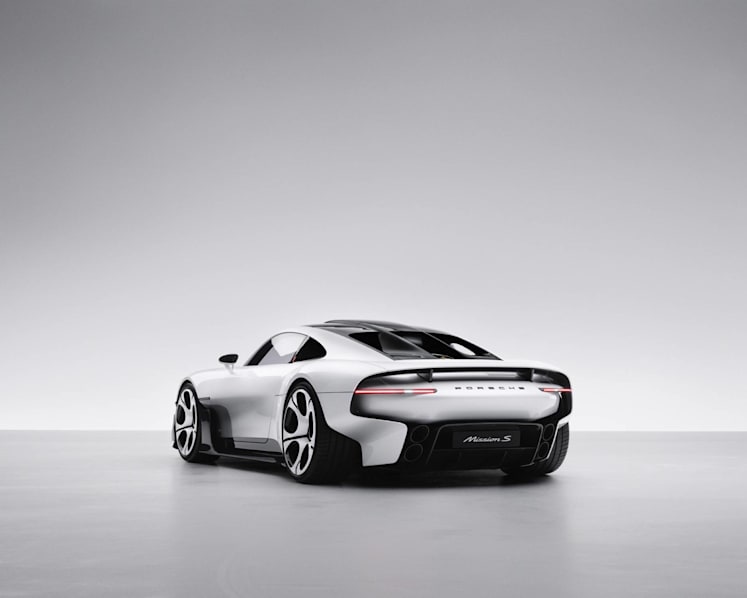
The colour scheme extends the historical thread, using Firn White Metallic, Light Red Metallic, Black Chrome and Special Black. The shades reinterpret Porsche Motorsport’s traditional palette and place the concept firmly within the company’s racing lineage.
For collectors and performance buyers in key Asian markets, where mechanical authenticity, structural precision, and engineering heritage carry real weight, the Mission S marks a strategic benchmark. From Japan’s mountain roads to private collections in Singapore and other southeast Asian countries, buyers value durable engineering credibility alongside visual exclusivity.
The business case is equally clear. Porsche wants to become less dependent on volume, increase the value generated by each car and offer greater individualisation at the top end of its range. Framed that way, the Mission S is a design study, a product signal and a margin play – an indication of how Porsche intends to connect its past with its next generation of super sports cars.
KioskNews shows a cleaned-up reading view extracted from the publisher’s page — the original always lives on their site, not ours.