PM Netanyahu's cousin refuses to vote for Likud, cites party's 4 sins in 'moral-public sphere'

"This time I will not vote for Likud, which has abandoned its original values and whose leaders have inflicted a deep national rift on the country," long-time Likud party member, cousin to Prime Minister Benjamin Netanyahu, and professor at Bar-Ilan University Nathan Netanyahu said in a letter published on X/Twitter on Tuesday evening.
Nathan accused the Israeli government of four sins in the "moral-public sphere" that signal it is "no longer worthy of the public's trust."
"The repeated attacks by the prime minister and his ministers on the judicial system and the gatekeepers, the controversial appointments and the campaign of incitement and slander against the coalition's critics, alongside the serious suspicions concerning the members of the cabinet — all of these have corrupted the governing culture, undermined the public's trust in the government, and deepened the rift in Israeli society to unprecedented proportions," he said in the letter.
Nathan asked readers of his letter to consider a question: "Are those responsible for such a devastating national rift even capable of repairing it?"
The four crimes were the Judicial Reform "coup d'etat," October 7 shattering Israel's perception of security, failure to support its citizens, and the refusal to bear responsibility.
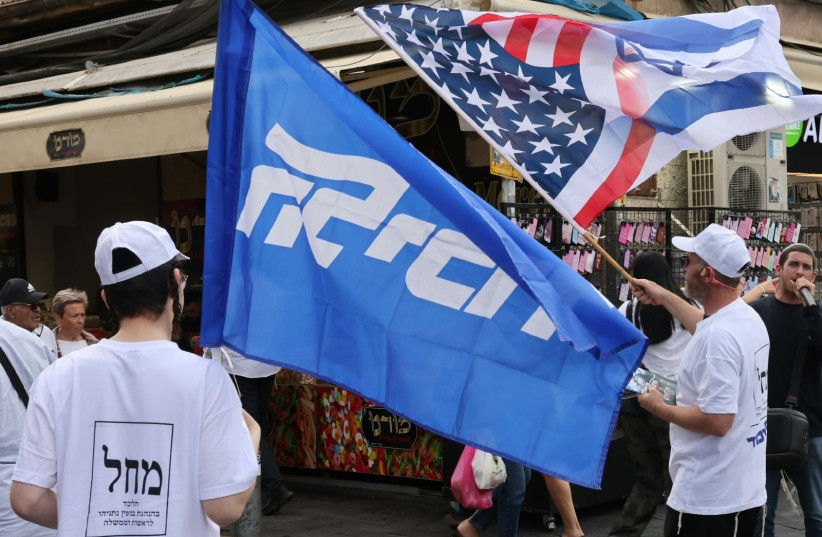
Complete loss of national cohesion
"The government was warned repeatedly," Nathan said, "but despite the warnings, it continued its predatory attack on the elements of the democratic regime, even in the midst of the war."
"Under the 'legal reform,' it sought to concentrate almost unlimited power in its hands, empty the control mechanisms of their content, and pave the way for a regime with dictatorial characteristics."
He explained that, in an April 2023 speech, he "warned of the danger to the independence of the judicial system, in the spirit of the values I absorbed at home with my mother, Supreme Court Justice Shoshana Netanyahu."
The Judicial Reform debates completely divided the country: "Society was torn from within, national cohesion was shattered, and senior security officials warned of the security danger," Nathan wrote.
Israeli perceptions of safety, security destroyed
The October 7 massacre occurred during this government's four-year term, Nathan noted, citing it as one of the reasons he would no longer vote Likud.
"On October 7, the concept of containing Hamas, which the prime minister had led for years, with the aim of buying peace through funds from Qatar and economic concessions, was shattered."
Not only was this idea that the prime minister was containing Hamas shattered, Nathan says, but "In reality, under the auspices of this policy, the terrorist organization grew stronger and prepared for the murderous attack."
The Hamas attack was a significant failure by the current Israeli government, Nathan argued. "Some 1,200 civilians and security forces were murdered and killed in the worst disaster to hit Israel since its founding. Towns were occupied, families were massacred in their homes, civilians were burned alive, women were sexually assaulted, and 251 people were kidnapped to Gaza."
"The war that broke out also exacted a terrible price of hundreds of dead and bereaved families and tens of thousands of wounded in body and mind."
"Israel has since been mired in an ongoing campaign on several fronts, with no clear end in sight," he wrote. "Its international standing has declined to an abysmal low, and its propaganda has failed in the battle for global public opinion."
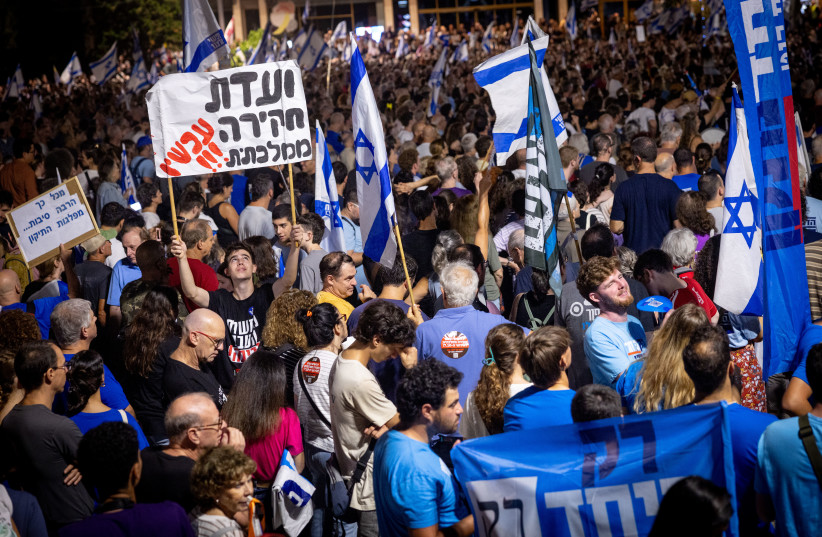
Government didn't do enough to support its citizens, Nathan argues
Nathan also accused the government of "violating the covenant between the state and its citizens."
Its "continued incompetence in education, health, transportation, and the struggle over the cost of living was exposed even more clearly after the disaster [Oct. 7], when citizens and volunteers filled the governmental vacuum."
Citizens supported each other; they "assisted evacuees and victims, the families of the kidnapped set up a struggle headquarters, and communities in the encirclement and the north are struggling for their rehabilitation," Nathan said, arguing that ordinary people were doing what the government should have done by default.
He also addressed the Haredi (ultra-Orthodox) draft exemption under this "sin."
"Reservists have repeatedly left their families and sources of livelihood, and many have paid with their bodies and lives. On the other hand, the government continues to promote exemption from service for the ultra-Orthodox and allocate huge sums to appease the ultra-Orthodox parties, for reasons of coalition survival, while grossly trampling on the principle of equality of burden."
Refusal to bear responsibility
Nathan also focuses on another key issue for voters in the Israeli election: whether or not a state commission of inquiry into October 7 should be established.
"With our Prime Minister, the responsibility always lies with someone else," he argued. "The most serious expression of this is the refusal to establish a national commission of inquiry."
"Why, despite widespread public support, was such a committee not established more than three years after the massacre? Is it possible that the greatest national disaster of all does not require the establishment of a state investigation committee? Government responsibility is not conditional on criminal guilt, but it does require accountability to the public," he argued.
"I will not vote for Likud under its current leadership, and I have even announced the immediate termination of my membership in the movement. I will consider renewing it when a leadership that is not tainted by these shortcomings is elected."
Referencing a quote from the prophet Amos, Nathan concluded his letter by saying, "For three crimes of the Israeli government — and for four I will not choose them!"
KioskNews shows a cleaned-up reading view extracted from the publisher’s page — the original always lives on their site, not ours.