Perspective: The next James Bond
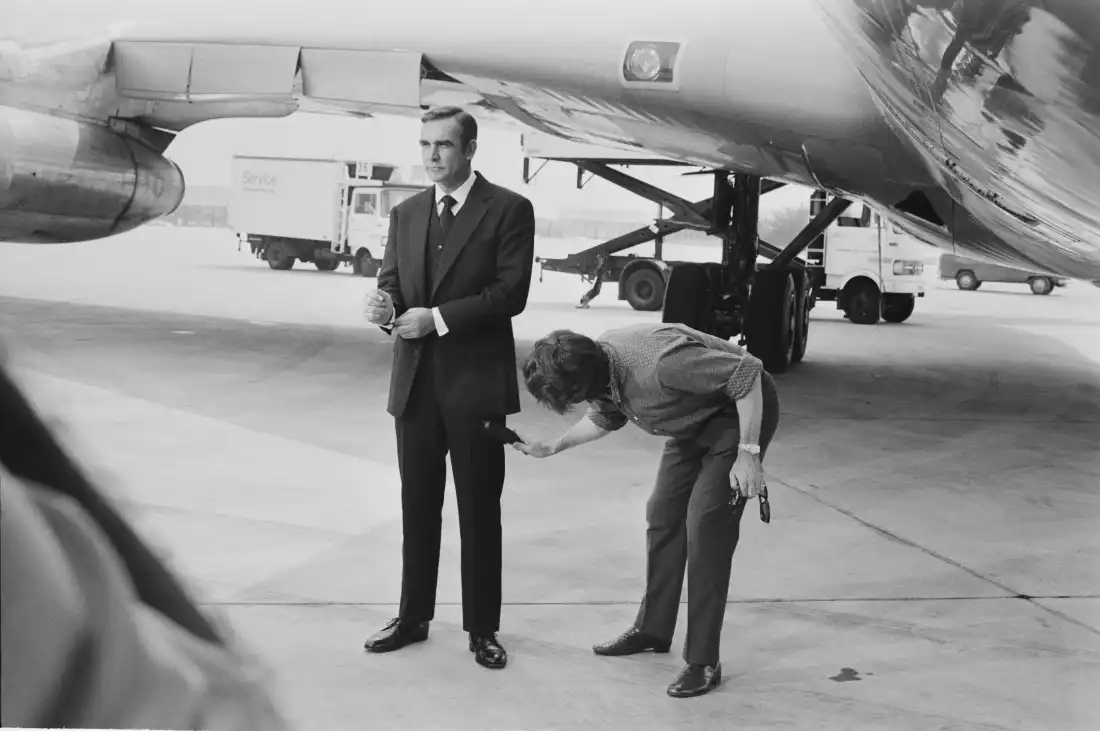
Scottish actor Sean Connery on location in Amsterdam for James Bond film 'Diamonds are Forever.' Jack Kay/Getty Images/Hulton Archive hide caption
Jack Kay/Getty Images/Hulton Archive
This weekend, perhaps even as we speak, auditions are being held in London to cast the next Bond.
James Bond. Double-oh—well, you know.
Deadline reports that at least three actors will be screen tested: Jack Lowden, Josh O' Connor, and Callum Turner, who are all fine, experienced British actors and...how do I say this? Hunks.
The Bond selected by Amazon MGM Studios will succeed Daniel Craig, who has owned the role since Casino Royale in 2006, following a parade of other fine, hunky British actors stretching way back to Sean Connery, who starred in Dr. No in 1962.
The literary Bond — a name poached from Dr. James Bond, an American ornithologist who wrote the field guide, Birds of the West Indies, when author Ian Fleming was living in Jamaica — was a Cold War creation. Fleming wrote Casino Royale in 1953, when Great Britain was feeling diminished. Brits had won World War II, with pluck and skill, but were losing their empire. British agents (Guy Burgess, Kim Philby) kept slipping out to Moscow with official secrets before British intelligence could discover they were spies.
It was all damaging to Britain, and embarrassing. But then James Bond strode into the pages of popular culture, dapper and deft. The Soviets and their allies might have sophisticated weaponry and boundless barbarity. But did they drink their martinis shaken, or stirred?
The great espionage novels of Graham Greene and John LeCarre depicted spycraft as a grimy, compromising business. But Fleming's 007, and the onscreen Bonds who played out those stories, dispatched danger in exotic locales, and without rumpling the pleats on their dinner jackets.
Of course ogres and adversaries can shift shapes over decades. I find myself more curious about what forces will next threaten the world when James Bond, whoever plays him, returns to film. So many devices can now listen to, watch, and track our lives second by second, and feed us information they hope will steer our opinions. It may make you think of a line in Dr. No, where Bond tells the scientist who believes he can control the world with his inventions, "Our asylums are full of people who think they're Napoleon. Or God."
KioskNews shows a cleaned-up reading view extracted from the publisher’s page — the original always lives on their site, not ours.