10 Great Sci-Fi Video Games You Haven't Played

Sign in to your Collider account
Science fiction is a genre that has always been pretty popular, no matter the form of media. It's been going strong in literature, film, television, and video games. Yet, video games allow for a lot of creative freedom, meaning it's easier to tell more outlandish stories. They also allow for more immersive experiences due to their inherent interactivity, which has always been a major selling point, as this allows players to experience things they otherwise couldn't.
In the flood of all the sci-fi video games out there, it's inevitable that many of them are going to get lost in the current. There are perhaps thousands of underrated sci-fi video games out there, some of which are quite obscure. While some of these entries aren't the most obscure things in the world, they have one thing in common: they are still underrated, and not a lot of people have actually played them, even if they are not entirely undiscovered.
'Frontlines: Fuel of War' (2008)

Frontlines: Fuel of War is set in the near future, when oil reserves begin to dry up. Sent into Central Asia, a strike force called the Stray Dogs witnessed the Red Star Federation (comprised of Russia, China, and their allies) attack an oil refinery plant, beginning a Third World War. The war is largely fought over the world's dwindling resources, specifically targeting oil deposits in the Caspian region.
The game isn't super high-tech, but it's definitely more advanced than modern technology. It's much in the same vein as the Battlefield franchise, as players can drive vehicles and choose from a variety of classes during both single-player and multiplayer. However, players also have a plethora of different drones to use as equipment, which can turn the tide of battle. It comes from the same developers as Homefront, which was already underrated enough. Frontlines is even more underrated, and ironically, much better.
'Bet on Soldier: Blood Sport' (2006)

Bet on Soldier: Blood Sport is a first-person shooter that is considered a spiritual successor to the highly underrated alternate history game Iron Storm, which is set during a never-ending World War I. Bet on Soldier contains a lot of the same mechanics as Iron Storm, and isn't quite as polished, but it still does a pretty good job of everything.
In this dystopian future, the world has entered a state of perpetual warfare. War has become more profitable than ever before, with unchecked capitalism turning the global conflict into profit. People actually follow soldiers via the internet, gambling on whether they'll survive or not; death and destruction have become a spectacle. Even though the gameplay can be clunky at times, it's still super fun and easy to get into, with a phenomenal setting and atmosphere.
'Battlefield 2142' (2006)

Battlefield 2142 is an early entry in the Battlefield franchise. Yes, that Battlefield franchise, the same one that attained massive success and sells millions of copies with each new installment. Fans of Battlefield tend to overlook this entry—some don't even know it exists. It's honestly kind of sad, because this sci-fi shooter was way ahead of its time.
The tragic thing is, there is no single-player campaign—the game is multiplayer only, and official servers have all been shut down. However, the game had enough of a dedicated following that there are still recovery servers available, all run by fans. Thus, it's still playable, which is honestly a miracle. It's just like every other Battlefield game, only this time, it includes mechs, robots, and laser weapons. DICE was really onto something with this game—it's criminally underrated, and a real diamond in the rough.
'Trepang2' (2023)

Trepang2, despite its name, is not a sequel; there is no Trepang1. The first-person shooter is highly action-oriented, allowing players to dual-wield most weapons for high-octane, over-the-top shootouts. The game opens up with the superhuman protagonist escaping from captivity, joining up with a group of rebels who are fighting against the villainous corporation known as Horizon.
It starts as a military shooter but eventually transitions into sci-fi when alien life enters the mix early on. The gunsmithing mechanic is surprisingly satisfying, as is close-quarters combat, which gives players more options than shooters normally do. Trepang2 is a game that does pretty well for itself as an indie title, and which has been a monumental sleeper hit that simply isn't getting the attention it so dearly deserves.
Collider Exclusive · Sci-Fi Survival Quiz Which Sci-Fi World Would You Survive? The Matrix · Mad Max · Blade Runner · Dune · Star Wars
Five universes. Five completely different ways the future went wrong — or sideways, or up in flames. Only one of them is the world your instincts were built for. Eight questions will figure out which dystopia, galaxy, or desert wasteland you'd actually make it out of alive.
💊The Matrix
🔥Mad Max
🌧️Blade Runner
🏜️Dune
🚀Star Wars
01
You sense something is deeply wrong with the world around you. What do you do? The first instinct is often the truest one.
02
In a world of scarcity, what resource do you guard most fiercely? What we protect reveals what we believe survival actually requires.
03
What kind of threat keeps you up at night? Fear is useful data — if you're honest about what you're actually afraid of.
04
How do you deal with authority you don't trust? Every dystopia has a power structure. Your approach to it determines everything.
05
Which environment could you actually endure long-term? Survival isn't just tactical — it's physical, psychological, and very much about where you are.
06
Who do you want in your corner when things fall apart? The company you keep is the clearest signal of who you actually are.
07
Where do you draw the line — if you draw one at all? Every survivor eventually faces a moment that tests what they're actually made of.
08
What would actually make survival worth it? Staying alive is one thing. Having a reason to is another.
Your Fate Has Been Calculated You'd Survive In…
Your answers point to the world your instincts were built for. This is the universe your temperament, your survival instincts, and your particular brand of stubbornness were made for.
The Matrix
You took the red pill a long time ago — probably before anyone offered it to you. You're a systems thinker who can't help but notice the seams in things.
- You're drawn to understanding how the system works before figuring out how to break it.
- You'd find the Resistance, or it would find you — your instinct for spotting constructed realities is the machines' worst nightmare.
- You function best when you have access to information and the freedom to act on it.
- The Matrix built an airtight prison. You'd be the one probing the walls for the door.
Mad Max
The wasteland doesn't reward the clever or the well-connected — it rewards those who are hard to kill and harder to break. That's you.
- You don't need comfort, community, or a cause larger than the next horizon.
- You need a vehicle, a clear threat, and enough fuel to outrun it — and you're good at all three.
- You are unsentimental enough to survive that world, and decent enough — just barely — to be something more than another raider.
- In the wasteland, that distinction is everything.
Blade Runner
You'd survive here because you know how to exist in moral grey areas without losing yourself completely.
- You read people accurately, keep your circle small, and ask the questions others prefer not to answer.
- In a city where humanity is a legal designation rather than a feeling, you hold onto something that keeps you functional.
- You're not a hero. But you're not lost, either.
- In Blade Runner's world, that distinction is everything.
Dune
Arrakis is the most hostile environment in the known universe — and you are precisely the kind of person it rewards.
- Patience, discipline, and political awareness are your core strengths — and on Arrakis, they're survival tools.
- You understand that the long game matters more than any single victory.
- Others come to Dune and are consumed by it. You'd learn its logic and earn its respect.
- In time, you wouldn't just survive Arrakis — you'd begin to reshape it.
Star Wars
The galaxy far, far away is vast, loud, and in a constant state of violent political upheaval — and you wouldn't have it any other way.
- You find meaning in being part of something larger than yourself — a cause, a crew, a rebellion.
- You'd gravitate toward the Rebellion, or the fringes, or whatever pocket of the galaxy still believes the Empire's grip can be broken.
- You fight — not because you have to, but because standing aside isn't something you're capable of.
- In Star Wars, that willingness is what makes all the difference.
'Tom Clancy's EndWar' (2008)

Tom Clancy's EndWar is one of the most underrated games in Tom Clancy's video game franchise. This one-off isn't a tactical shooter, but rather a futuristic real-time strategy game. The plot is set in the near future, when the European Union has formed into one massive country. After tensions escalate and a war breaks out, the world finds itself in the midst of a Third World War.
Instead of there being two sides, there are three: the US, the EU, and the Russian Federation, which are all playable. Cyber warfare is the name of the game. Drones are everywhere, as are high-tech laser weapons, with the goal being to secure uplinks to control the battlefield. Perhaps most interestingly, the game has optional voice controls, even on console, providing players with a greater sense of immersion as they command their troops across the battlefield. EndWar even lets players wage campaigns, selecting what locations to attack and which troops to bring. It's just an awesome game all around.
'Sable' (2021)

Sable is a gorgeous exploration game that's basically about nothing. Okay, well that's not entirely true, but the point is that there is very little in regards to a main questline. Sable allows you to go at your own pace, crossing the wide-open desert and completing favors for various parties. The story is only revealed if you really pay attention to environmental cues.
There is no combat; the game is solely based on exploration. Fortunately, you don't have to do it all on foot, as you get a pretty sweet hoverbike to accompany you. The real catch with Sable is its stylized artwork. Hand-crafted, vibrant, and stunning, the game is like a canvas for the imagination, as well as a relaxing journey through a broken, barren world.
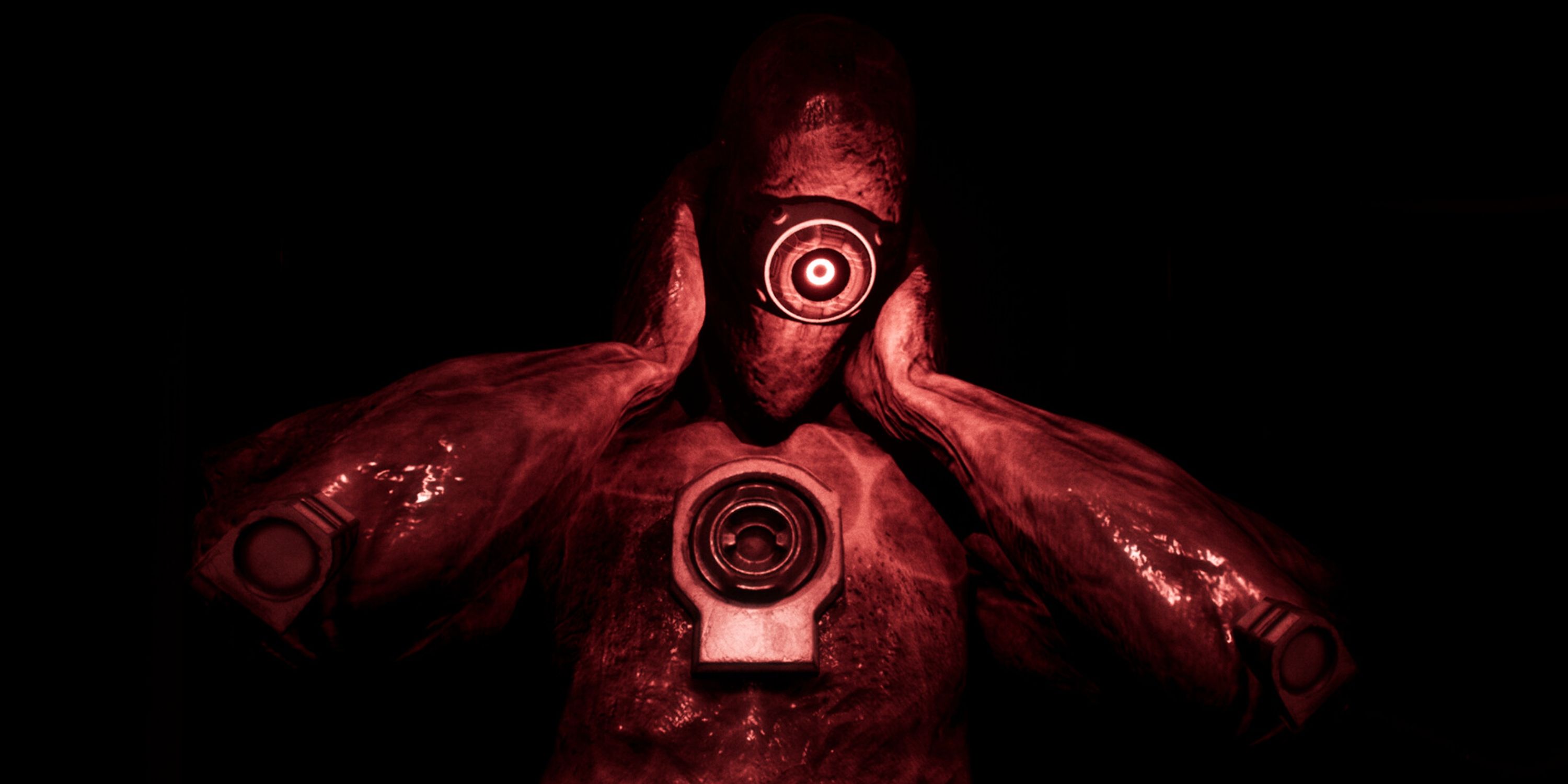
'[SUBJECT]' (2023)

[SUBJECT] is a short independent horror game that can honestly be finished in less than an hour. Admittedly, it doesn't have any replay value at all, but for its low price, the experience is well worth it. The game is played from a first-person perspective, with the character being an unnamed, unseen test subject. Your task, assigned by a shapeless, robotic voice, is to walk through a simulated environment, encountering high-stress situations.
The game is basically a puzzle-horror, meaning you have to find objects around the fake apartment and figure out how and where to use them. The map is extremely cramped, playing on claustrophobia, and is dimly lit by an eerie red light. This short horror game is atmospheric and surprisingly scary, even if the stakes aren't super high. It's a shame it's so obscure, even in the horror gaming community.
'Project: Snowblind' (2005)

Project: Snowblind was initially conceived as a spin-off of the Deus Ex franchise, but it eventually morphed into a distinct entity. The first-person shooter is set in the year 2065, when a militant regime known simply as the Republic (though it is heavily implied to be China) attacks the city of Hong Kong. An international peacekeeping corps called the Liberty Coalition stands against the Republic, along with its cybernetically enhanced soldiers.
The player steps into the boots of Nathan Front, an ordinary man who receives cybernetic upgrades following a near-death experience. Aside from the sweet sci-fi weapons, players can hack robots and customize their cybernetic enhancements to their leisure. It's a moderately challenging game, but one that has an atmosphere like no other. If you're a fan of Deus Ex, you simply have to check this one out.
'Black the Fall' (2017)

Black the Fall is a 2.5D side-scrolling puzzle-platformer inspired by the Romanian Revolution in the 1980s. However, this game doesn't resemble the '80s at all, with the unnamed city being heavily industrialized, automated, and populated by robots. The protagonist works as a cyclist, meaning he spends his days pedalling a stationary bike to produce electricity. Then, one day, he decides to escape the dystopia.
There are a lot of parallels to the Romanian Revolution, including parallels to the last communist leader of the country, Nicolae Ceaușescu. The game's environment is bleak and depressing, depicting the struggles of industrialization and the overreliance on technology. Its gameplay is simplistic but surprisingly challenging, really requiring the use of your brain. It's a cinematic and thoroughly enjoyable experience that earned stellar reviews from critics.
'SOMA' (2015)

SOMA is a sci-fi horror made by Frictional Games, the same developers behind the famed Amnesia series. Despite the commercial success of Amnesia, SOMA remains underrated. The story is about a Canadian man living in Toronto named Simon, who has a brain injury following an accident. To alleviate his headaches, he volunteers for an experimental neurological treatment. He passes out during the brain scan and wakes up centuries in the future.
Not only is he a man out of time, but he is also in a hidden lab deep beneath the surface of the Atlantic. Stranger still, Simon's human form is gone, and he now has a shiny new robot body. Creeping through the abandoned lab, Simon must unravel the mystery of how he got here whilst avoiding the corrupted robots down there with him. This game's ending is really profound, producing an unparalleled sense of existential horror. It's definitely a game that will make you sit in silence for a while after you beat it. The experience as a whole, even aside from the ending, is pretty solid too, which is why it's a shame that it's seldom talked about.
KioskNews shows a cleaned-up reading view extracted from the publisher’s page — the original always lives on their site, not ours.