New US-Mexico water agreement means reduced allotments but a heathier Colorado River
A long-running dispute between Mexico and the United States over Colorado River water-sharing has been resolved — at least for the next two years — with Mexico getting significantly less water as a result.
The U.S. is also receiving less water as part of a joint effort to mitigate ongoing drought conditions and low reservoir levels in the Colorado River basin.
In fact, under the new agreement, formally called Minute 334 and finalized by the International Boundary and Water Commission (IBWC) on Sept. 2, Mexico’s 16.7% (250,000 acre-feet) annual reduction of its previous typical water allocation is equivalent to water-use reductions imposed on U.S. Lower Basin states (Arizona, California and Nevada).
The agreement also implements a strategy to manage the salinity of Colorado River water as it reaches Mexico. Consultations regarding possible further cuts are contemplated for 2028 if conditions worsen.
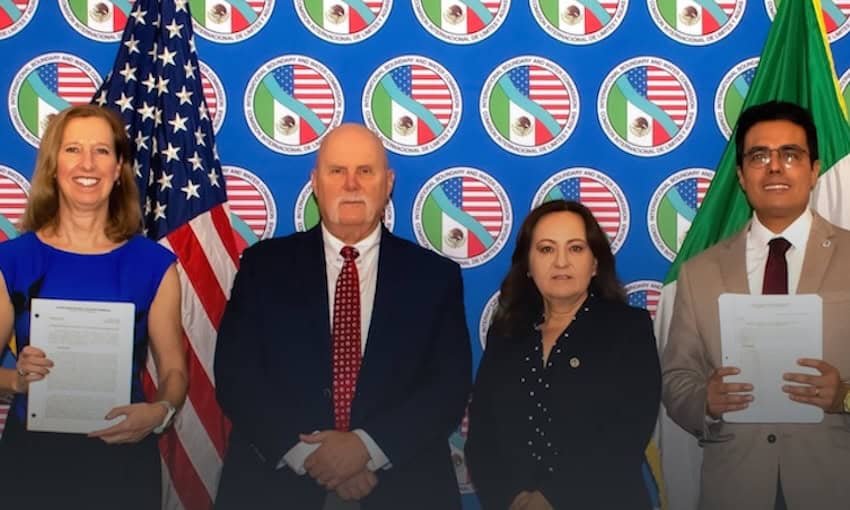
Minute 334 was signed by Mexican IBWC Commissioner Adriana Reséndez and her U.S. counterpart, Chad McIntosh, with the participation of Mexican IBWC Secretary Manuel Morales. The U.S. Department of the Interior confirmed the approval of both governments.
“This Minute makes sure water is shared fairly among our users and protects the health of the Colorado River during these difficult times,” McIntosh said in a news release. “Both countries deserve a lot of credit for agreeing to these water reductions and other measures.”
Reséndez insisted on proportionality between the two countries, defending Mexico’s position even as it has struggled to meet its obligations in the original 1944 treaty.

When the most recent five-year cycle of that treaty came to an end on Oct. 24 last year, Mexico still owed 865,136 acre-feet of water, though the terms of the treaty grant Mexico five years to catch up.
The reduction agreed to in Minute 334 is equivalent to one-sixth of Mexico’s annual allocation established in the treaty, about 1.85 billion cubic meters.
The two nations also agreed to cooperate on managing the Colorado River Delta in Mexico, which has been transformed from a lush 2-million-acre wetland into a mostly dry salt flat due to decades of intensive upstream dam construction and water diversions.
With reports from El Universal, WaterWorld and The Colorado Sun
KioskNews shows a cleaned-up reading view extracted from the publisher’s page — the original always lives on their site, not ours.