David Lynch's 5 Greatest Masterpieces, Ranked

Liam Gaughan is a film and TV writer at Collider. He has been writing film reviews and news coverage for ten years. Between relentlessly adding new titles to his watchlist and attending as many screenings as he can, Liam is always watching new movies and television shows.
In addition to reviewing, writing, and commentating on both new and old releases, Liam has interviewed talent such as Mark Wahlberg, Jesse Plemons, Sam Mendes, Billy Eichner, Dylan O'Brien, Luke Wilson, and B.J. Novak. Liam aims to get his spec scripts produced and currently writes short films and stage plays. He lives in Allentown, PA.
Sign in to your Collider account
David Lynch is among the most singular artists of all-time, and one of the few filmmakers who is a genre in of himself. Although he is hardly the first writer/director to work within surrealism, Lynch’s painterly quality combines visceral horror, bizarre comedy, and undeniable beauty into formally inventive masterworks that embody what it feels like to dream. Despite the fact that he frequently worked with A-list actors and was showered with acclaim by the industry at larger, Lynch never felt like a Hollywood filmmaker because he never bucked to convention or felt the need to appease an audience. In an era in which artists are constantly asked to explain or justify their work, Lynch simply let the audience make up their own minds on what his stories meant, which has allowed them to endure. Don’t go into a Lynch film thinking that it can be “solved,” because that is the wrong way to approach it.
Lynch has a fairly amazing track record that included very few misses, and it’s even more impressive because he worked in so many different fields. In addition to making short films and music videos, Lynch was an avid painter and philosopher, and he wasn’t opposed to taking acting roles in projects that he did not write or direct; while on one hand he played John Ford in Steven Spielberg’s semi-autobiographical coming-of-age drama The Fabelmans, he also did comedy parts in shows like Louie and The Cleveland Show. Although there are several of his films that have gone through periods of critical reappraisal, Lynch’s most defining work has endured as classic text that any aspiring filmmaker would do themselves a favor by checking them out.
5 ‘The Elephant Man’ (1980)

The Elephant Man is the most uncharacteristically straightforward of Lynch’s films because it a classical biographical drama that doesn’t contain any overt surrealism (other than one morbid nightmare scene), but it does reflect upon the themes that he has continuously addressed throughout his entire career. Lynch has often shown an affinity for outsiders who are not accepted by society, and The Elephant Man tells the heartbreaking true story of Joseph Merrick, a man with severe facial disfigurements who was captured and treated as a circus performer before he was rescued by a kindly doctor (Sir Anthony Hopkins) and treated with respect. The film was produced by the legendary spoof filmmaker Mel Brooks, who wanted to tell the story, but grew concerned that audiences would not take it seriously if his name was attached; he decided to hire Lynch after being blown away by his directorial debut.
The Elephant Man is a tender and sensitive drama that features remarkable makeup effects that were ahead of their time, as it was the acclaimed that they received that helped inspire the Academy Awards to introduce the ‘Best Makeup’ Oscar (later renamed ‘Best Makeup and Hairstyling’) at the following ceremony. The performance by John Hurt is truly powerful and utterly respectful, as it finds poignance within a man who treated the world with grace, despite not receiving any.
4 ‘Eraserhead’ (1977)

Eraserhead is as singular of a directorial debut as any other major work of the ‘70s, and instantly became a cult classic that attracted admirers when it played on the midnight circuit. Eraserhead is a great introduction to Lynch’s work because it is startling, formally daring, and frequently disturbing, yet also has a very irreverent sense-of-humor that reminds the audience that what they are watching is taking place in a version of reality that is not quite the same as real life. Lynch was known for working with a similar group of actors on many projects, similar to what Wes Anderson and Quentin Tarantino have done, and Eraserhead featured a terrific performance by Jack Nance as a lowly factory worker who has to deal with his wife having birthed a horrifically monstrous child.
Eraserhead is a lot more comprehensible than some of the more esoteric work later on in Lynch’s career, and that isn’t necessarily a bad thing. It’s a fairly direct exploration of the anxieties that come with fatherhood, and it makes a lot more sense for those who know a little bit about Lynch’s life and what he was going through at the time. The other critical factor to the brilliance of Eraserhead that has allowed it to age so well is that it is frequently very funny, and functions as well as an absurdist comedy as it does as a body horror film.
3 ‘Blue Velvet’ (1986)

Blue Velvet was a true breakthrough and reclamation for Lynch, as it was two years after Dune flopped at the box office, failing to become the next Star Wars, that he returned to make what was unambiguously one of the best films of its year. As is the case with Eraserhead, Blue Velvet makes it pretty clear what it is about within an opening scene; it’s beneath the white picket fences and red roses of an idealized suburban neighborhood that Lynch reveals the grime and worms beneath the surface, suggesting that there is a dark side to the myth of the “American dream.” The film is a surreal odyssey that breaks down as the young man Jeffrey (Kyle MacLachlan) is drawn into an enigmatic ring of crime and tries to rescue the seductive femme fatale Dorothy (Isabella Rossellini). There are more than a few references to The Wizard of Oz, which is one of Lynch’s favorite movies of all-time.
Blue Velvet captures the paranoia of a suburban gothic atmosphere and creates a tone in which the wildest and most eccentric villains can exist. Few villains in screen history are as unpredictable and terrifying as Frank Booth, played by Dennis Hopper in one of the wildest performances of his career (which is by no means a small statement). Of all of the great needle drops in Lynch’s films, the use of Roy Orbinson’s “In Dreams” might be the very best.
Collider Exclusive · 8 Questions · 2 Minutes Which Coen Brothers Movie Would You Thrive In? Lebowski · O Brother · Fargo · No Country
Nobody writes people like the Coen brothers. The decent ones. The talkers. The ones who stopped trying years ago. And the ones who can already see how bad this is going to get. Four films, four completely different ways of handling trouble. Eight questions decide which one you would actually walk out of.
🎳Lebowski(1998)
🎸O Brother(2000)
❄️Fargo(1996)
🪙No Country(2007)
01
A bag of money lands in your lap. What happens next? Every Coen film starts roughly here. It never goes smoothly.
02
Somebody is being completely unreasonable with you. How does it go? Coen dialogue is mostly people failing to understand each other.
03
What is your actual relationship with work? Everyone in these films is either working far too hard or not at all.
04
Long drive, bad weather, nobody else on the road. How are you? There is always a drive in these films. It is never a good drive.
05
You are offered a shortcut that is not quite legal. This is the moment where the Coens find out who you really are.
06
The plan has fallen apart completely. What is your move? In a Coen film the plan always falls apart. That is the genre.
07
Which of these sounds most like something you would say? Nobody writes a line quite like the Coens. Which one is yours?
08
How does your film end? Eight questions in, this is the one that decides your movie.
The Verdict Is In Your Coen Film Is…
Four films, four completely different ways of handling money, trouble and other people. This is the one you would survive, why it suits you, and what it would cost you to be there.
The Big Lebowski
You have quietly arranged your life so that very little can get to you, and a surprising number of people find that infuriating. You would be completely at home here.
- The Dude is the only person in the film with no ambition, and the only one who comes out the other side undamaged. That is not an accident.
- You do not chase things. You let situations arrive and you deal with them at your own pace, which is a genuine skill however lazy it looks.
- This is a full crime plot happening around a man who mostly wants his rug back, and that is exactly the energy you would bring to it.
- Everything goes wrong. You abide. The film ends.
O Brother
You talk your way through life and it works far more often than it should. Give you a bad situation and an audience and you will find a way out of both at once.
- Everett never has a plan that survives contact with reality. He has something better, which is the ability to keep talking until a new one turns up.
- You are the optimist in the group, the one who makes a ridiculous idea sound reasonable at two in the morning.
- This is the warmest film the Coens have made. It is a chase, a comedy and a musical at once, and nobody in it is quite beyond saving.
- You would end up famous entirely by accident, and act like you planned it all along.
Fargo
You would survive Fargo because you are the only kind of person who does: patient, decent, and completely unimpressed by anybody trying to be clever.
- Marge Gunderson solves the whole case by being polite, thorough and unhurried while everybody around her panics. That is the entire argument of the film.
- You do the boring parts of the job, which is precisely why you would notice the thing everyone else walked straight past.
- Fargo is about ordinary greed causing enormous damage, and about one person who simply refuses to be corrupted by any of it.
- You would go home at the end of it, have dinner, and sleep perfectly well.
No Country
You do not expect the world to be fair and you stopped being surprised about it a long time ago. That clear-eyed quality is exactly what this film asks for.
- No Country is the Coens at their coldest: a film where being smart, fast and careful might still not be anywhere near enough.
- You plan for the worst, you keep your own counsel, and some part of you is already working out the exit.
- Llewelyn Moss is competent, prepared and resourceful, and the film is honest about whether any of that is ever sufficient.
- You would see it coming. Whether that helps is the one question the film refuses to answer.
2 ‘Mulholland Drive’ (2001)
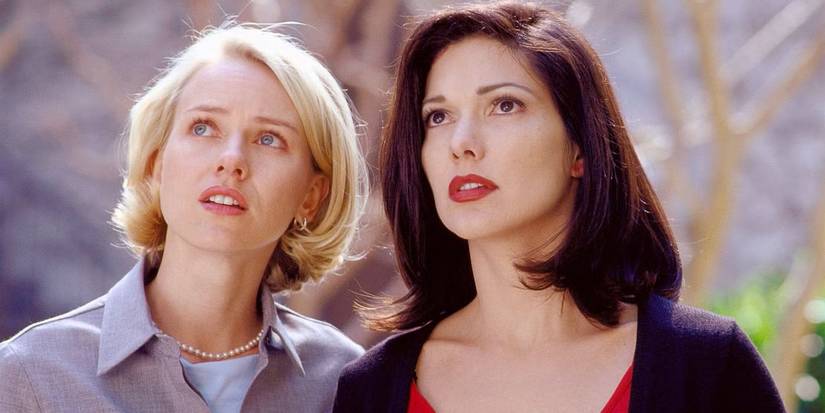
Mulholland Drive is the cinematic masterpiece that Lynch had been gearing up to for his entire career, which makes it all the more surprising that it started off as a television pilot that wasn’t picked up before turning into one of the most acclaimed films of the 21st century. Most of Lynch’s films are unpacking the dark reality behind one aspect of the American experience, but Mulholland Drive sees him examining the destructive idealism of Hollywood, and how it continuously draws women into a cyclical process of abuse and exploitation. There are of course a number of ways to read into the film, as the presence of a film-within-a-film makes it so that the viewer is constantly questioning the nature of reality and whether or not they are watching the “real” characters or their doppelgangers. That cinema and reality have become so interchangeable is part of the point that Lynch is making.
Mulholland Drive does not deny the appeal that cinematic magic has as a tool that inspired artists and dreamers, and thus it makes sense that it is among the most gorgeous films ever made. A line of influence can be drawn to the work that Billy Wilder did on Sunset Boulevard, which is another one of Lynch’s favorite films, but it also left a strong impression on a number of the most unique filmmakers working today.
1 ‘Twin Peaks’ (1990-2017)
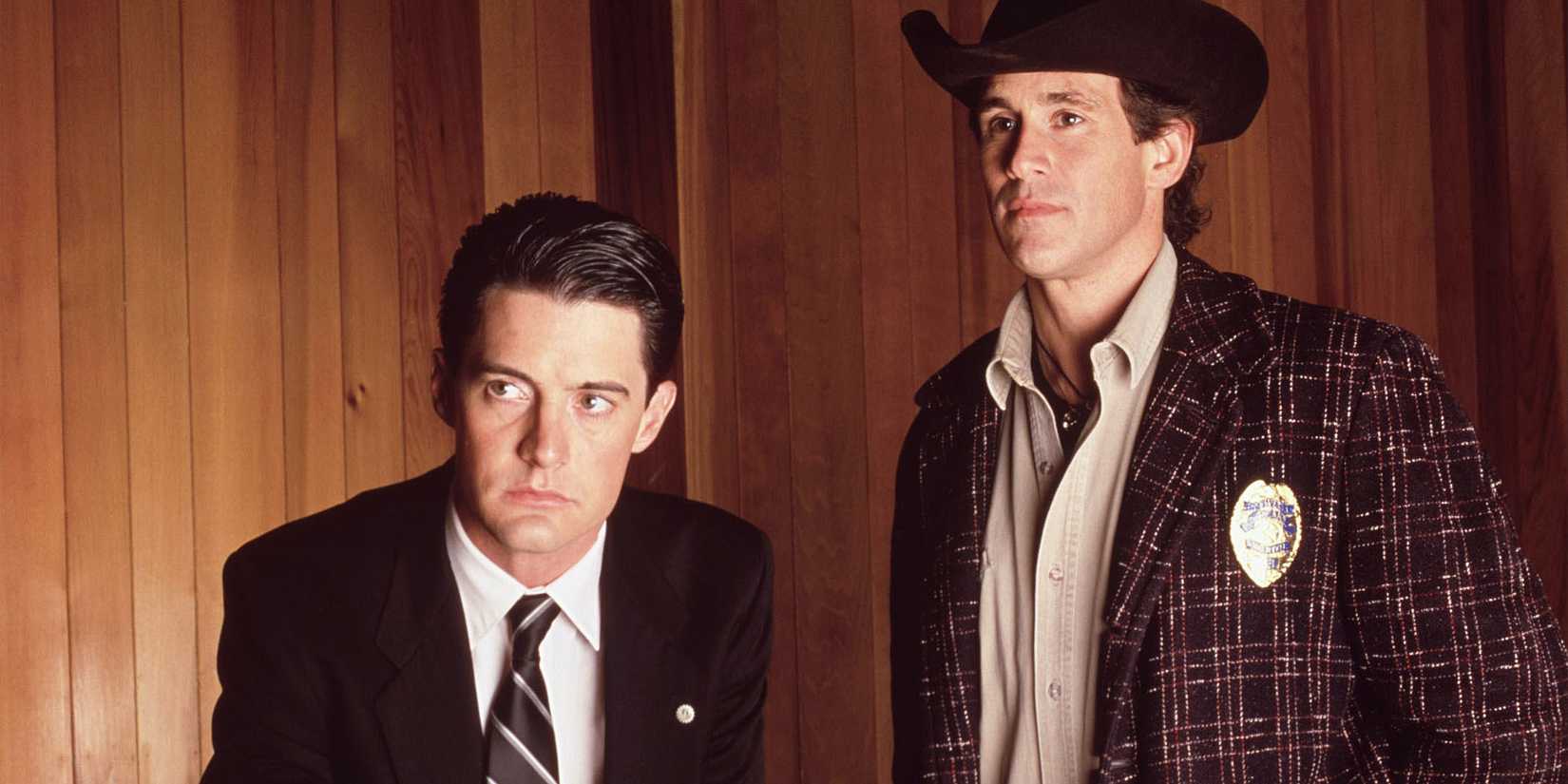
Twin Peaks is a completely unique and unparalleled achievement in storytelling that took Lynch three decades to complete. The series began on ABC with co-creator Mark Frost, but Lynch grew disillusioned with its prospects after he was forced to make several creative concessions. The uneven nature of Season 2 was redeemed when Lynch returned to direct the season finale before it was cancelled, leaving stunned viewers off on one of the biggest cliffhangers in television history. The strong desire to know what happened next actually ended up harming the reputation of Lynch’s 1992 prequel film Twin Peaks: Fire Walk With Me, even though it has been retroactively treated more favorably as being an uncompromising exploration of abuse and trauma.
Lynch was able to close off his most epic story when he returned to the world of Twin Peaks for a third season in 2017 that aired on Showtime for 18 weeks, where he had unlimited creative control. There’s never been anything remotely like it within the history of filmmaking, and enough time has not passed to fully break down the wealth of historical, cinematic, philosophical, thematic, and personal allusions within a text that says more about nostalgia than any other work of contemporary media. The totality of Twin Peaks is a work of collaboration that featured the efforts of an incredible cast and other members of the creative team, but in its purest form it unadulterated Lynch. No show has come close when it comes to the redemption of an entire medium, as Twin Peaks is cited by countless modern television creators as being the reason that they got into their line of work.

Twin Peaks
- Release Date
- 1990 - 1991-00-00
- Network
- ABC, Showtime
- Showrunner
- Mark Frost
- Directors
- Lesli Linka Glatter, Caleb Deschanel, Duwayne Dunham, Tim Hunter, Todd Holland, Tina Rathborne, Diane Keaton, Graeme Clifford, James Foley, Jonathan Sanger, Mark Frost, Stephen Gyllenhaal
KioskNews shows a cleaned-up reading view extracted from the publisher’s page — the original always lives on their site, not ours.