More heavy hitters in US Jewish establishment joining J Street in sign of changing times
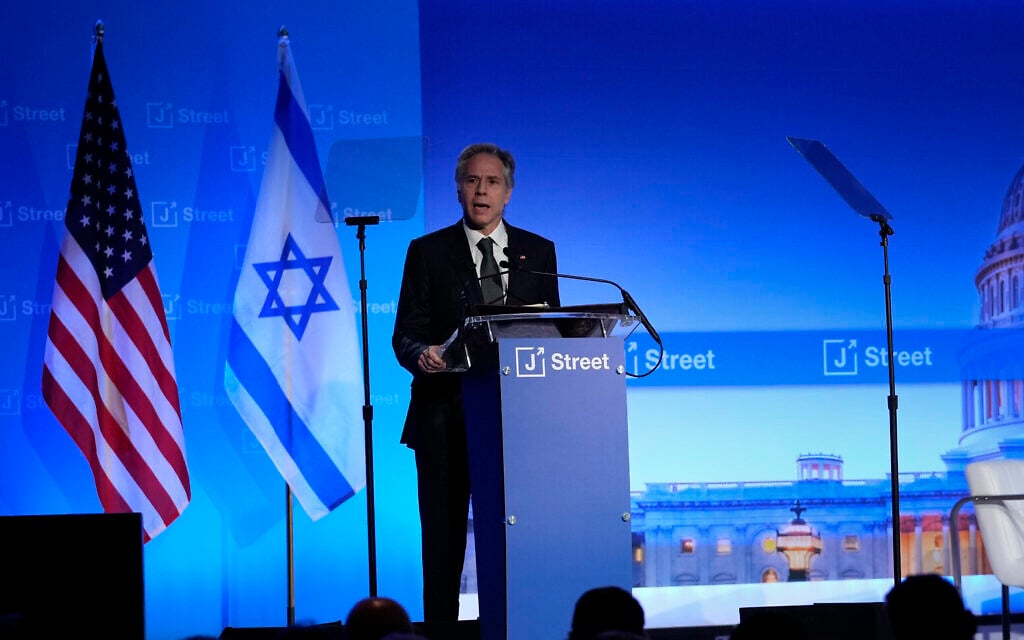
JTA — J Street, the Jewish advocacy group that calls itself pro-Israel and pro-peace, has sought a seat at the Jewish establishment table since its inception in 2008 — and has been repeatedly rebuffed.
Now it is building its own table.
The lobby has lined up heavy hitters from the Jewish establishment to further its claim to speak for a substantial portion of the American Jewish community on Israel. In doing so, it’s making the case that its record of putting pressure on Israel’s governments and its criticism of the Israeli military should no longer be dealbreakers for mainstream Jewish organizations.
0:00 / 0:00
Promoted: Bridges for Peace

On Monday, J Street is forming a Jewish Community Advisory Council that includes past leaders of groups that define the establishment. They include the Conference of Presidents of Major American Jewish Organizations, the American Jewish Committee, the Jewish Agency for Israel and the UJA-Jewish Federation of New York.
“Together their advice, support and critiques will help advance an agenda that bolsters the Israel promised in its Declaration of Independence, thriving in relationships with both the United States and the American Jewish community — steeped in our values — for generations to come,” the group said in a release shared exclusively with the Jewish Telegraphic Agency.
Get The Times of Israel's Daily Edition by email and never miss our top stories
By signing up, you agree to the terms
This fresh effort to test whether the American Jewish establishment can tolerate J Street’s brand of “tough love” Israel activism comes three years after the bloody Hamas-led onslaught on southern Israel on October 7, 2023. J Street supports the Jewish state’s existence but has been highly critical of how the Israeli military has prosecuted the war against Hamas in Gaza. It also stridently opposes its right-wing governments and advocates for US pressure on Israel to make peace with the Palestinians, including by withholding weapons sales to Jerusalem.
The move is happening amid seismic shifts the Gaza war has seeded in the American Jewish community: On one side, younger Jews are increasingly alienated from Israel, evident in polling, as the country is led by its most right-wing government ever; on the other, the Diaspora has been roiled by an explosion of antisemitic expression with criticism of Israel often exploited by the worst enemies of the Jews.
At the same time, given Israel’s diminishing reputation among Americans, especially Democrats, J Street sees an opportunity to make inroads with Jewish leaders who want to have strong relationships with US politicians. Its president, Jeremy Ben-Ami, told JTA in an interview that the group was the best avenue to stem the growth of extremist anti-Israel voices among Democrats — the party that a substantial majority of Jews still vote for — especially as many Jews want to oppose the Trump administration because they believe it is veering toward authoritarianism and associates with bigots.
“The issue that I would say we’re well positioned to address is to say, for Jews who want to not live under MAGA and [US President] Donald Trump, ‘We want to ensure that there’s a Democratic Party that adheres to the J Street line, that does not negate the right of the Jewish people to a state, but does oppose what the Jewish state is doing,’” said Ben-Ami.
Ben-Ami argued that making J Street the voice of the community among Democrats would help it stem the insurgency on the party’s left because it would keep Jewish votes and donations flowing to Democrats, blunting both anti-Israel sentiments in the party and Trump’s power in the second half of his second term.
Among those on the new council are former American Jewish Committee president Bob Goodkind; former UJA-Jewish Federation of New York CEO John Ruskay; Alan Solow and Seymour Reich, former chairmen of the Conference of Presidents of Major American Jewish Organizations; Charles Ratner, former chair of the Board of Governors of the Jewish Agency for Israel; former president of the Union for Reform Judaism Rabbi Eric Yoffie; former National Council of Jewish Women CEO Nancy Kaufman; and Rabbi Ismar Schorsch, former chancellor of the Conservative movement’s Jewish Theological Seminary.

J Street also announced in the same release that Rabbi David Saperstein, the director emeritus of the Reform movement’s Religious Action Center, is joining J Street’s board of directors.
The new council, its members said in interviews, will exert influence on the Jewish conversation about Israel by reaching out to local federations, where many of its members have served. And it will also do so simply by existing — with a panoply of people who were once ardent establishmentarians welcoming J Street.
“You have to try to find a way to get the leadership [of federations] to be at least open to hearing another point of view,” said Ratner, who headed the federation in Cleveland in 2000-2003 and who is a member of one of that city’s leading philanthropic families.
UJA’s Ruskay told JTA that the consensus he and others once hewed to — that American Jewish organizations must defer wholly to Israel’s government of the day when it comes to its security — is faltering. (70 Faces Media, the parent company of the Jewish Telegraphic Agency, receives UJA funding.)
“There are now multiple views of what it means to be ‘pro-Israel’ in the American Jewish community,” he said. “I believe this is healthy, reflecting different perspectives on what is best for Israel. We need to provide space for discussion and civil debate within our community for all groups committed to Jewish sovereignty in our ancient homeland — those we agree with, and those we don’t.”
We need to provide space for discussion and civil debate within our community for all groups committed to Jewish sovereignty in our ancient homeland — those we agree with, and those we don’t
But many leaders of mainstream organizations aren’t convinced that endorsing J Street’s perspective is beneficial for Israel or American Jews.
Jason Shames, the executive director of the Jewish Federation of Northern New Jersey, said differing perspectives on Israel’s security are a gift to Israel’s enemies at a time when the country is in crisis.
“They want to see change within Israel, which is fair, and they do not want to see the demise of Israel,” Shames said. “The problem is that balancing act, in today’s social media era, means that the haters and those who do want Israel’s demise inherently see that as an asset and a value to their cause, and that’s where the breakdown is. That’s why I think you see resistance from people like me.”
Other critics of J Street, however, said the group is simply not representative of pro-Israel activism in this country, and it’s a mistake to invite in an organization so contrary to the stances of so many.

“Mainstream Jewish organizations should not pretend J Street represents the pro-Israel mainstream,” said one former top federation official who requested anonymity to speak frankly. “An organization that seeks to condition aid, block weapons, excuse votes to eliminate security assistance and support damaging actions against Israel at the United Nations has placed itself outside that consensus. A big tent still needs boundaries. If pro-Israel can mean anything, it means nothing.”
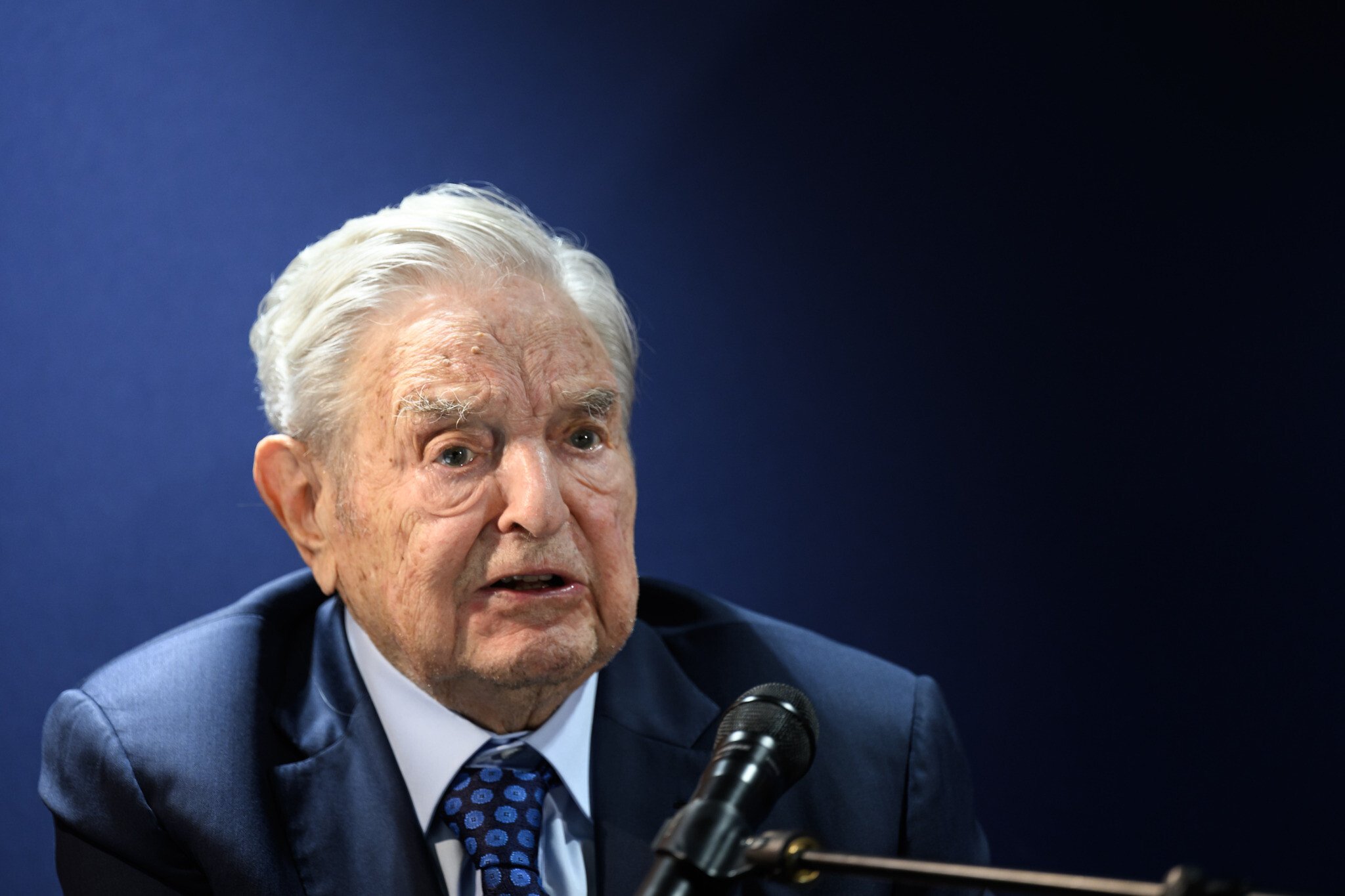
J Street has long faced resistance to its advocacy for US pressure on Israel to move toward a two-state solution and its criticism of many Israeli actions since its inception in 2008. For a time, the group concealed the fact that a leading donor was George Soros, the Jewish billionaire and Holocaust survivor who has been lacerating in his criticism of Israel’s governments and the American Israel Public Affairs Committee.
This is because J Street’s leadership believed his name was anathema in the community. Soros initially declined to help launch the group out of concern that his involvement would be used against it. While J Street at first avoided directly tangling with AIPAC, in recent years the two organizations have frequently gone head to head on social media.
The dissembling about Soros was exposed in 2010, but even before the revelations, J Street’s outreach to the mainstream was having little success. Establishment organizations discouraged synagogues and Jewish community centers from hosting its speakers. It sought membership in the umbrella group, the Conference of Presidents of Major American Jewish Organizations, in 2014 and was rejected.
J Street initially supported Israel’s military response in Gaza, saying that it “strongly supports Israel’s right to defend itself proportionately against the threat of relentless rockets and to destroy tunnels leading into Israel.” But it later accused the government of ignoring Palestinian suffering. “We take issue with those who say that discussing how to end the violence in the long run is not pro-Israel,” it said.
J Street joined other liberal groups in March 2024 in calling on former US president Joe Biden to bring about a ceasefire in Gaza. The move came after months of pressure from progressives who accused liberal Zionist groups of not doing enough to call for an end to the fighting. It also came as Israel was preparing to enter Rafah despite US pressure to refrain from doing so.
In November of the same year, when the International Criminal Court issued arrest warrants for Prime Minister Benjamin Netanyahu and former defense minister Yoav Gallant, J Street did not quite endorse the warrants. But it did call on the organized Jewish community not to “blame [the warrants] on antisemitism or inherent enmity for Israel” — a departure from the response of several major Jewish organizations, which strongly denounced the ICC’s action as anti-Jewish.
Last year, Ben-Ami, under what he acknowledged was pressure from the left, retreated from his argument that Israel was not committing genocide, and now J Street is ambivalent on the issue.
But despite the antagonism his positions have sparked among mainstream Jewish leaders, Ben-Ami argued that keeping young people invested in Israel’s survival is an acute challenge — and that it won’t happen by discouraging dissent.
Finally, he said, that point has been absorbed by the establishment, which made it easy to get the former bigwigs on board with the council.
“There is a level of fear setting in among people who have devoted decades and decades of their lives to Zionism and to the US-Israel relationship,” he said. “Fear about where we’re headed, fear about where Israel is headed, the kind of Israel that is going to be left behind, and a recognition that perhaps after all these decades, providing unconditional support and no daylight wasn’t the best idea, you know, and we need to have an open and honest conversation.”
He continued, “Some of these folks are recognizing that the essence of what J Street argued for the last 20 years, it turns out, is really important right now.”
Solow, a past chairman of the Conference of Presidents, recalled making those arguments himself when he advocated in 2014 for J Street’s inclusion in the organization.
“It has become increasingly apparent that excluding J Street from these conversations is a communal error because it discourages many young people who want to be involved in a positive way in supporting an Israel that they very much want to believe in,” he said. “It discourages them from being included in the community and in the communal discussion.”
It has become increasingly apparent that excluding J Street from these conversations is a communal error because it discourages many young people who want to be involved in a positive way in supporting an Israel that they very much want to believe in
UJA’s Ruskay said he was appalled by reports that the Jewish campus organization Hillel discouraged its chapters from working with J Street U, J Street’s student affiliate, most recently in the case of the Hillel chapter at the University of Michigan.
“When I hear that J Street is not welcomed in certain Hillels, we need J Street in Hillels!” he said. Hillel did not return a request for comment.
NCJW’s Kaufman is on the board of a number of organizations that stridently oppose the current government led by Netanyahu. Similar to joining those other boards, her participation in the J Street council is a matter of penitence for her past at the NCJW and the Boston-area Jewish Community Relations Council before that.
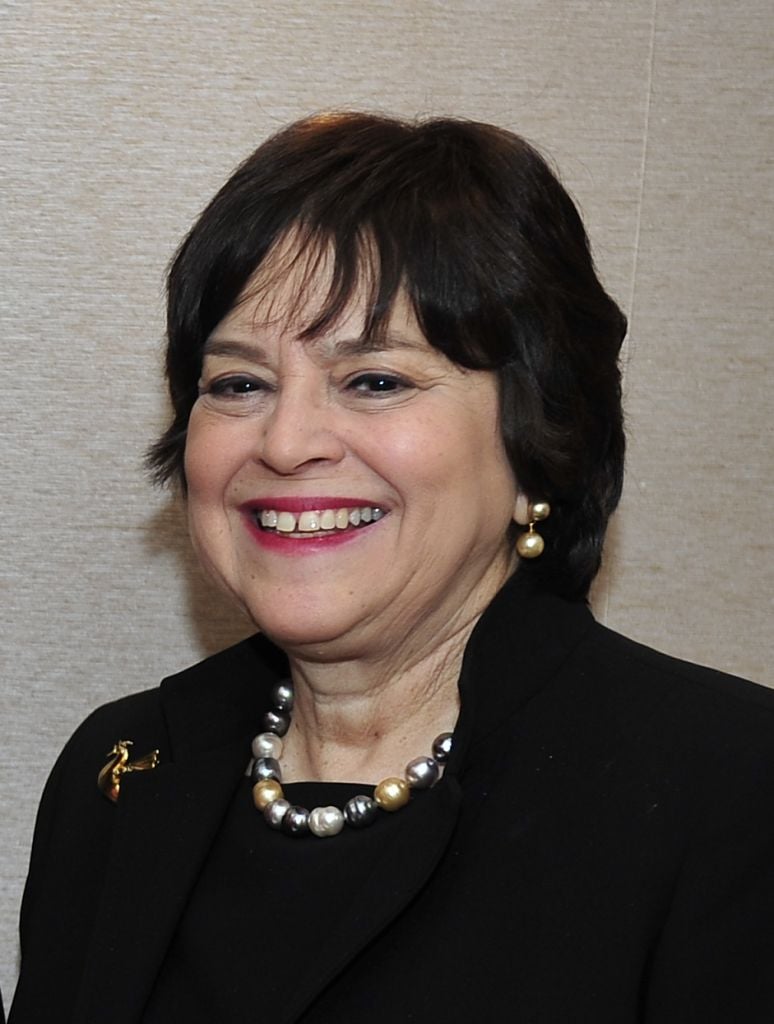
“I feel like we didn’t say enough. I really do. It’s my issue. I feel like we should have spoken out more,” she said.
She recalled feeling ill when she saw J Street voted down at the Conference of Presidents, which at the same time allowed in AEPi, a fraternity that she believed held conservative views unrepresentative of young Jews.
“This was a ‘We have met the enemy, and he is us’ moment,” said Kaufman, who at the time was present in her capacity as NCJW CEO. “It was a shanda,” she added, using the Yiddish word for scandal.
An influential vote against J Street at that meeting was the American Jewish Committee, which nullified the nod J Street had received from other mainstream groups such as the Anti-Defamation League and the Reform movement.
David Harris, then the AJC’s CEO, said he doesn’t regret the way his group voted then and that he would recommend the same vote now.
“I don’t believe it is the role of American Jews — who live thousands of miles from Israel, reject aliyah, don’t face life-and-death military service and don’t have to take their children and elderly to bomb shelters day and night — to seek to influence existentially important issues affecting Israel and its vital link with the United States,” he said.
He added that such lobbying for US pressure on Israel is “inappropriate and, yes, harmful.” The same goes, he said, for right-wing groups that seek US pressure on Israel for their favored outcomes.
The Jewish Agency’s Ratner, who once gave to AIPAC, said that organization is now too closely associated with the right wing in the United States and Israel. “I think as AIPAC became more and more reactionary and right wing, and it just didn’t feel right to me anymore,” he said.
AIPAC, which did not return a request for comment, has said that it continues to enjoy the support of donors and elected officials from both American parties.
Ratner said that whatever “center” there was among American Jews is disappearing.
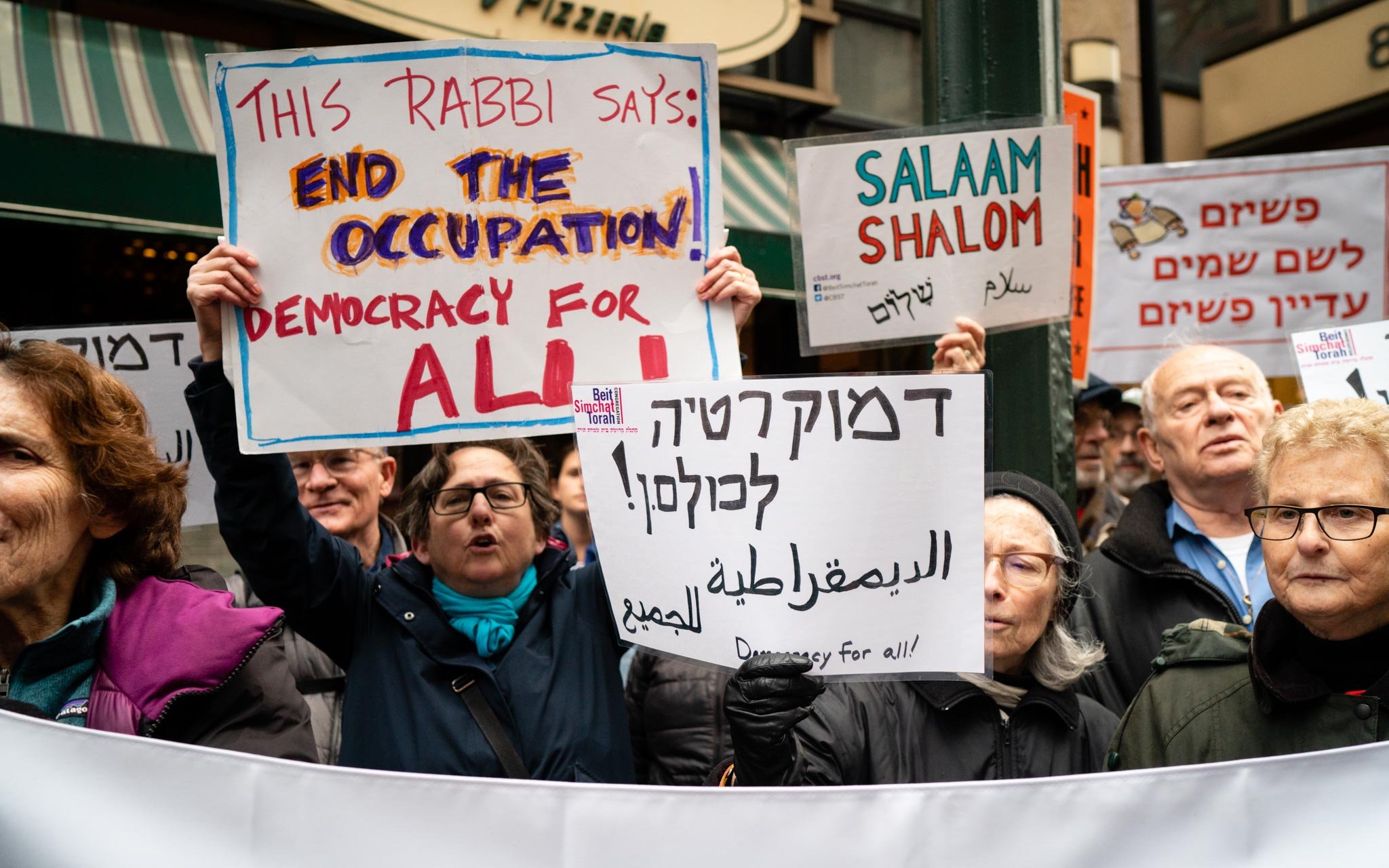
“I don’t think J Street has yet achieved the position where it’s viewed as a centrist position. Nor do I think that AIPAC anymore is a centrist position, and I think that’s one of the challenges the community has. Where is there room for a centrist position?” he asked.
Jeremy Burton, the CEO of the Jewish Community Relations Council of Greater Boston, said the notion that the community can rally around a single Israel position is antiquated, though it was once commonplace among establishment Jewish organizations.
“The project of American Jews speaking with one coordinated voice — and I say this as a CEO of an independent JCRC that has 40 member organizations, including J Street — I don’t know that that project looks the same way it did even a decade or so ago in terms of the formal infrastructure of collective voice,” said Burton, who is not involved in the new J Street council.
The groups who participated in the 2014 vote did not return or declined requests for comment on where they stand now, as did a number of federation officials. Among those not commenting were the Jewish Federations of North America, AIPAC, the ADL, the AJC and the Conference of Presidents.
Saperstein said one role that he, as a board member, and the new council could play would be to advise J Street “that it has to be clearer about the Ahavat Yisrael aspect of its work,” referring to the principle of “Love of Israel,” which applies to the country and the Jewish community.
Religious Action Center’s Saperstein said he expected J Street would robustly speak out against those who oppose all weapons sales to Israel since the organization itself only opposes some offensive weapons sales, which it believes should be conditioned on Israeli behavior. It does not oppose sales of defensive weapons, which anti-Israel political forces have increasingly proposed.
Ben-Ami said J Street’s best strategy was to make its case and not seek the marginalization of others, however extreme their positions.
KioskNews shows a cleaned-up reading view extracted from the publisher’s page — the original always lives on their site, not ours.