With diesel deal, Trump is teaching Reagan’s lesson to a larger class

In June 1982, Ronald Reagan imposed sanctions to prevent European firms from using American technology to help build a pipeline that would carry Soviet gas to western Europe. He warned that Europe was making itself a hostage to the Kremlin and contributing to the Moscow’s war chest. Then, 18 days before that November’s congressional elections, he offered to sell the Soviet Union up to 23 million tonnes of grain.
Europeans, told to tear up their own contracts while American farmers were invited to feed Moscow, cried hypocrisy. Even the Kremlin’s own news agency called the offer an electoral ploy. Reagan’s Republicans lost 26 House seats anyway, and about 10 days after the vote he lifted the pipeline sanctions.
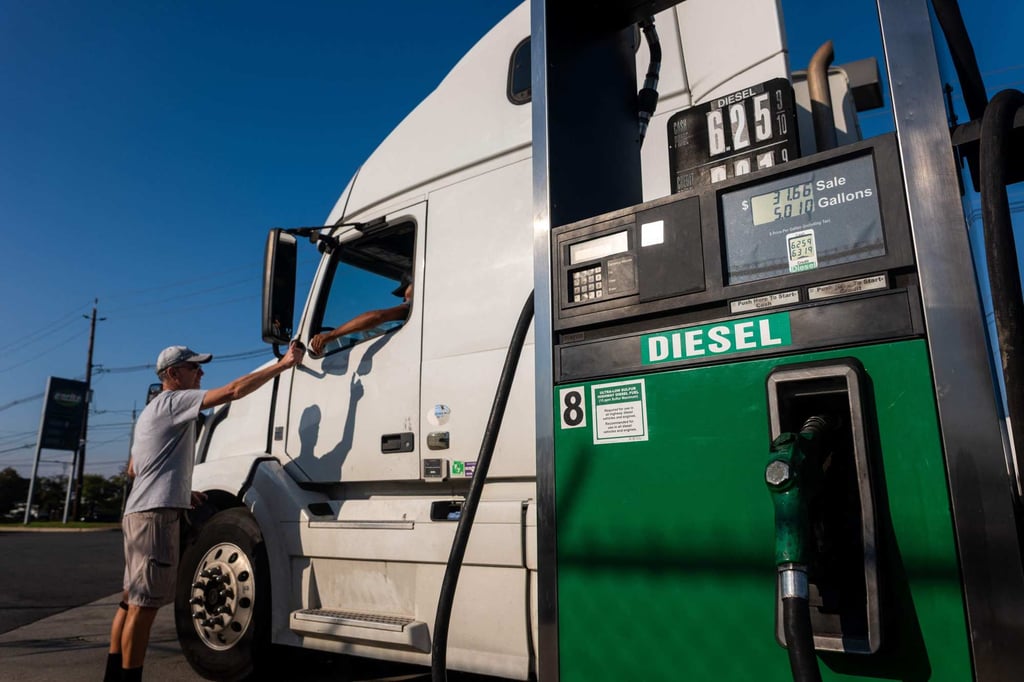
Forty-four years later, the commodity is diesel. Last week, a tanker left Russia for New York carrying 40,000 tonnes of the fuel, an import Congress banned in 2022. It sails under a temporary Treasury licence meant to bring down pump prices before the November 3 midterm elections, though its cargo arrives four days after polls close.
It is ironic that the US, having warned Europeans for years against buying Russian energy, is now looking to buy Russian diesel itself. Trump has also suspended the 100 per cent tariffs on the biggest buyers of Russian oil and gas that were to take effect under legislation he had signed only in September.
Even the diesel licence rests on shaky legal ground: lawmakers from both parties have questioned whether it can be squared with the 2022 ban on Russian energy imports. Every government living under American restrictions now knows that they are for sale, and that in an election year the price can be a few weeks of good headlines.
China, the largest buyer of Russian oil and a major beneficiary of the waiver, will bring that lesson to Shenzhen, where Trump is due to meet Chinese President Xi Jinping at next month’s Asia-Pacific Economic Cooperation leaders’ summit. Xi will arrive with something to sell. The truce the two leaders agreed to in Busan, South Korea, in October 2025 depends on Beijing holding back its restrictions on rare earths, minerals American factories cannot do without.
What Beijing wants in return is looser American chip controls, including on the machines that make advanced chips. Trump has already shown those controls are negotiable, letting Nvidia ship its powerful H200 AI processor to Chinese buyers last December in exchange for a 25 per cent surcharge. His officials insisted in September that chipmaking equipment was not on the agenda.
But here is the catch. The most important of those machines are not American. ASML, a Dutch company, is the only firm in the world that makes the equipment needed to print the most advanced chips, and Japan is home to several other leading toolmakers. Both countries restricted sales to China in 2023 because Washington asked them to, and their companies have lost business as a result. ASML expects China to account for about a fifth of its sales this year, down from a third in 2025.
The Dutch also know what American pressure can cost. On September 29 last year, Washington extended its export blacklist to subsidiaries of companies already on it, bringing Nexperia, a Dutch chipmaker owned by China’s Wingtech Technology, within its reach. The Hague intervened the following day, amid mounting US demands to remove Nexperia’s Chinese CEO.
Beijing retaliated by restricting exports from the company’s Chinese factories, disrupting supplies of chips used by European carmakers. In November, Trump suspended the new rule for a year as part of a trade deal in which China promised to keep rare earths flowing. The Netherlands was left to clean up a crisis its ally had set in motion and then walked away from.
Inside the Nexperia crisis: the future of chip supply chain | China Future Tech webinar
Beijing is now working on Brussels. At trade talks this month, the European Union agreed to help clear priority applications to export sensitive technology to China, and Chinese officials made plain that any easing of export controls must be mutual. That reads like an opening bid for the Dutch restrictions on ASML, the strongest card Europe holds in its dealings with China. If Washington trades away its own chip controls in Shenzhen, The Hague and Tokyo will struggle to justify the cost of keeping theirs, Beijing will recognise this, and neither the Netherlands nor Japan will count on America to back it next time.
This is where Trump’s diesel diplomacy does its real damage. The Dutch and Japanese accepted lost orders and Chinese retaliation because Washington told them that keeping advanced technology from China was a matter of shared security. If Trump now swaps chip controls for rare earths, he will have turned his allies’ sacrifice into his own bargaining chip.
Reagan’s grain offer taught Europeans that American sanctions bend to domestic politics. Trump is teaching the same lesson to a much larger class, with Beijing in the front row. The next time an American envoy arrives in The Hague or Tokyo asking allies to give up Chinese business in the name of solidarity, he should expect the answer Washington itself has made routine: what’s your price?
KioskNews shows a cleaned-up reading view extracted from the publisher’s page — the original always lives on their site, not ours.