The 10 Most Universally Acclaimed Books of the 21st Century, Ranked

Diego Pineda has been a devout storyteller his whole life. He has self-published a fantasy novel and a book of short stories, and is actively working on publishing his second novel.
A lifelong fan of watching movies and talking about them endlessly, he writes reviews and analyses on his Instagram page dedicated to cinema, and occasionally on his blog. His favorite filmmakers are Andrei Tarkovsky and Charlie Chaplin. He loves modern Mexican cinema and thinks it's tragically underappreciated.
Other interests of Diego's include reading, gaming, roller coasters, writing reviews on his Letterboxd account (username: DPP_reviews), and going down rabbit holes of whatever topic he's interested in at any given point.
Sign in to your Collider account
So far, the 21st century has delivered several books so exceptional in virtually every sense that matters that they deserve to be called downright perfect masterpieces. But while there have been some incredible books from 2001 until the present, only a few of them have earned universal acclaim: awards, commercial success, critical renown, and the love of readers all across the board and throughout the globe.
You'd be hard-pressed to find anyone who hates, or even dislikes, these legendary books. From huge pop-cultural sensations like Harry Potter and the Deathly Hallows to quieter (yet equally powerful) works of art like The Nickel Boys, these are books which prove that it's perfectly possible for a novel to be adored and lauded by pretty much anyone and everyone who has read it. If there are any 10 books from the last 25 years that should be essential reading for anyone who loves literature, it's these ones.
10 'Harry Potter and the Deathly Hallows' (2007)

To this day, J. K. Rowling's Harry Potter and the Philosopher's Stone (published in the US as Harry Potter and the Sorcerer's Stone) is still one of the bestselling works of fiction in the history of literature. The series that came after was not only hugely influential, but a straight-up pop-cultural phenomenon whose effects on the fantasy genre can still be felt today. As such, a lot was riding on the saga's momentous conclusion, Harry Potter and the Deathly Hallows.
A landmark of 21st-century literature which broke records as the fastest-selling fiction book in 24 hours of all time.
Saying that fans felt the seventh Harry Potter adventure lived up to expectations would be an understatement. This is one of those fantasy books that marked the end of an era, a landmark of 21st-century literature which broke records as the fastest-selling fiction book in 24 hours of all time. The shared experience of reading the final volume in such a massive series of books created an unprecedented sense of global community, completely re-defining what books aimed at younger audiences were capable of achieving on a mass scale.
9 'The Road' (2006)

Cormac McCarthy is one of the greatest and most important American authors of modern times, and though there are many potentially phenomenal ways of diving into his oeuvre for the first time, there's one title that feels like it was designed as an introduction to McCarthy: The Road, a genuinely masterful post-apocalyptic novel that's easily among the bleakest sci-fi books of all time.
Critics and audiences alike adored the novel, praising it as one of the most enrapturing psychological dramas and most atmospheric post-apocalyptic books they had read at any point during the 21st century. With the 2007 Pulitzer Prize for Fiction under its belt, The Road has continued aging like fine wine as the years have passed, with some of the most fascinatingly minimalistic prose and emotionally engaging writing that any American novel has offered throughout the last two decades.
8 'The Nightingale' (2015)
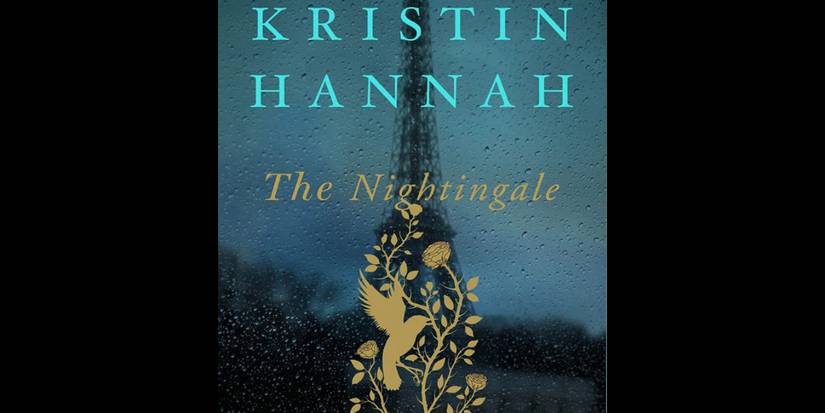
Inspired by the accounts of the Belgian Resistance member Andrée de Jongh, who helped downed Allied pilots escape Nazi territory during World War II, Kristin Hannah wrote The Nightingale. It's one of the best World War II books of all time, a tearjerker so riveting that it instantly became a fixture of book clubs and online literary communities. Thanks to its success, Hannah, who used to be better known for her romance fiction for female audiences, was able to pivot more toward mainstream historical fiction.
Sentimentalistic though it may sometimes feel, The Nightingale is a brilliant feminist reframing of a period of history that literature has usually viewed through the eyes of male soldiers, generals, and political leaders. With some incredible character work, highly cinematic pacing, and universal themes of sisterhood and forgiveness, The Nightingale has been able to stand the test of time as one of the most universally beloved historical fiction books of the 2010s.
7 'Station Eleven' (2014)
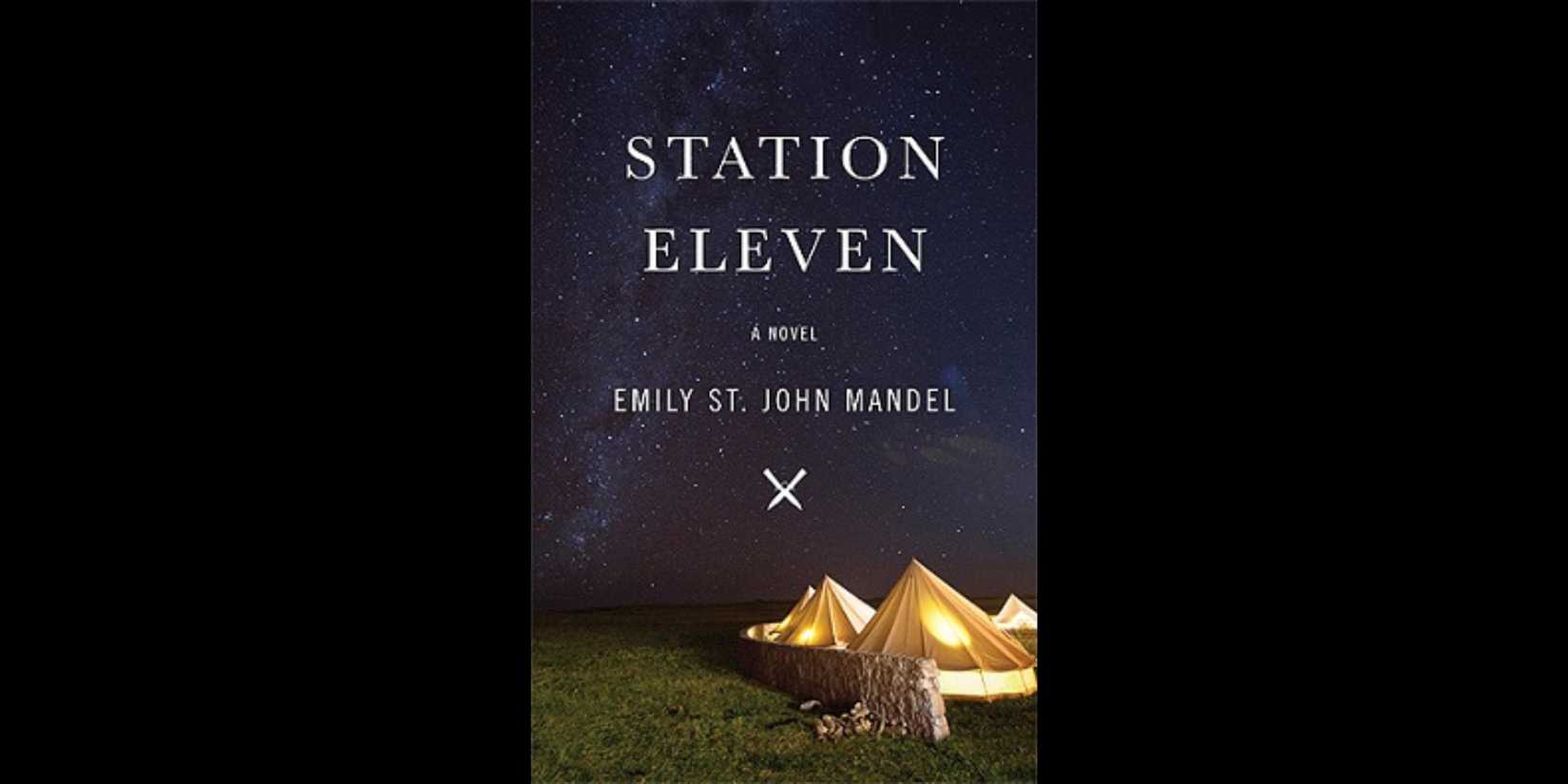
Canadian literature has always had plenty to offer, and the last 25 years have been no exception. Case in point: Emily St. John Mandel's Station Eleven, yet another one of the greatest dystopian novels to have come out during the 21st century. Winner of the 2015 Arthur C. Clarke Award, acclaimed by critics, and commercially successful all across the board, it was adapted into an HBO Max miniseries in 2021 that's almost as universally acclaimed.
All in all, it's one of the best dystopian sci-fi books of modern times, an awfully prescient book about a pandemic that takes out most of the world's population. But where most dystopian novels tend to focus on the grief, raw survival, and inherent darkness of such apocalyptic events, Station Eleven takes a different approach by instead focusing on how art, culture, and stories help people find beauty in life after catastrophes. That's perhaps why it's one of the most beloved dystopian books of the last 25 years.
6 'Words of Radiance' (2014)
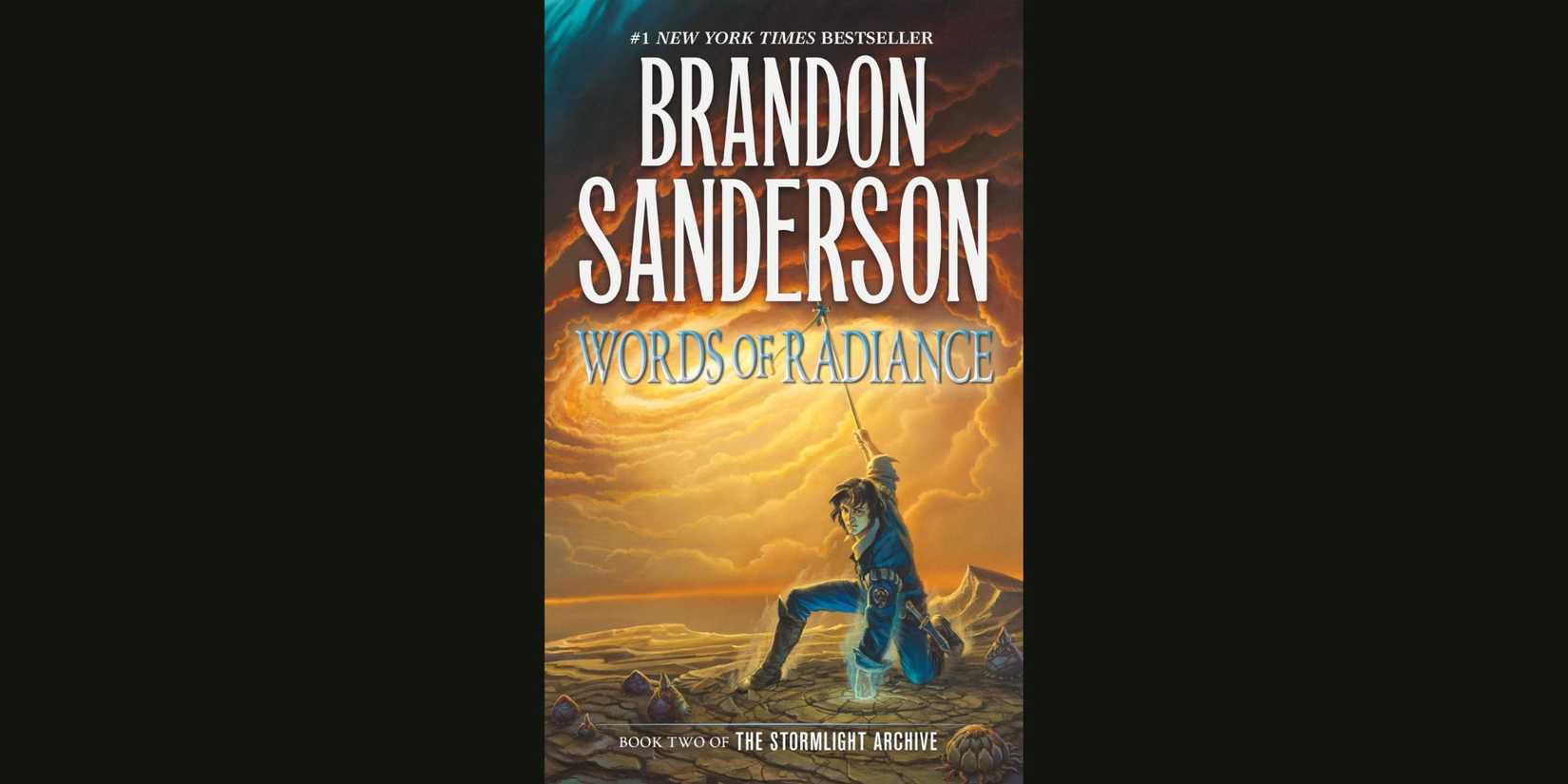
Many authors have helped to re-define speculative fiction as a whole and the high fantasy genre more particularly throughout the 21st century, but few have been as instrumental (or prolific) as Brandon Sanderson. His Stormlight Archive series, part of his overarching Cosmere shared universe, has proven particularly influential. The question of what the best installment in the series is isn't really much of a question at all: It has to be Words of Radiance.
One of the best heroic fantasy books of all time, the second chapter in the Stormlight Archive series was an international commercial powerhouse, solidified this as a flagship epic fantasy media franchise, and won awards as major as the David Gemmell Legend Award for Best Novel. As the years have passed, the Stormlight Archive story has progressed, and Sanderson has continued delivering banger after banger, many would still refer to the masterfully exciting, twisty, and complex Words of Radiance as his best work to date.
5 'The Nickel Boys' (2019)

Based on the Dozier School, a reform school in Florida that operated for over a century and was revealed as a hellscape of emotional and physical abuse, Colson Whitehead's The Nickel Boys is both a celebration of human resilience and a scathing critique of systemic racism and institutional abuse. Devastating, fast-paced, and philosophically profound, it may be a harrowing read, but it's an essential one nonetheless.
The fourth author ever to win two Pultizer Prizes for Fiction (and the only one to do so in the 21st century so far).
Whitehead won the 2020 Pulitzer Prize for Fiction, and after he won the same award for 2016's The Underground Railroad, that made him the fourth author ever to win two Pultizer Prizes for Fiction (and the only one to do so in the 21st century so far). Indeed, we're talking about one of the best American masterpieces of the 21st century, grounding historic horrors in a character piece with such powerfully controlled prose that it becomes impossible to put the book down.
4 'The Book Thief' (2005)

There is perhaps no Australian novel from the last 25 years more universally acclaimed or beloved than Markus Zusak's The Book Thief, one of the most perfectly-written books of the 21st century. Death isn't exactly a particularly common narrator in books, and not only does The Book Thief take that unique concept and run with it—It turns it into a beautifully human and emotional story about a girl growing up in Nazi Germany right in the midst of WWII.
The novel has remained an enduring global sensation, a commercial success that completely re-defined what Young Adult fiction was capable of achieving. Winner of several awards and praised by pretty much all critics who read it, it's a masterpiece with some incredibly lyrical prose, tremendous moral nuance, and a unique approach to a genre that can sometimes end up feeling very samey.
3 'James' (2024)

The debate over what "The Great American Novel" could possibly be is a practically neverending one, but there's a particular title that tends to come up far more often than most: Mark Twain's Adventures of Huckleberry Finn, one of the most important and influential American novels of the 19th century. Percival Everett took the foundations of that story to write James, a book that views the narrative through the eyes of Huck's fugitive slave friend, Jim.
For his masterpiece, Everett won several major awards, including the 2025 Pulitzer Prize for Fiction—arguably making this the best Pulitzer-winning book of the 2020s so far. Thanks to its downright genius subversion of the American canon and its potent recontextualization of Twain's magnum opus, Everett delivered a book that's among the most intelligent and thematically nuanced novels that the world has seen since 2001.
2 'Demon Copperhead' (2022)

In the history of the Pulitzer Prize for Fiction, there has only ever been one tie, and that was when the award was shared between Hernan Diaz for Trust and Barbara Kingsolver for Demon Copperhead. As phenomenal as Trust is, it's arguably Kingsolver's masterpiece that's among the most universally acclaimed books of the century so far—at the very least, it's one of the best books published since 2005.
This modern reimagining of Charles Dickens' David Copperfield is both surprisingly original and a brilliant modernization of the narrative skeleton of Dickens' masterpiece. With an unforgettable narrating voice, an unsparing examination of the opioid epidemic and modern rural American neglect, and a reclaiming of Appalachia with a refreshingly nuanced portrait of the space, Kingsolver delivered a book that's bound to go down in history as one of the greatest classics of the 2020s.
1 'The Warmth of Other Suns' (2010)

Though it's fiction books that have delivered the significant majority of the most universally acclaimed books of the 21st century so far, there's also some genuinely flawless non-fiction that even those who don't usually love the genre should consider essential reading. Case in point: Isabel Wilkerson's The Warmth of Other Suns, a historical study of the Great Migration, the movement of Black Americans out of the Southern US from roughly around 1915 to 1970.
It's one of the best books of the last 20 years, considered by critics and bookworms alike to be one of the most important works of American history literature written this century. Wilkerson spent over a decade conducting interviews to tell this sweeping story, and the result is a monumental masterpiece crafted with such care, passion, rigor, and majestic prose that it almost reads like a true fiction epic. There are remarkably few books about American history more universally essential than this one.
Collider Exclusive · Universe Personality Quiz Which Iconic Universe Do You Belong in the Most? Star Wars · Lord of the Rings · Harry Potter · Game of Thrones · Star Trek
Five legendary universes. Five completely different visions of what the world could be — or already was. One of them is the world your instincts, your values, and your particular way of existing were built for. Eight questions will tell you which one.
🚀Star Wars
💍Lord of the Rings
🧙Harry Potter
👑Game of Thrones
🖖Star Trek
01
What gives your life its deepest sense of meaning? Every universe is built around a different answer to this question.
02
Which kind of world do you most want to inhabit? The environment shapes who you become. Choose carefully.
03
How do you prefer your conflicts resolved? The shape of a world's conflicts tells you everything about its soul.
04
Who do you want beside you when things get difficult? Your ideal companions reveal the world you were made for.
05
What is your relationship with power? How you seek, wield, or resist power is the map of who you are.
06
How does your universe treat good and evil? A world's moral architecture tells you more about it than any map.
07
What role would you naturally fall into? Every universe has archetypes. Which one fits you without trying?
08
What do you ultimately believe about the future? The answer to this is the clearest window into which universe already lives inside you.
Your Universe Has Been Chosen You Belong In…
Your answers point to the iconic universe your values, your instincts, and your particular way of seeing the world were built for. This is where you would find your people — and your purpose.
Star Wars
You believe in the cause — in the idea that freedom is worth fighting for even when the odds are impossible and the empire is vast.
- You are drawn to the moral clarity of a universe where hope itself is a form of resistance.
- You'd find your people in the Rebellion — a ragtag coalition of true believers held together by conviction more than resources.
- Star Wars is fundamentally a story about ordinary people choosing to matter in an extraordinary conflict — and that is exactly your kind of story.
- The Force may or may not be with you. But the will to use it for something larger than yourself certainly is.
Lord of the Rings
You understand, in the deepest part of yourself, that the journey matters as much as the destination — and that the world's beauty is worth protecting even at great cost.
- Middle-earth is a world of ancient wonder, deep friendship, and a darkness that only retreats when enough small acts of courage accumulate.
- You would thrive here because you value the fellowship more than the glory — the road more than the arrival.
- Tolkien's universe rewards patience, loyalty, and the willingness to carry something heavy across a very long distance.
- Those are not burdens to you. They are simply how you move through the world.
Harry Potter
You believe that love, loyalty, and doing what's right are not naive sentiments — they are the most powerful forces in any world, magical or otherwise.
- The Wizarding World is a place of wonder hidden in plain sight, where learning is transformative and the bonds you form at school follow you into every battle.
- You would flourish here because you take both the magic and the friendships seriously — and you understand that one without the other is incomplete.
- Harry Potter's universe ultimately rewards those who choose to stand for something even when standing is terrifying.
- That choice — made quietly, without guarantee — is something you understand completely.
Game of Thrones
You see the world clearly — its power structures, its hypocrisies, its brutal arithmetic — and you are not paralysed by that clarity. You use it.
- Westeros is a world that rewards intelligence, adaptability, and the willingness to understand that every alliance is also a negotiation.
- You would survive here — possibly thrive here — because you don't confuse the world as it is with the world as you'd like it to be.
- Game of Thrones is a story about what happens when the idealists and the realists collide. You are sharp enough to know which one lasts longer.
- Winter always comes. You are already prepared.
Star Trek
You believe the future is worth building — that curiosity, cooperation, and the expansion of understanding are not just ideals but the most practical path forward for any civilisation.
- Star Trek is a universe where the questions matter as much as the answers, and where encountering something utterly alien is cause for wonder rather than fear.
- You would belong here because you are fundamentally optimistic about what intelligence and decency can achieve — while being honest about how hard that achievement is.
- The Federation is the universe's most ambitious thought experiment: what if we actually got better?
- You don't just hope that's possible. You think it's the only thing worth working toward.
KioskNews shows a cleaned-up reading view extracted from the publisher’s page — the original always lives on their site, not ours.